p.238 抽出テキスト
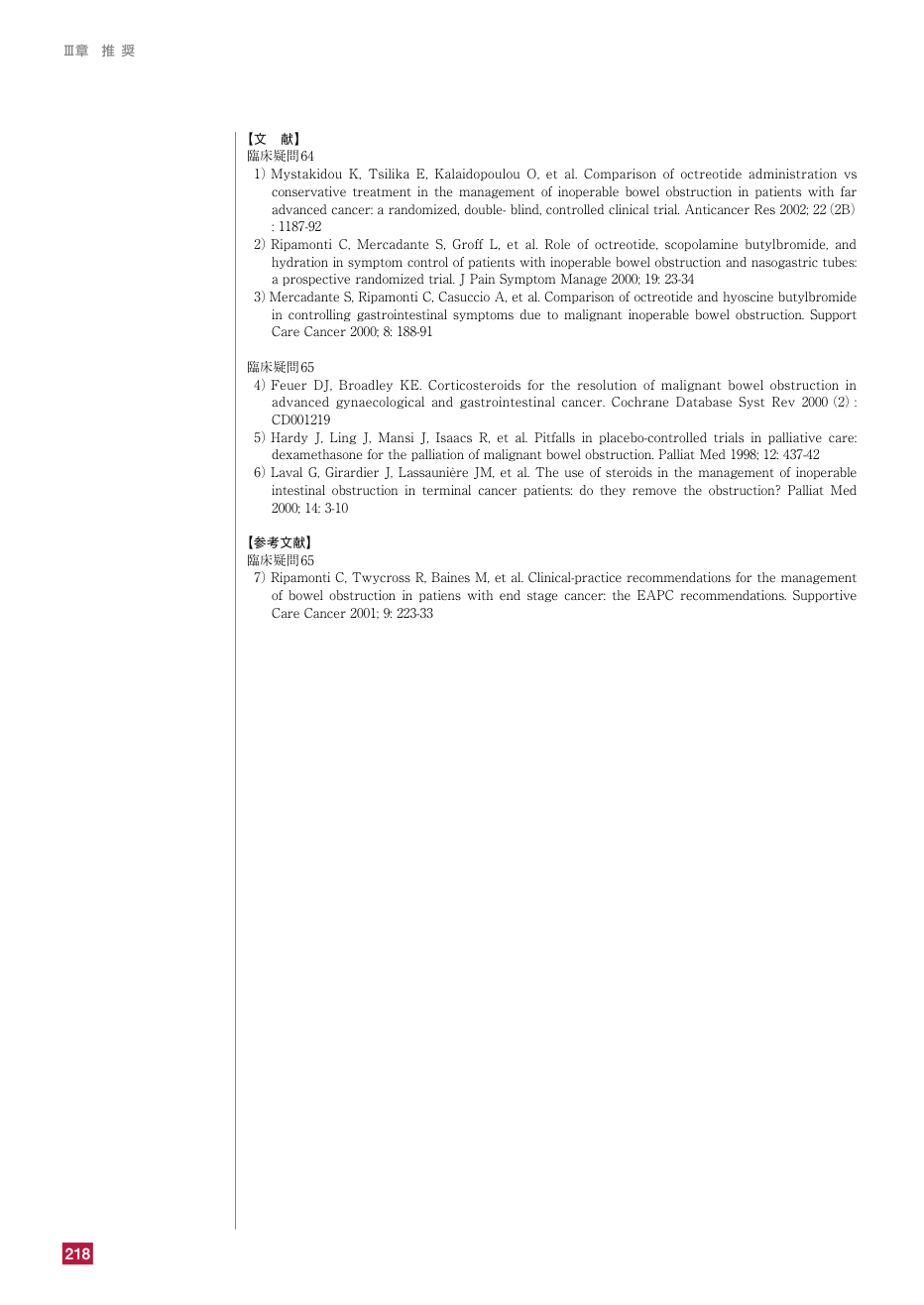
【文 献】臨床疑問64 1)Mystakidou K, Tsilika E, Kalaidopoulou O, et al. Comparison of octreotide administration vs conservative treatment in the management of inoperable bowel obstruction in patients with far advanced cancer: a randomized, double- blind, controlled clinical trial. Anticancer Res 2002; 22(2B) : 1187-92 2)Ripamonti C, Mercadante S, Groff L, et al. Role of octreotide, scopolamine butylbromide, and hydration in symptom control of patients with inoperable bowel obstruction and nasogastric tubes: a prospective randomized trial. J Pain Symptom Manage 2000; 19: 23-34 3)Mercadante S, Ripamonti C, Casuccio A, et al. Comparison of octreotide and hyoscine butylbromide in controlling gastrointestinal symptoms due to malignant inoperable bowel obstruction. Support Care Cancer 2000; 8: 188-91

臨床疑問65 4)Feuer DJ, Broadley KE. Corticosteroids for the resolution of malignant bowel obstruction in advanced gynaecological and gastrointestinal cancer. Cochrane Database Syst Rev 2000(2): CD001219 5)Hardy J, Ling J, Mansi J, Isaacs R, et al. Pitfalls in placebo-controlled trials in palliative care: dexamethasone for the palliation of malignant bowel obstruction. Palliat Med 1998; 12: 437-42 6)Laval G, Girardier J, Lassaunière JM, et al. The use of steroids in the management of inoperable intestinal obstruction in terminal cancer patients: do they remove the obstruction? Palliat Med 2000; 14: 3-10

【参考文献】臨床疑問65 7)Ripamonti C, Twycross R, Baines M, et al. Clinical-practice recommendations for the management of bowel obstruction in patiens with end stage cancer: the EAPC recommendations. Supportive Care Cancer 2001; 9: 223-33