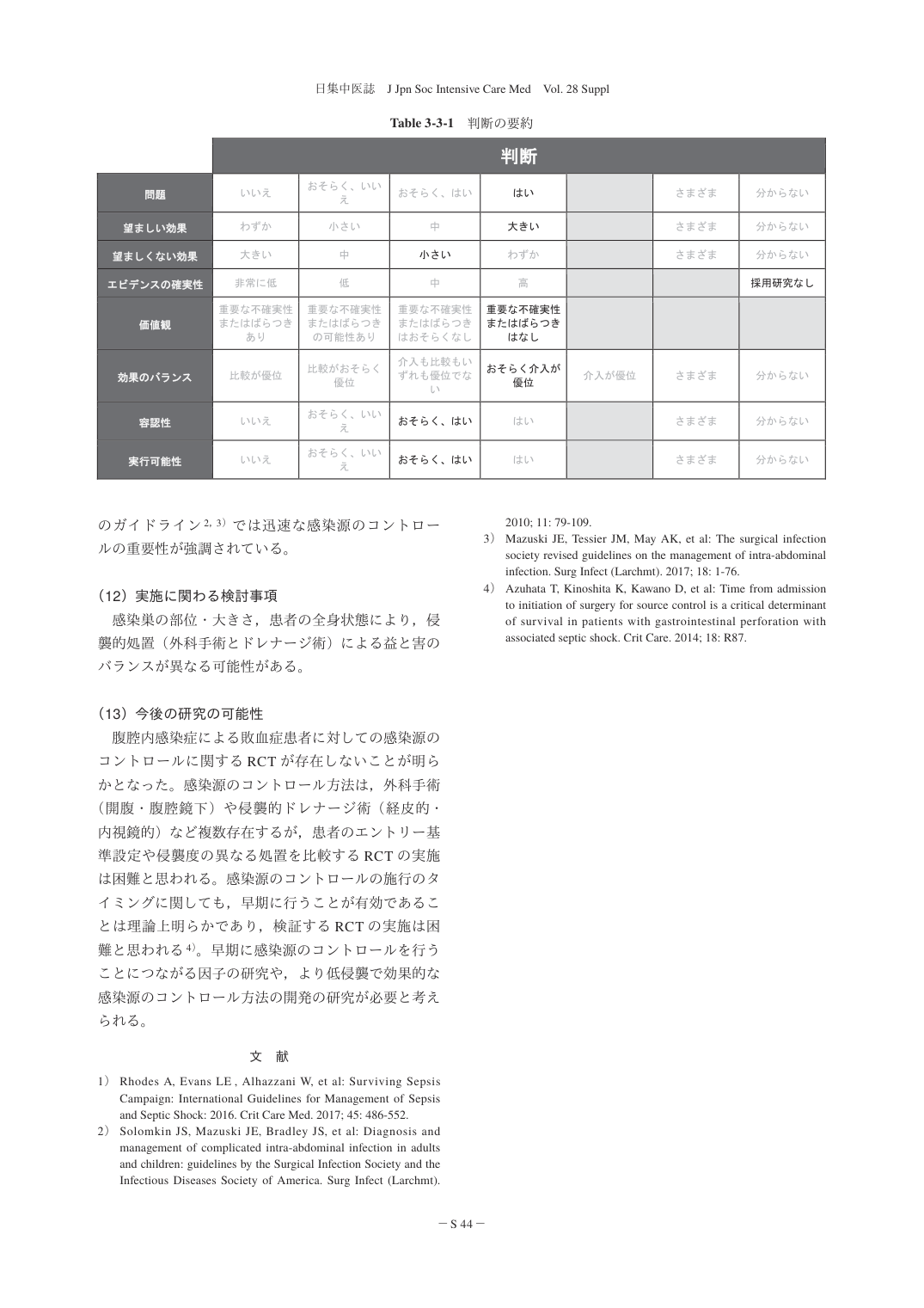
p.46 抽出テキスト
のガイドライン 2, 3)では迅速な感染源のコントロールの重要性が強調されている。

(12)実施に関わる検討事項

感染巣の部位・大きさ,患者の全身状態により,侵襲的処置(外科手術とドレナージ術)による益と害のバランスが異なる可能性がある。

(13)今後の研究の可能性

腹腔内感染症による敗血症患者に対しての感染源のコントロールに関するRCT が存在しないことが明らかとなった。感染源のコントロール方法は,外科手術(開腹・腹腔鏡下)や侵襲的ドレナージ術(経皮的・内視鏡的)など複数存在するが,患者のエントリー基準設定や侵襲度の異なる処置を比較するRCT の実施は困難と思われる。感染源のコントロールの施行のタイミングに関しても,早期に行うことが有効であることは理論上明らかであり,検証するRCT の実施は困難と思われる 4)。早期に感染源のコントロールを行うことにつながる因子の研究や,より低侵襲で効果的な感染源のコントロール方法の開発の研究が必要と考えられる。

文 献

1) Rhodes A, Evans LE , Alhazzani W, et al: Surviving Sepsis Campaign: International Guidelines for Management of Sepsis and Septic Shock: 2016. Crit Care Med. 2017; 45: 486-552. 2) Solomkin JS, Mazuski JE, Bradley JS, et al: Diagnosis and management of complicated intra-abdominal infection in adults and children: guidelines by the Surgical Infection Society and the Infectious Diseases Society of America. Surg Infect (Larchmt). 2010; 11: 79-109. 3) Mazuski JE, Tessier JM, May AK, et al: The surgical infection society revised guidelines on the management of intra-abdominal infection. Surg Infect (Larchmt). 2017; 18: 1-76. 4) Azuhata T, Kinoshita K, Kawano D, et al: Time from admission to initiation of surgery for source control is a critical determinant of survival in patients with gastrointestinal perforation with associated septic shock. Crit Care. 2014; 18: R87.

Table 3-3-1 判断の要約

-S 44-