p.9 抽出テキスト
2 Introduction

In these guidelines, we have redefined the classification of heart failure (HF) compared with the definition used in the 2021 ESC Guidelines for the diagnosis and treatment of acute and chronic heart failure,3 and provided a simple definition that we believe will translate into everyday clinical practice. As early detection of HF is increasingly important, we have, in alignment with the 2022 AHA/ACC/HFSA Guideline for the management of heart failure,4 also included risk factors and early signs of HF into the staging of HF. An updated classification for the treatment of HF has also been added, which emphasizes foundational and additional medical therapies, as well as interventional therapies. Figure 1 provides an overview of current management recommendations for HF. Since the publication of the 2021 ESC Guidelines for the diagnosis and treatment of acute and

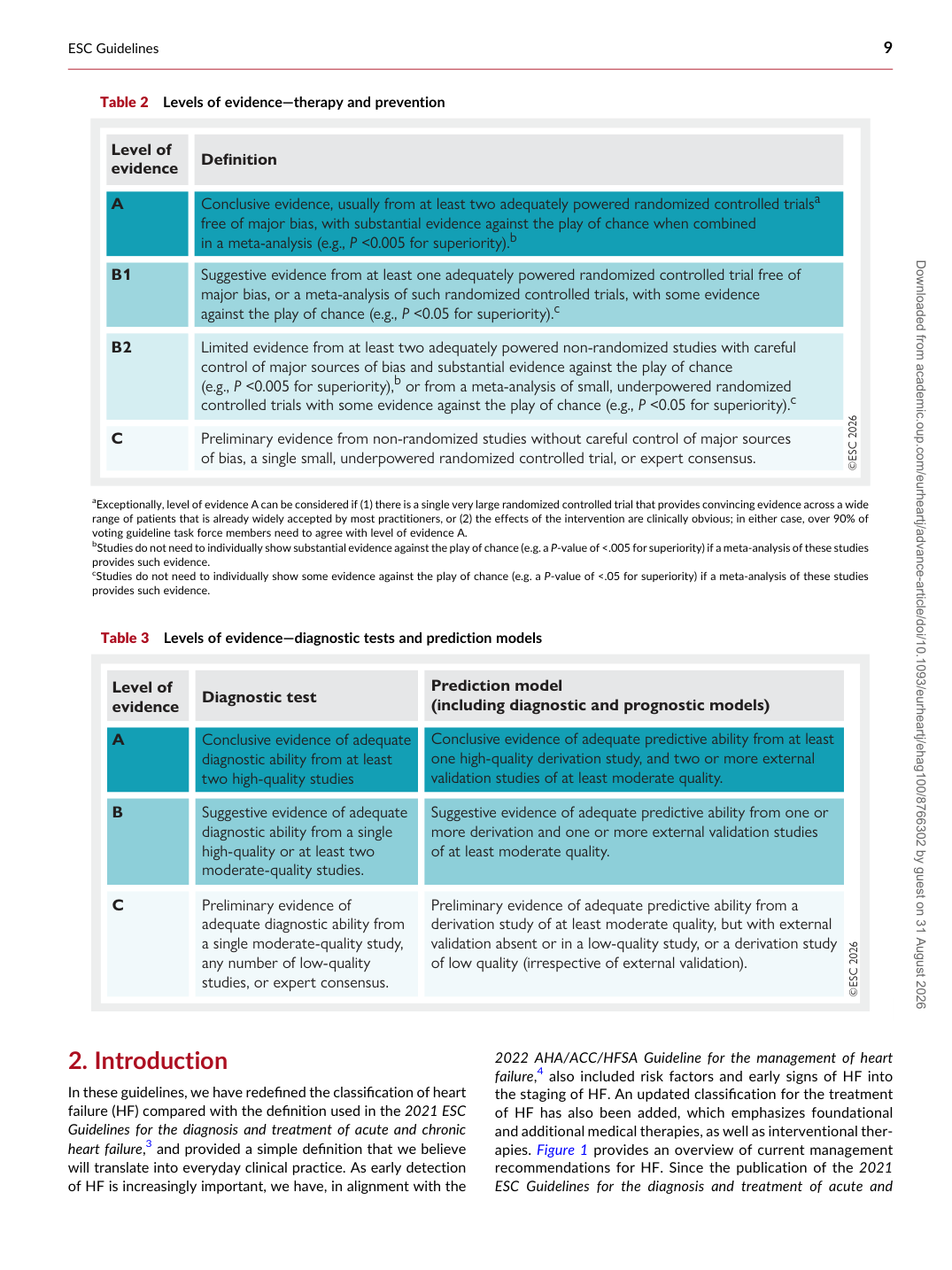
Table 2 Levels of evidence—therapy and prevention

©ESC 2026

Level of evidence A

B1

B2

C Definition

Conclusive evidence, usually from at least two adequately powered randomized controlled trialsa free of major bias, with substantial evidence against the play of chance when combined in a meta-analysis (e.g., P <0.005 for superiority).b Suggestive evidence from at least one adequately powered randomized controlled trial free of major bias, or a meta-analysis of such randomized controlled trials, with some evidence against the play of chance (e.g., P <0.05 for superiority).c Limited evidence from at least two adequately powered non-randomized studies with careful control of major sources of bias and substantial evidence against the play of chance (e.g., P <0.005 for superiority),b or from a meta-analysis of small, underpowered randomized controlled trials with some evidence against the play of chance (e.g., P <0.05 for superiority).c Preliminary evidence from non-randomized studies without careful control of major sources of bias, a single small, underpowered randomized controlled trial, or expert consensus.

aExceptionally, level of evidence A can be considered if (1) there is a single very large randomized controlled trial that provides convincing evidence across a wide range of patients that is already widely accepted by most practitioners, or (2) the effects of the intervention are clinically obvious; in either case, over 90% of voting guideline task force members need to agree with level of evidence A. bStudies do not need to individually show substantial evidence against the play of chance (e.g. a P-value of <.005 for superiority) if a meta-analysis of these studies provides such evidence. cStudies do not need to individually show some evidence against the play of chance (e.g. a P-value of <.05 for superiority) if a meta-analysis of these studies provides such evidence.

Table 3 Levels of evidence—diagnostic tests and prediction models

©ESC 2026

Level of evidence A

B

C Diagnostic test Prediction model (including diagnostic and prognostic models)

Conclusive evidence of adequate diagnostic ability from at least two high-quality studies Conclusive evidence of adequate predictive ability from at least one high-quality derivation study, and two or more external validation studies of at least moderate quality.

Suggestive evidence of adequate predictive ability from one or more derivation and one or more external validation studies of at least moderate quality.

Preliminary evidence of adequate predictive ability from a derivation study of at least moderate quality, but with external validation absent or in a low-quality study, or a derivation study of low quality (irrespective of external validation).

Suggestive evidence of adequate diagnostic ability from a single high-quality or at least two moderate-quality studies. Preliminary evidence of adequate diagnostic ability from a single moderate-quality study, any number of low-quality studies, or expert consensus.

} Downloaded from academic.oup.com/eurheartj/advance-article/doi/10.1093/eurheartj/ehag100/8766302 by guest on 31 August 2026