p.75 抽出テキスト
12.3.2 Disease-specific treatments

12.3.2.1. Immunoglobulin light chain cardiac amyloidosis Treatment of AL-CA includes chemotherapy or autologous stem cell transplantation with careful monitoring of haematological response, cardiac and organ function. Management of AL-CA should be undertaken by a multidisciplinary team involving oncohaematology specialists and cardiologists, and whenever possible, patients should be referred to specialized centres.

12.3.2.2 Transthyretin cardiac amyloidosis

Therapeutic agents for ATTR-CA include drugs that inhibit hepatic synthesis of transthyretin (TTR), stabilize the tetramer, or disrupt the amyloid fibrils. Based on the results of large RCTs, the Task Force recommends treatment with a TTR stabilizer or a TTR silencer with proven safety and efficacy on morbidity and mortality, in patients with either wild-type or hereditary ATTR-CA and a clinical history of HF with NYHA classes I–III. These drugs include the TTR stabilizers tafamidis and acoramidis and the TTR silencer vutrisiran.1082–1084 In the ATTR-ACT trial, tafamidis reduced all-cause death and CV hospitalizations over 30 months in both hereditary and wildtype ATTR-CA.1082 Benefits on functional capacity occurred within 6 months, whereas reduction in all-cause death was observed from 18 months onwards. It showed limited impact in advanced cases (NYHA class III). In the ATTRibute-CM trial, after 30 months of treatment, acoramidis was superior to placebo in a hierarchical analysis (allcause death, CV hospitalization, change from baseline in NT-proBNP, and change from baseline in 6-min walk test).1083 Although it did not independently lower death at 30 months, it did reduce the combined endpoint of all-cause death or CV hospitalizations. Notably, survival rates in the placebo arm were higher than in the treatment group of ATTR-ACT, possibly reflecting earlier disease stage and the improvements in earlier diagnosis and access to specialist care. Furthermore, in the open-label extension study, early initiation and continuous use of acoramidis significantly reduced death at 42 months, as compared with the later initiation of acoramidis.1085 In the APOLLO-B trial, patisiran (i.v.) reduced functional decline over 12 months.1086 However, no data are available regarding morbidity and mortality. In the HELIOS-B trial, vutrisiran (subcutaneous) reduced the risk of the combined endpoint of allcause death and recurrent CV events vs placebo.1084 Also, the risk of all-cause death through 42 months was lowered with vutrisiran. These benefits persisted regardless of background tafamidis use at baseline (∼40% of the trial population).1084 None of the studies provided a head-to-head comparison of TTR silencers vs stabilizers nor a head-to-head comparison of monotherapy vs combination therapies. Several studies are ongoing with further therapeutical options acting on gene editing, RNA silencing, or the repletion of amyloid deposits, and might change the management of ATTR-CA in the future.

12.3.3 Treatment of heart failure and cardiovascular

comorbidities Evidence for the use of FMT in patients with CA is still scarce and limited to post-hoc analyses of RCTs or retrospective studies.1087–1092 Patients with CA may poorly tolerate standard HF therapies due to restrictive physiology, autonomic dysfunction, atrioventricular conduction disturbance, and kidney impairment. Diuretics remain central for congestion management but must be used cautiously within a narrow euvolaemic window.1089,1090 Increasing diuretic dose is a signal of disease progression with worse outcomes.1093,1094 Evidence supports the safety and benefit of SGLT2-Is.73,1089–1092 MRA might also be useful.1092

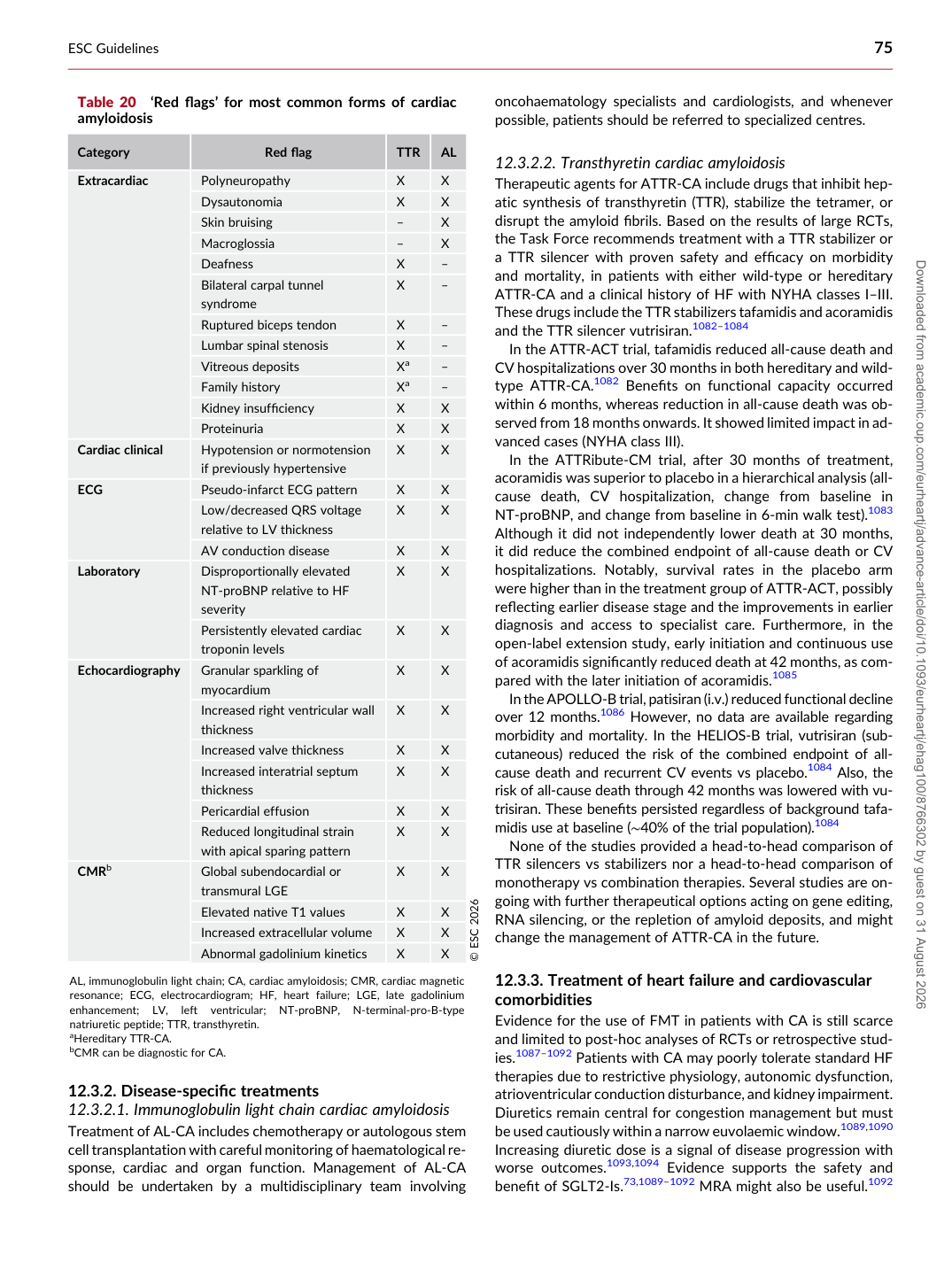
Table 20 ‘Red flags’ for most common forms of cardiac amyloidosis

Category Red flag TTR AL Extracardiac Polyneuropathy X X

Dysautonomia X X Skin bruising – X Macroglossia – X Deafness X – Bilateral carpal tunnel syndrome X – Ruptured biceps tendon X – Lumbar spinal stenosis X – Vitreous deposits Xa – Family history Xa – Kidney insufficiency X X Proteinuria X X

Cardiac clinical Hypotension or normotension

if previously hypertensive X X

ECG Pseudo-infarct ECG pattern X X

Low/decreased QRS voltage relative to LV thickness X X AV conduction disease X X

Laboratory Disproportionally elevated

NT-proBNP relative to HF severity X X Persistently elevated cardiac troponin levels X X

Echocardiography Granular sparkling of myocardium X X

Increased right ventricular wall thickness X X Increased valve thickness X X Increased interatrial septum thickness X X Pericardial effusion X X Reduced longitudinal strain with apical sparing pattern X X

CMRb Global subendocardial or

transmural LGE X X Elevated native T1 values X X Increased extracellular volume X X Abnormal gadolinium kinetics X X © ESC 2026

AL, immunoglobulin light chain; CA, cardiac amyloidosis; CMR, cardiac magnetic resonance; ECG, electrocardiogram; HF, heart failure; LGE, late gadolinium enhancement; LV, left ventricular; NT-proBNP, N-terminal-pro-B-type natriuretic peptide; TTR, transthyretin. aHereditary TTR-CA. bCMR can be diagnostic for CA. Downloaded from academic.oup.com/eurheartj/advance-article/doi/10.1093/eurheartj/ehag100/8766302 by guest on 31 August 2026