p.7 抽出テキスト
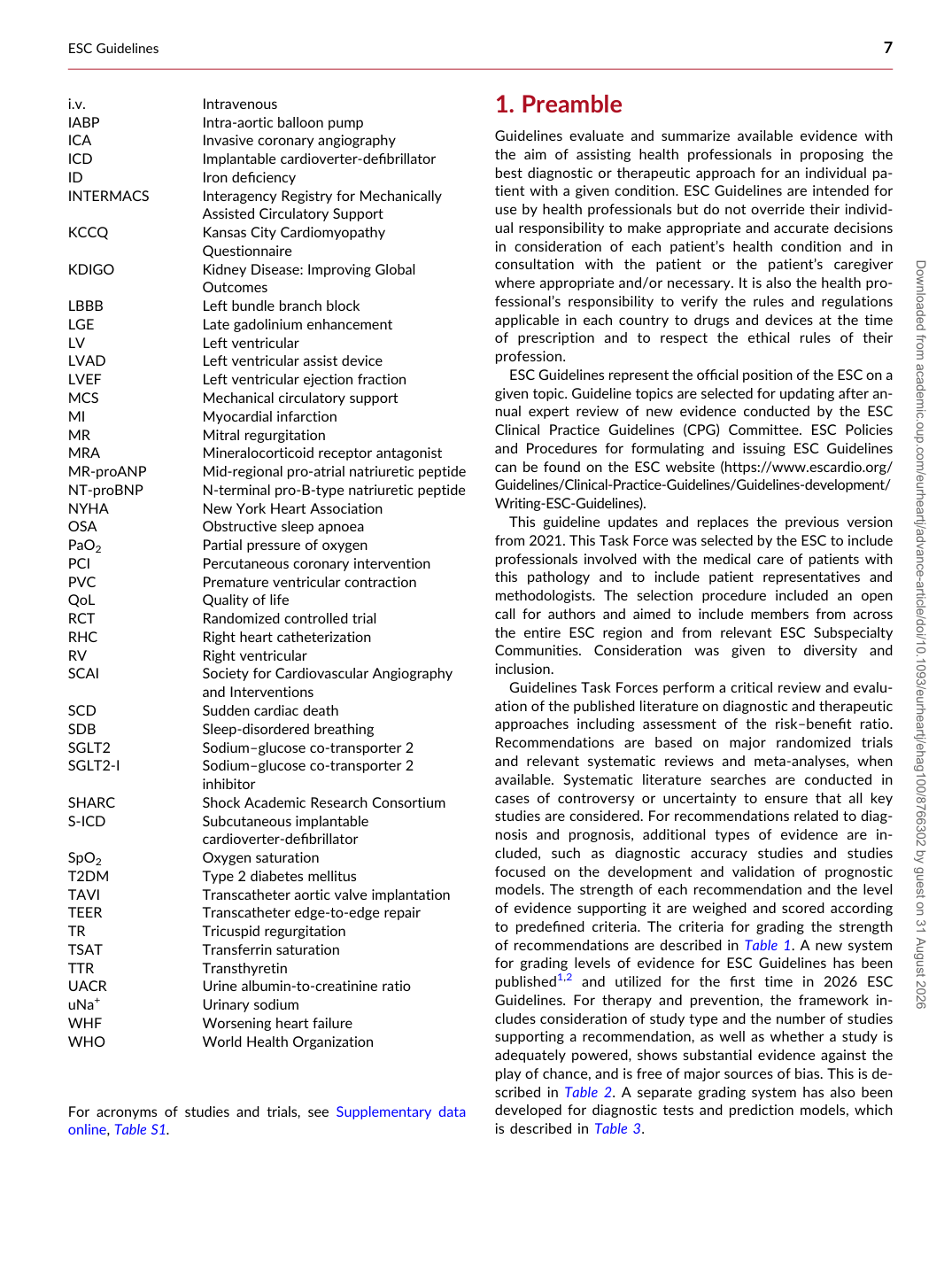
i.v. Intravenous IABP Intra-aortic balloon pump ICA Invasive coronary angiography ICD Implantable cardioverter-defibrillator ID Iron deficiency INTERMACS Interagency Registry for Mechanically Assisted Circulatory Support KCCQ Kansas City Cardiomyopathy Questionnaire KDIGO Kidney Disease: Improving Global Outcomes LBBB Left bundle branch block LGE Late gadolinium enhancement LV Left ventricular LVAD Left ventricular assist device LVEF Left ventricular ejection fraction MCS Mechanical circulatory support MI Myocardial infarction MR Mitral regurgitation MRA Mineralocorticoid receptor antagonist MR-proANP Mid-regional pro-atrial natriuretic peptide NT-proBNP N-terminal pro-B-type natriuretic peptide NYHA New York Heart Association OSA Obstructive sleep apnoea PaO2 Partial pressure of oxygen PCI Percutaneous coronary intervention PVC Premature ventricular contraction QoL Quality of life RCT Randomized controlled trial RHC Right heart catheterization RV Right ventricular SCAI Society for Cardiovascular Angiography and Interventions SCD Sudden cardiac death SDB Sleep-disordered breathing SGLT2 Sodium–glucose co-transporter 2 SGLT2-I Sodium–glucose co-transporter 2 inhibitor SHARC Shock Academic Research Consortium S-ICD Subcutaneous implantable cardioverter-defibrillator SpO2 Oxygen saturation T2DM Type 2 diabetes mellitus TAVI Transcatheter aortic valve implantation TEER Transcatheter edge-to-edge repair TR Tricuspid regurgitation TSAT Transferrin saturation TTR Transthyretin UACR Urine albumin-to-creatinine ratio uNa+ Urinary sodium WHF Worsening heart failure WHO World Health Organization

For acronyms of studies and trials, see Supplementary data online, Table S1. 1 Preamble

Guidelines evaluate and summarize available evidence with the aim of assisting health professionals in proposing the best diagnostic or therapeutic approach for an individual patient with a given condition. ESC Guidelines are intended for use by health professionals but do not override their individual responsibility to make appropriate and accurate decisions in consideration of each patient’s health condition and in consultation with the patient or the patient’s caregiver where appropriate and/or necessary. It is also the health professional’s responsibility to verify the rules and regulations applicable in each country to drugs and devices at the time of prescription and to respect the ethical rules of their profession. ESC Guidelines represent the official position of the ESC on a given topic. Guideline topics are selected for updating after annual expert review of new evidence conducted by the ESC Clinical Practice Guidelines (CPG) Committee. ESC Policies and Procedures for formulating and issuing ESC Guidelines can be found on the ESC website (https://www.escardio.org/ Guidelines/Clinical-Practice-Guidelines/Guidelines-development/ Writing-ESC-Guidelines). This guideline updates and replaces the previous version from 2021. This Task Force was selected by the ESC to include professionals involved with the medical care of patients with this pathology and to include patient representatives and methodologists. The selection procedure included an open call for authors and aimed to include members from across the entire ESC region and from relevant ESC Subspecialty Communities. Consideration was given to diversity and inclusion. Guidelines Task Forces perform a critical review and evaluation of the published literature on diagnostic and therapeutic approaches including assessment of the risk–benefit ratio. Recommendations are based on major randomized trials and relevant systematic reviews and meta-analyses, when available. Systematic literature searches are conducted in cases of controversy or uncertainty to ensure that all key studies are considered. For recommendations related to diagnosis and prognosis, additional types of evidence are included, such as diagnostic accuracy studies and studies focused on the development and validation of prognostic models. The strength of each recommendation and the level of evidence supporting it are weighed and scored according to predefined criteria. The criteria for grading the strength of recommendations are described in Table 1. A new system for grading levels of evidence for ESC Guidelines has been published1,2 and utilized for the first time in 2026 ESC Guidelines. For therapy and prevention, the framework includes consideration of study type and the number of studies supporting a recommendation, as well as whether a study is adequately powered, shows substantial evidence against the play of chance, and is free of major sources of bias. This is described in Table 2. A separate grading system has also been developed for diagnostic tests and prediction models, which is described in Table 3. Downloaded from academic.oup.com/eurheartj/advance-article/doi/10.1093/eurheartj/ehag100/8766302 by guest on 31 August 2026