p.65 抽出テキスト
in 8%–11% patients with HF785–789 with similar790–794 or increased795,796 prevalence in patients with HFpEF compared with HFrEF. Poorer outcomes after stroke are observed in patients with HF with a 2.2–4.5 times higher rate of death compared with people without HF,782,783,797 as well as an increased rate of recurrent stroke.798 The risk of stroke in patients with HF seems independent of rhythm, with an annualized stroke risk of 2.0 per 100 patientyears in patients in sinus rhythm and 2.87 per 100 patient-years in patients with AF.799–802 However, RCTs failed to demonstrate a possible benefit of oral anticoagulation in patients with HFrEF in sinus rhythm.803–806 Thus, in the absence of AF, there is no evidence to recommend routine anticoagulation for stroke prevention in patients with HFrEF. Optimization of blood pressure, heart rate, and cardiac output immediately after a stroke is key to reducing the risk of DHF and improving outcomes. In patients already established on FMT, treatment with FMT should be maintained if possible and attention should be paid to dose modification in order to avoid both hypo- and hypertension as well as rebound tachycardia in patients in whom beta-blockers have been withdrawn.807 Following the acute phase, treatment of HF in patients with stroke does not differ from treatment in patients without stroke.

10 Non-cardiovascular comorbidities

10.1 Obesity

Obesity contributes to the development of well-known CV and HF risk factors like hypertension, diabetes, and dyslipidaemia. Obesity has direct adverse effects on cardiac structure and function, and is associated with the development of CVD, including HF.808 Patients with HF and obesity may have lower natriuretic peptide concentrations due to increased expression of clearance receptors, augmented peptide degradation by the adipose tissue,155 and underestimation of circulatory congestion.809 Peak oxygen consumption adjusted for body weight underestimates exercise capacity in obese patients, and an adjustment for lean body mass should be used for risk stratification pro-inflammatory.810 A stronger association between obesity and HFpEF rather than HFrEF has been described.778,811 Among patients with HFpEF, the obesity-related phenotype has a high prevalence (30%–40% in Europe and 60%–70% in North America).314,812 These patients display several pathophysiological mechanisms that differ from non-obese patients with HFpEF.813 An increase in adipocyte mass induces a state of systemic inflammation and a proinflammatory transformation of epicardial adipose tissue that may lead to fibrosis. The capacity of the left ventricle to dilate in response to an increase in blood volume is impaired, and thus, even modest degrees of volume overload may lead to cardiac overfilling and disproportionate increase in cardiac filling pressures.814 On average, patients with HFpEF and obesity are younger, experience worse HF signs and symptoms, poorer QoL, and worse functional capacity, than those without obesity.815,816 Weight-loss interventions in patients with HFpEF and obesity alleviate symptoms and may improve outcomes. Lifestyle interventions, such as caloric restriction, exercise, and patient education, have a significant impact on body weight and are recommended in all patients with HF.817,818 Recent RCTs demonstrated favourable effects of the GLP-1 RA semaglutide and the dual GIP/GLP-1 RA tirzepatide in patients with HFpEF and obesity regardless of diabetes status, namely reduction of body weight, improvement of QoL, symptoms, and functional capacity (see Supplementary data online, Section S7.1).315–317

Pooled and secondary analyses of RCTs, and the recent SUMMIT trial, have also suggested a potential benefit of these drugs on HF events.317,819,820 Dedicated RCTs are needed to evaluate safety and efficacy of these drugs in patients with HFrEF and to assess long-term follow-up.821,822 In propensity score-matched cohort studies, bariatric surgery was associated with weight loss and a lower risk of all-cause and CV death, HFH, and AF as compared to medical therapy in patients with HF and a BMI ≥35 kg/m2, with consistent benefits observed among patients with HFrEF and HFpEF.823,824 Studies comparing bariatric surgery vs new anti-obesity medications are lacking, and the indications for bariatric surgery may change in the future.

10.2 Diabetes

Patients with HF who have T2DM have a poorer prognosis than patients who do not have T2DM.826–828 The diagnostic process and therapeutic approach to HF in patients with T2DM is the same as the population without T2DM. There is no evidence that the efficacy of FMT is altered by the presence of T2DM.241,829–833 60 The 2023 ESC Guidelines for the management of cardiovascular disease in patients with diabetes dedicated a specific section to the treatment of diabetes in patients with HF.60 Sodium–glucose co-transporter 2 inhibitors have been investigated in different populations with diabetes, ranging from patients with ASCVD or multiple ASCVD risk factors to patients with established HF across the entire range of LVEF or recently hospitalized for WHF, with greater absolute risk reduction of clinical events in patients at higher risk.834 Thus, the use of

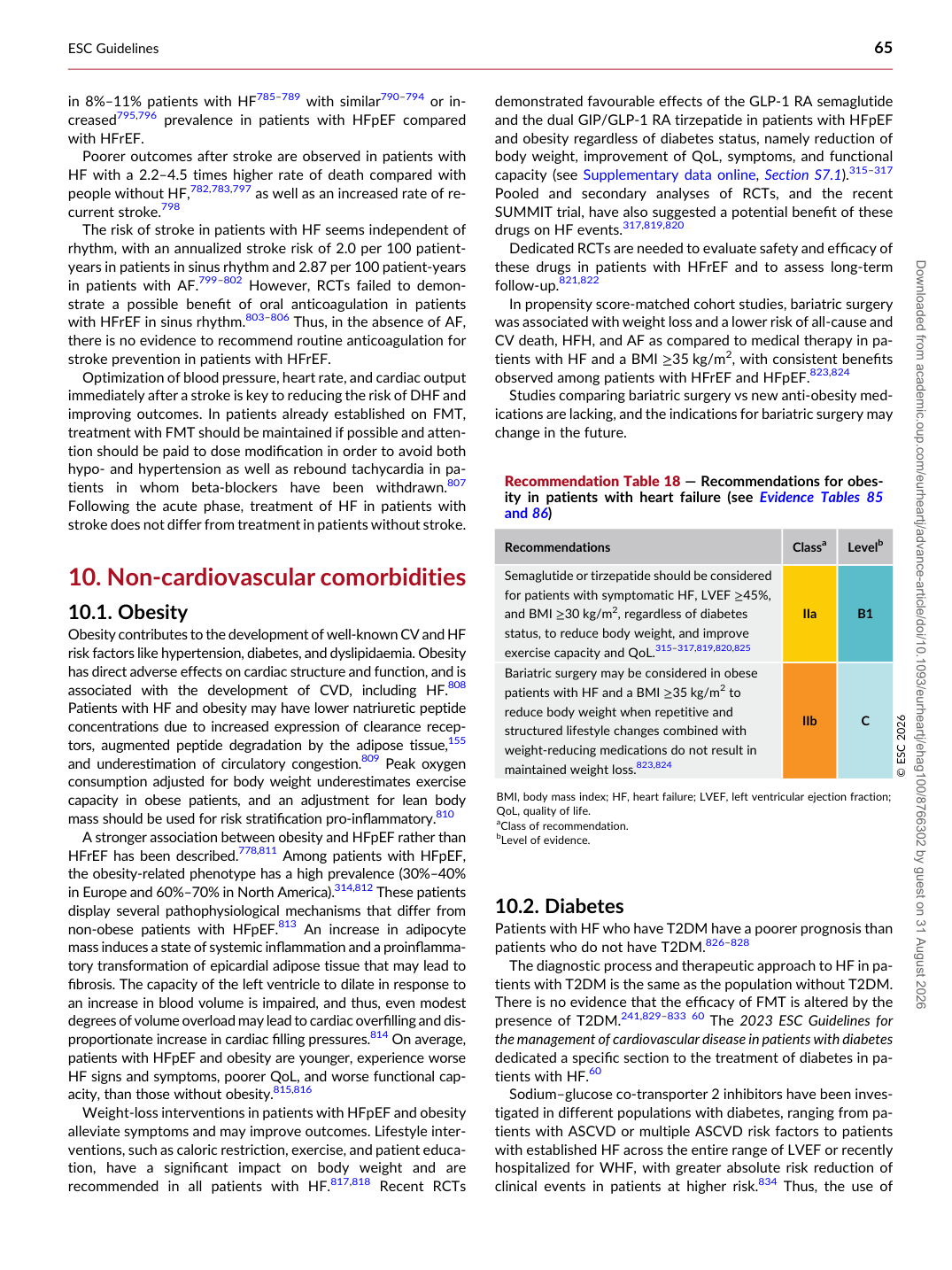
Recommendation Table 18 — Recommendations for obesity in patients with heart failure (see Evidence Tables 85 and 86)

Recommendations Classa Levelb Semaglutide or tirzepatide should be considered for patients with symptomatic HF, LVEF ≥45%, and BMI ≥30 kg/m2, regardless of diabetes status, to reduce body weight, and improve exercise capacity and QoL.315–317,819,820,825 IIa B1 Bariatric surgery may be considered in obese patients with HF and a BMI ≥35 kg/m2 to reduce body weight when repetitive and structured lifestyle changes combined with weight-reducing medications do not result in maintained weight loss.823,824 IIb C © ESC 2026 BMI, body mass index; HF, heart failure; LVEF, left ventricular ejection fraction; QoL, quality of life. aClass of recommendation. bLevel of evidence. Downloaded from academic.oup.com/eurheartj/advance-article/doi/10.1093/eurheartj/ehag100/8766302 by guest on 31 August 2026