p.61 抽出テキスト
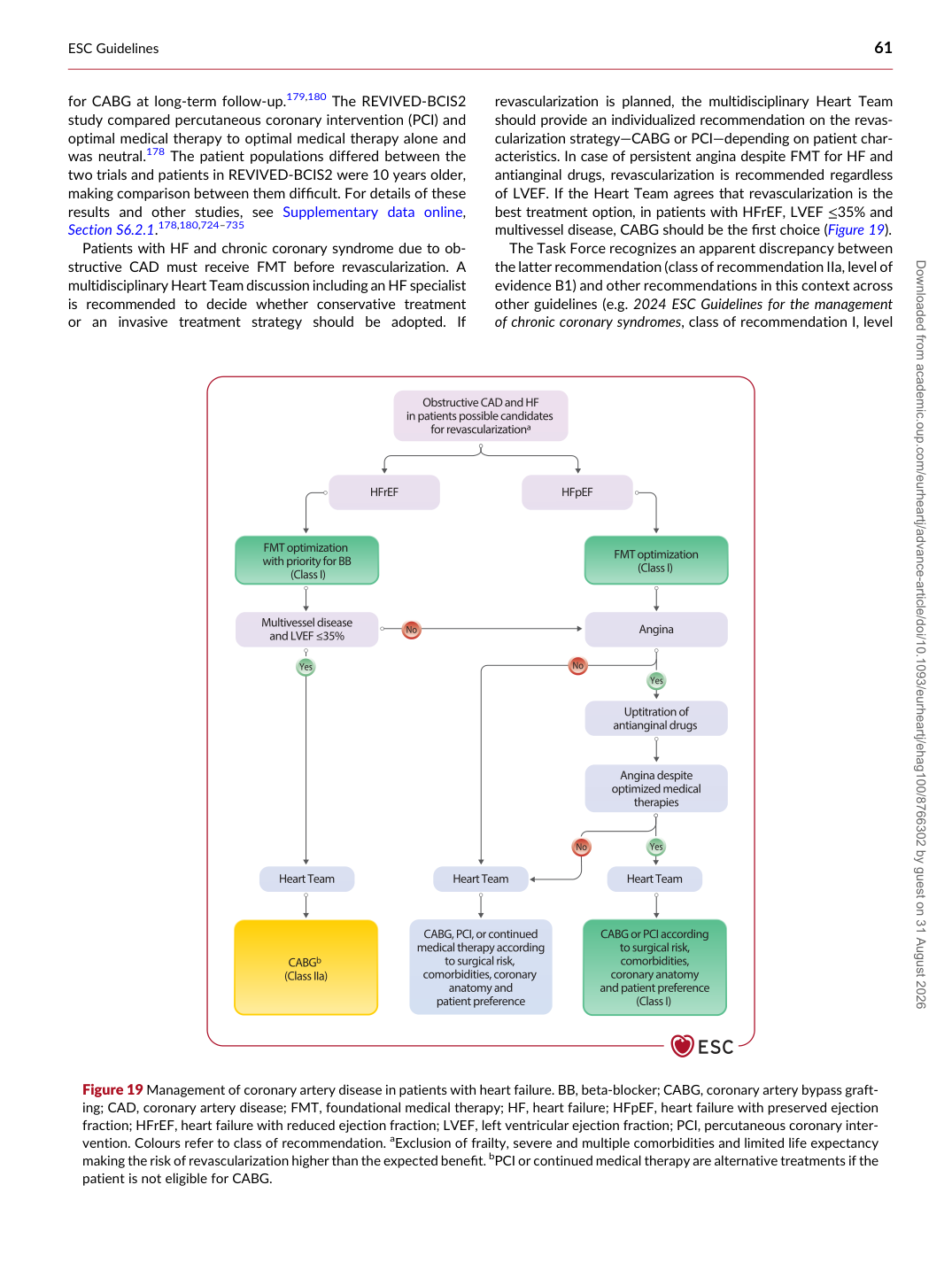
for CABG at long-term follow-up.179,180 The REVIVED-BCIS2 study compared percutaneous coronary intervention (PCI) and optimal medical therapy to optimal medical therapy alone and was neutral.178 The patient populations differed between the two trials and patients in REVIVED-BCIS2 were 10 years older, making comparison between them difficult. For details of these results and other studies, see Supplementary data online, Section S6.2.1.178,180,724–735 Patients with HF and chronic coronary syndrome due to obstructive CAD must receive FMT before revascularization. A multidisciplinary Heart Team discussion including an HF specialist is recommended to decide whether conservative treatment or an invasive treatment strategy should be adopted. If revascularization is planned, the multidisciplinary Heart Team should provide an individualized recommendation on the revascularization strategy—CABG or PCI—depending on patient characteristics. In case of persistent angina despite FMT for HF and antianginal drugs, revascularization is recommended regardless of LVEF. If the Heart Team agrees that revascularization is the best treatment option, in patients with HFrEF, LVEF ≤35% and multivessel disease, CABG should be the first choice (Figure 19).

The Task Force recognizes an apparent discrepancy between the latter recommendation (class of recommendation IIa, level of evidence B1) and other recommendations in this context across other guidelines (e.g. 2024 ESC Guidelines for the management of chronic coronary syndromes, class of recommendation I, level

Figure 19 Management of coronary artery disease in patients with heart failure. BB, beta-blocker; CABG, coronary artery bypass grafting; CAD, coronary artery disease; FMT, foundational medical therapy; HF, heart failure; HFpEF, heart failure with preserved ejection fraction; HFrEF, heart failure with reduced ejection fraction; LVEF, left ventricular ejection fraction; PCI, percutaneous coronary intervention. Colours refer to class of recommendation. aExclusion of frailty, severe and multiple comorbidities and limited life expectancy making the risk of revascularization higher than the expected benefit. bPCI or continued medical therapy are alternative treatments if the patient is not eligible for CABG. Downloaded from academic.oup.com/eurheartj/advance-article/doi/10.1093/eurheartj/ehag100/8766302 by guest on 31 August 2026