p.59 抽出テキスト
or severe mitral stenosis, direct-acting oral anticoagulants are recommended as the anticoagulant of choice.643–646 Left atrial appendage closure can be an option for selected patients as described in the 2024 ESC Guidelines for the management of atrial fibrillation.118,647–651

9.1.1.3 Management of heart failure and atrial fibrillation

All patients with coexisting HF and AF should be optimally treated with FMT, AMT, and GDIT regardless of AF (Section 6.2.4).435 In patients with AF and HFrEF, where there may be a high likelihood of LVEF recovery following rhythm control, evidence remains limited. However, given the well-established prognostic benefit of FMT on long-term prognosis in the general HFrEF population, initiation of FMT upfront seems reasonable. There is ongoing debate regarding the optimal management of AF in patients with HF. Currently, there is insufficient evidence to support a rhythm-control strategy over a rate-control strategy.337,652–658 Decisions with regard to choice of strategy must be made taking into account the cause–effect relationship between AF and HF, along with clinical presentation, symptom burden, stage of disease, comorbidities, and patient preference.

9.1.1.4 Rate control

Data to support strict vs lenient rate control in patients with HF and AF are inconclusive. Analyses from a large observational registry showed a significant association between heart rate in AF and long-term death only in patients with HFrEF and heart rate >100 b.p.m.659,660 The RACE II trial demonstrated that lenient rate control (target heart rate <110 b.p.m.) was non-inferior to strict rate control (<80 b.p.m. at rest; <110 b.p.m. during exercise) in patients with permanent AF with a primary endpoint of death from CV causes, HFH, stroke, systemic embolism, bleeding, and life-threatening arrhythmic events.307 A post-hoc combined analysis from the AFFIRM and the RACE trials showed similar results.661 However, these trials were not focused on HF and only a minority of patients included had HF. A large observational study showed that a lenient rate-control strategy and poor rate control are associated with a higher risk of death as compared with strict rate control in patients with AF and HF regardless of LVEF.662 Lenient rate control, with resting heart rate <110 b.p.m., should be considered as initial target in both patients with and without HF, with re-evaluation based on symptoms.118

Beta-blockers have proven safety and efficacy in patients with AF and HFrEF and are recommended as the first-line approach.663,664 If the ventricular rate control is suboptimal with beta-blockers, or if beta-blockers are not tolerated, digoxin or digitoxin should be considered.665–667 In patients with HFrEF who are haemodynamically unstable, i.v. amiodarone or digoxin may be used to achieve acute control of heart rate and improve haemodynamics, although acute electrical cardioversion to restore sinus rhythm should be first choice.668–671 There is no evidence on pharmacological strategies for rate control in patients with AF and HFpEF. Atrioventricular node ablation combined with CRT was found to be superior to pharmacological therapy in reducing death and HFH and improving QoL in patients with severely symptomatic permanent AF and HF, regardless of LVEF.672,673

9.1.1.5 Rhythm control

The results of RCTs comparing catheter ablation vs pharmacological rhythm control in patients with HFrEF cannot be considered conclusive for hard outcomes on HFH and death, although catheter ablation has proven superior to antiarrhythmic treatment for AF recurrence.674–682 Data on the role of catheter ablation in HFpEF are limited.683,684 For a detailed description, see Supplementary data online, Section S6.1.1.674–681,683–686 Based on current evidence, catheter ablation should be considered only in carefully selected patients with HFrEF and symptomatic AF. This Task Force suggests that these criteria should be used to guide the selection of patients for catheter ablation: high burden AF,687 less than 1-year duration of continuous persistent AF, and a clear cause–effect relationship between AF and HF. In patients presenting with DHF, AF with rapid ventricular rates, and haemodynamic instability, urgent cardioversion is recommended. Pharmacological and electrical cardioversion seem to have similar outcomes, although specific studies in HF populations are lacking.688,689 Amiodarone is recommended in patients with HFrEF requiring pharmacological cardioversion. Other antiarrhythmic drugs, i.e. propafenone, flecainide, and dronedarone, are associated with poorer outcomes in HFrEF and should be avoided.690–694 There are no data on pharmacological cardioversion in HFpEF.

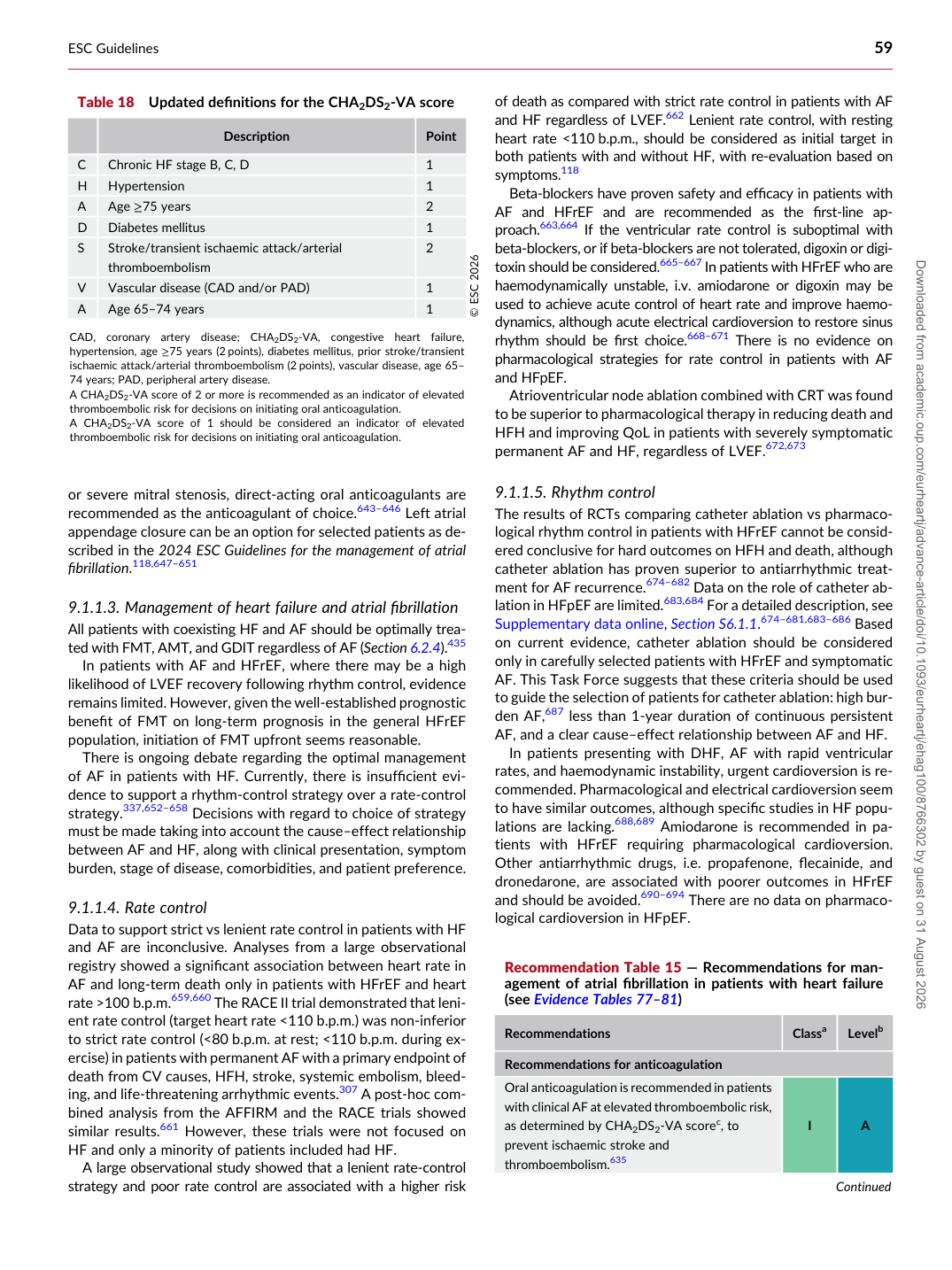
Table 18 Updated definitions for the CHA2DS2-VA score

Description Point

C Chronic HF stage B, C, D 1 H Hypertension 1 A Age ≥75 years 2 D Diabetes mellitus 1 S Stroke/transient ischaemic attack/arterial

thromboembolism

2 V Vascular disease (CAD and/or PAD) 1 A Age 65–74 years 1 © ESC 2026 CAD, coronary artery disease; CHA2DS2-VA, congestive heart failure, hypertension, age ≥75 years (2 points), diabetes mellitus, prior stroke/transient ischaemic attack/arterial thromboembolism (2 points), vascular disease, age 65– 74 years; PAD, peripheral artery disease. A CHA2DS2-VA score of 2 or more is recommended as an indicator of elevated thromboembolic risk for decisions on initiating oral anticoagulation. A CHA2DS2-VA score of 1 should be considered an indicator of elevated thromboembolic risk for decisions on initiating oral anticoagulation.

Recommendation Table 15 — Recommendations for management of atrial fibrillation in patients with heart failure (see Evidence Tables 77–81)

Recommendations Classa Levelb

Recommendations for anticoagulation Oral anticoagulation is recommended in patients with clinical AF at elevated thromboembolic risk, as determined by CHA2DS2-VA scorec, to prevent ischaemic stroke and thromboembolism.635 I A

Continued Downloaded from academic.oup.com/eurheartj/advance-article/doi/10.1093/eurheartj/ehag100/8766302 by guest on 31 August 2026