p.46 抽出テキスト
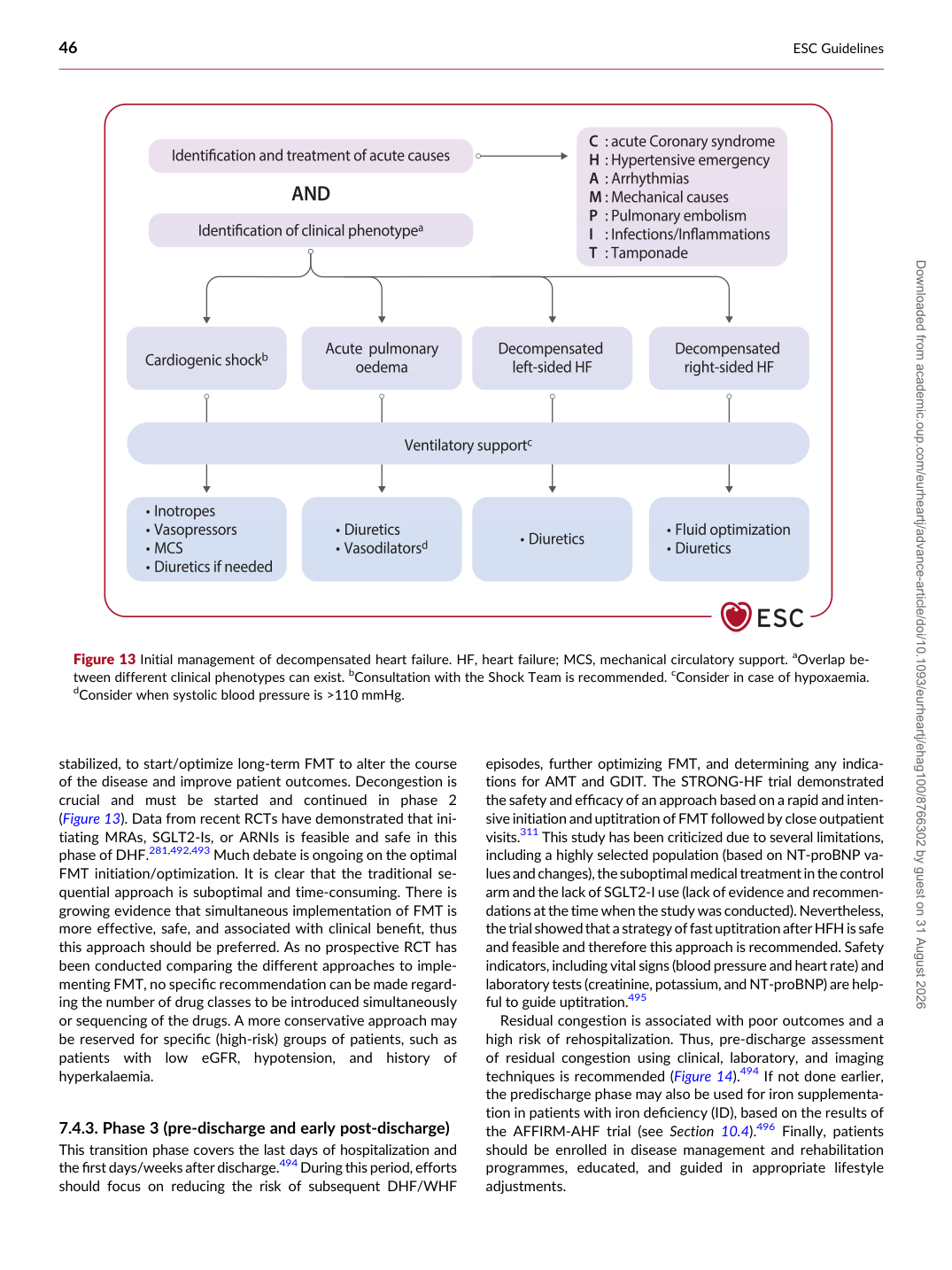
stabilized, to start/optimize long-term FMT to alter the course of the disease and improve patient outcomes. Decongestion is crucial and must be started and continued in phase 2 (Figure 13). Data from recent RCTs have demonstrated that initiating MRAs, SGLT2-Is, or ARNIs is feasible and safe in this phase of DHF.281,492,493 Much debate is ongoing on the optimal FMT initiation/optimization. It is clear that the traditional sequential approach is suboptimal and time-consuming. There is growing evidence that simultaneous implementation of FMT is more effective, safe, and associated with clinical benefit, thus this approach should be preferred. As no prospective RCT has been conducted comparing the different approaches to implementing FMT, no specific recommendation can be made regarding the number of drug classes to be introduced simultaneously or sequencing of the drugs. A more conservative approach may be reserved for specific (high-risk) groups of patients, such as patients with low eGFR, hypotension, and history of hyperkalaemia.

7.4.3 Phase 3 (pre-discharge and early post-discharge)

This transition phase covers the last days of hospitalization and the first days/weeks after discharge.494 During this period, efforts should focus on reducing the risk of subsequent DHF/WHF episodes, further optimizing FMT, and determining any indications for AMT and GDIT. The STRONG-HF trial demonstrated the safety and efficacy of an approach based on a rapid and intensive initiation and uptitration of FMT followed by close outpatient visits.311 This study has been criticized due to several limitations, including a highly selected population (based on NT-proBNP values and changes), the suboptimal medical treatment in the control arm and the lack of SGLT2-I use (lack of evidence and recommendations at the time when the study was conducted). Nevertheless, the trial showed that a strategy of fast uptitration after HFH is safe and feasible and therefore this approach is recommended. Safety indicators, including vital signs (blood pressure and heart rate) and laboratory tests (creatinine, potassium, and NT-proBNP) are helpful to guide uptitration.495

Residual congestion is associated with poor outcomes and a high risk of rehospitalization. Thus, pre-discharge assessment of residual congestion using clinical, laboratory, and imaging techniques is recommended (Figure 14).494 If not done earlier, the predischarge phase may also be used for iron supplementation in patients with iron deficiency (ID), based on the results of the AFFIRM-AHF trial (see Section 10.4).496 Finally, patients should be enrolled in disease management and rehabilitation programmes, educated, and guided in appropriate lifestyle adjustments.

Figure 13 Initial management of decompensated heart failure. HF, heart failure; MCS, mechanical circulatory support. aOverlap between different clinical phenotypes can exist. bConsultation with the Shock Team is recommended. cConsider in case of hypoxaemia. dConsider when systolic blood pressure is >110 mmHg. Downloaded from academic.oup.com/eurheartj/advance-article/doi/10.1093/eurheartj/ehag100/8766302 by guest on 31 August 2026