p.43 抽出テキスト
decompensated right-sided heart failure. Thus, both pulmonary and peripheral congestion may be present. Hypoperfusion can occur.447,465,476 Treatment is mainly based on decongestion by means of diuretic therapy. Site of care can be outpatient clinic or hospital.

7.3.2 Decompensated right-sided heart failure

Decompensated isolated right-sided HF is characterized by elevated RV and right atrial pressures, leading to systemic congestion and, in more advanced stages, hypoperfusion. It is often associated with tricuspid regurgitation (TR) and can also impair LV filling and reduce systemic cardiac output through ventricular interdependence. Pulmonary embolism and acute MI involving the right ventricle are possible causes of decompensated right HF that need to be excluded during initial evaluation and treated. Fluid overload, elevated central venous pressures, and multiorgan dysfunction are the most frequent elements of the clinical picture of the disease. In the most severe cases, it can manifest as a refractory shock. The RV function and its effect on other organs (kidney, liver) usually determine the clinical

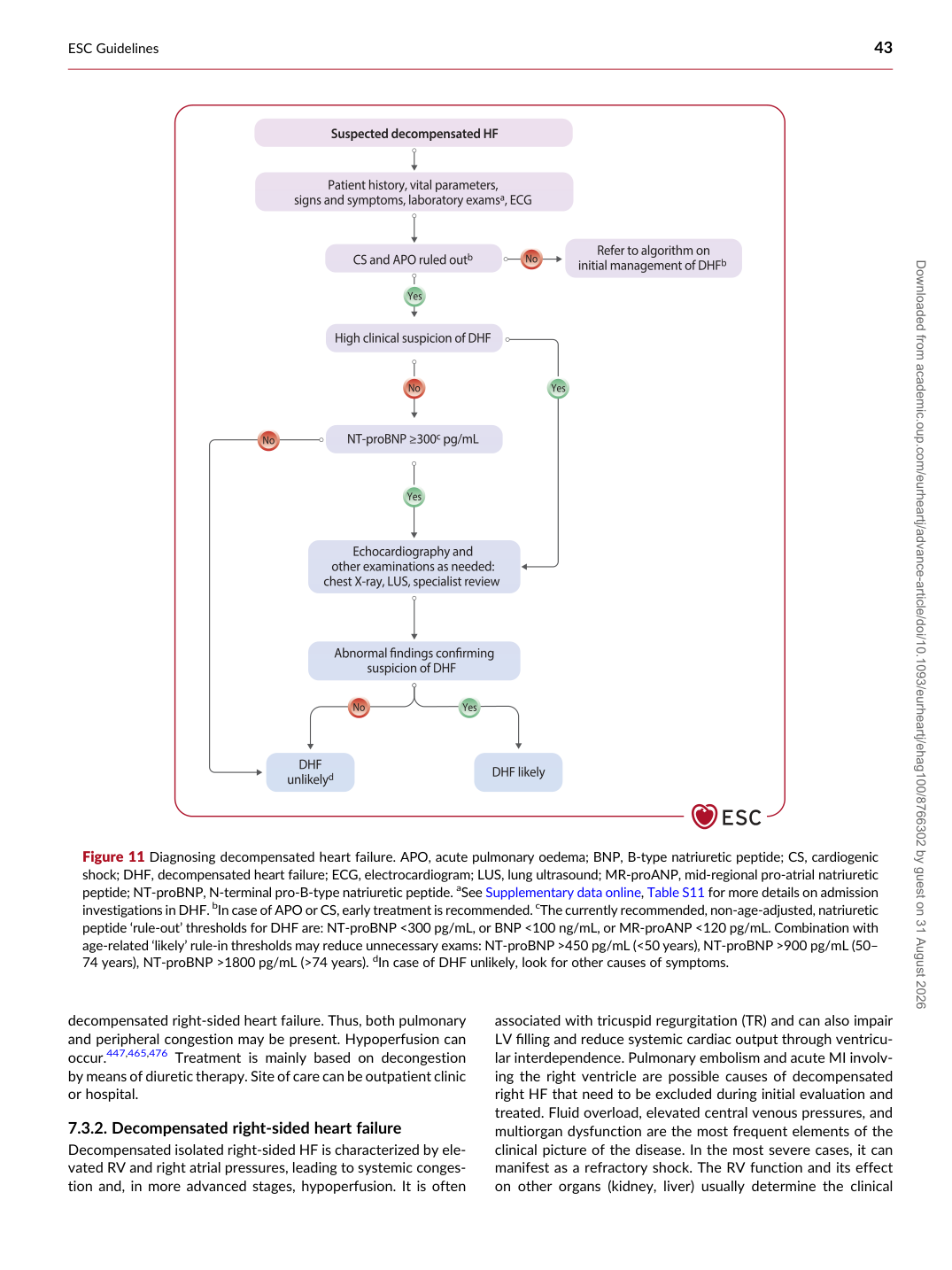
Figure 11 Diagnosing decompensated heart failure. APO, acute pulmonary oedema; BNP, B-type natriuretic peptide; CS, cardiogenic shock; DHF, decompensated heart failure; ECG, electrocardiogram; LUS, lung ultrasound; MR-proANP, mid-regional pro-atrial natriuretic peptide; NT-proBNP, N-terminal pro-B-type natriuretic peptide. aSee Supplementary data online, Table S11 for more details on admission investigations in DHF. bIn case of APO or CS, early treatment is recommended. cThe currently recommended, non-age-adjusted, natriuretic peptide ‘rule-out’ thresholds for DHF are: NT-proBNP <300 pg/mL, or BNP <100 ng/mL, or MR-proANP <120 pg/mL. Combination with age-related ‘likely’ rule-in thresholds may reduce unnecessary exams: NT-proBNP >450 pg/mL (<50 years), NT-proBNP >900 pg/mL (50– 74 years), NT-proBNP >1800 pg/mL (>74 years). dIn case of DHF unlikely, look for other causes of symptoms. Downloaded from academic.oup.com/eurheartj/advance-article/doi/10.1093/eurheartj/ehag100/8766302 by guest on 31 August 2026