p.24 抽出テキスト
5.1.2 Other laboratory tests

Basic investigations, such as serum urea and electrolytes, creatinine, full blood count, glycated haemoglobin, lipids, iron status [transferrin saturation (TSAT) and ferritin], liver and thyroid function tests, are recommended to assess for and evaluate comorbidities, to provide prognostic information, and to guide potential therapy. Urine albumin-to-creatinine ratio (UACR) has been added to the initial baseline investigations, because the Kidney Disease: Improving Global Outcomes (KDIGO) guidelines advise that both estimated glomerular filtration rate (eGFR) and UACR (graded A1, <30 mg/g; A2, 30–300 mg/g; A3, >300 mg/g) are required in the assessment of kidney function.164 UACR is independent of glomerular filtration rate (GFR), and severe albuminuria (grade A3) may be present despite GFR ≥90 mL/min/ 1.73 m2. UACR has strong independent prognostic value for patients with HF.165,166 Albuminuria is a potentially treatable and reversible disorder, amenable to medications also used in HF, including ACE-Is/ARNIs/ARBs, MRAs, and SGLT2-Is.167

5.2 Heart failure phenotypes based on left

ventricular ejection fraction Echocardiography provides evaluations of both systolic and diastolic function and valvular function and enables the distinction between HF (stage C) phenotypes based on LVEF.

5.2.1 Heart failure with reduced ejection fraction

The diagnosis of HFrEF requires the following criteria: (i) Presence of current or prior symptoms and/or signs of HF (Table 7) (ii) LVEF <50%.

Elevated natriuretic peptides strongly support the diagnosis of HFrEF in the presence of symptoms, and may aid in the

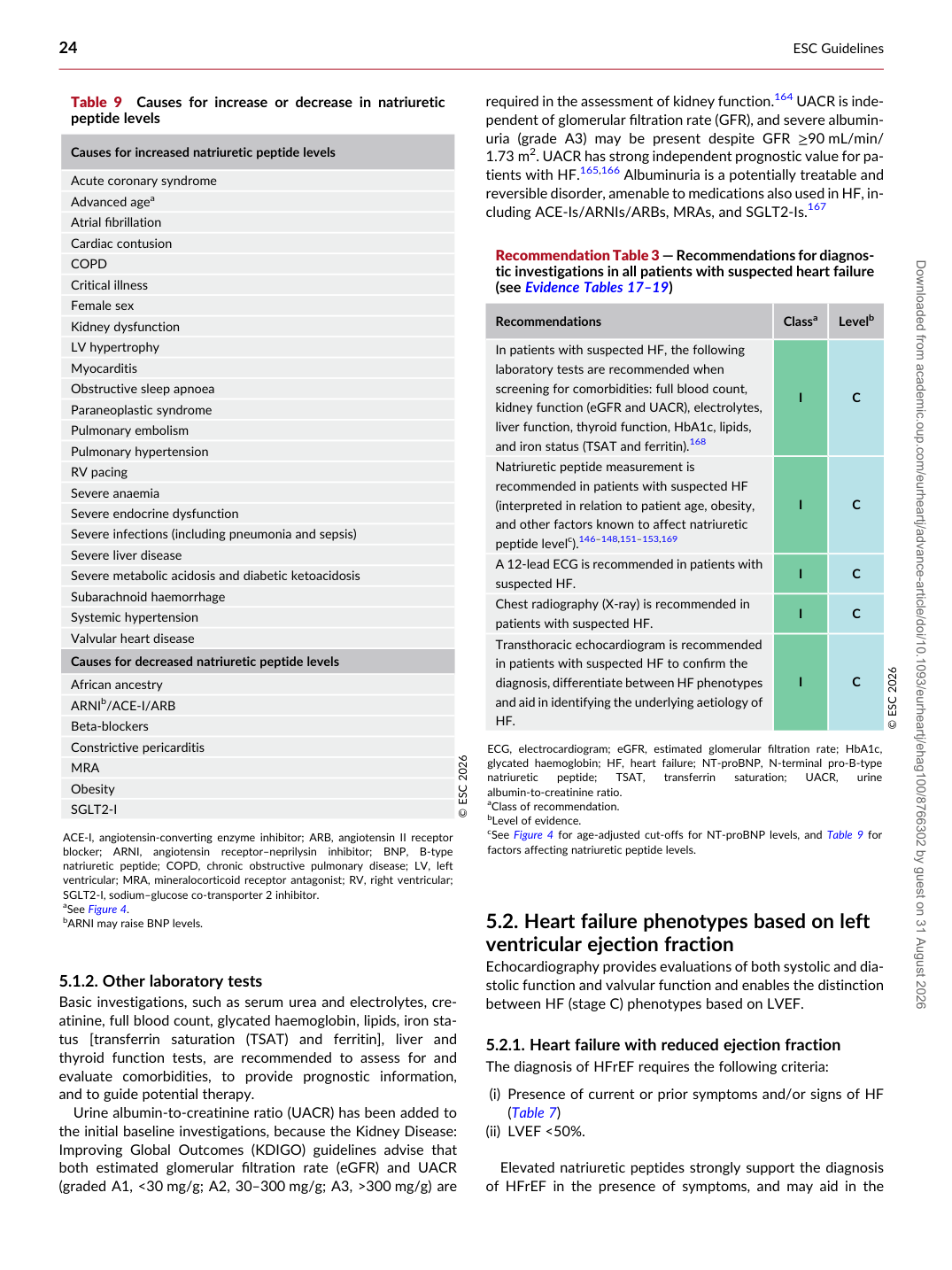
Table 9 Causes for increase or decrease in natriuretic peptide levels

Causes for increased natriuretic peptide levels Acute coronary syndrome Advanced agea Atrial fibrillation Cardiac contusion COPD Critical illness Female sex Kidney dysfunction LV hypertrophy Myocarditis Obstructive sleep apnoea Paraneoplastic syndrome Pulmonary embolism Pulmonary hypertension RV pacing Severe anaemia Severe endocrine dysfunction Severe infections (including pneumonia and sepsis) Severe liver disease Severe metabolic acidosis and diabetic ketoacidosis Subarachnoid haemorrhage Systemic hypertension Valvular heart disease Causes for decreased natriuretic peptide levels African ancestry ARNIb/ACE-I/ARB Beta-blockers Constrictive pericarditis MRA Obesity SGLT2-I © ESC 2026 ACE-I, angiotensin-converting enzyme inhibitor; ARB, angiotensin II receptor blocker; ARNI, angiotensin receptor–neprilysin inhibitor; BNP, B-type natriuretic peptide; COPD, chronic obstructive pulmonary disease; LV, left ventricular; MRA, mineralocorticoid receptor antagonist; RV, right ventricular; SGLT2-I, sodium–glucose co-transporter 2 inhibitor. aSee Figure 4. bARNI may raise BNP levels. Recommendation Table 3 — Recommendations for diagnostic investigations in all patients with suspected heart failure (see Evidence Tables 17–19)

Recommendations Classa Levelb In patients with suspected HF, the following laboratory tests are recommended when screening for comorbidities: full blood count, kidney function (eGFR and UACR), electrolytes, liver function, thyroid function, HbA1c, lipids, and iron status (TSAT and ferritin).168 I C Natriuretic peptide measurement is recommended in patients with suspected HF (interpreted in relation to patient age, obesity, and other factors known to affect natriuretic peptide levelc).146–148,151–153,169 I C A 12-lead ECG is recommended in patients with suspected HF. I C Chest radiography (X-ray) is recommended in patients with suspected HF. I C Transthoracic echocardiogram is recommended in patients with suspected HF to confirm the diagnosis, differentiate between HF phenotypes and aid in identifying the underlying aetiology of HF. I C © ESC 2026 ECG, electrocardiogram; eGFR, estimated glomerular filtration rate; HbA1c, glycated haemoglobin; HF, heart failure; NT-proBNP, N-terminal pro-B-type natriuretic peptide; TSAT, transferrin saturation; UACR, urine albumin-to-creatinine ratio. aClass of recommendation. bLevel of evidence. cSee Figure 4 for age-adjusted cut-offs for NT-proBNP levels, and Table 9 for factors affecting natriuretic peptide levels. Downloaded from academic.oup.com/eurheartj/advance-article/doi/10.1093/eurheartj/ehag100/8766302 by guest on 31 August 2026