p.22 抽出テキスト
5.1.1 Natriuretic peptides

Adverse clinical events often occur soon after a new presentation of HF in the community; therefore, timely diagnosis and initiation of treatment are essential. Natriuretic peptide testing is recommended to support the diagnosis of HF and improves efficiency by avoiding unnecessary echocardiography and/or specialist assessment.146–150 N-terminal pro-B-type natriuretic peptide (NT-proBNP) is the most widely used natriuretic peptide in the management of HF in Europe and has two key advantages: better stability at room temperature, enabling reliable testing in both hospital and community settings; and unaltered results despite treatment with ARNIs, which affect B-type natriuretic peptide (BNP) degradation.149,150 However, testing for NT-proBNP is not universally available, and some regions employ BNP or mid-regional pro-atrial natriuretic peptide (MR-proANP) testing. The 2021 ESC Guidelines for the diagnosis and treatment of acute and chronic heart failure recommended a single natriuretic peptide threshold to ‘rule out’ HF (<125 pg/mL for NT-proBNP, <35 pg/mL; for BNP, <40 pg/mL; for MR-proANP). Single natriuretic peptide rule-out thresholds have the advantage of simplicity; however, natriuretic peptide levels are strongly related to age and lack specificity in older people.151 More than 75% of a healthy population >80 years were found to exceed the 125 pg/mL NT-proBNP threshold.152–156 The HFA-ESC consensus statement on NT-proBNP testing recommends introducing age-related thresholds determined from the 95th percentile of the Generation Scotland cohort to improve specificity and reduce unnecessary demand on echocardiography and HF services.157

The suggested age-adjusted NT-proBNP levels, above which HF is ‘likely’ in the outpatient setting, were  ≥125 pg/mL for those aged <50 years, ≥250 pg/mL between 50 and 75 years, and ≥500 pg/mL over 75 years.151,157 Currently there are insufficient data for determining age-specific BNP cut-offs. For the diagnosis of HFpEF, natriuretic peptide interpretation may be challenging as a variety of conditions associated with HFpEF affect natriuretic peptide levels (Table 9).158 Especially obesity is associated with lower cut-off values for natriuretic peptides, and caution is advised when interpreting natriuretic peptide levels in obese patients.158–160 Reduced kidney function has been shown to be associated with higher NT-proBNP levels, although NT-proBNP measurements should not be disregarded in the setting of kidney dysfunction.161,162 Furthermore, many other factors can elevate natriuretic peptide levels (Table 9). Clinicians must consider these factors in conjunction with clinical assessment and investigation findings when interpreting natriuretic peptide measurements; however, the higher the natriuretic peptide level the greater the likelihood of HF as the diagnosis. Natriuretic peptides also provide important prognostic information, enabling rapid triage of high-risk patients. Primary care data from England demonstrate that patients with HF and NT-proBNP levels exceeding 2000 pg/mL exhibit a two-fold increased risk of early HFH. Accordingly, expedited specialist assessment of this high-risk cohort is warranted.163

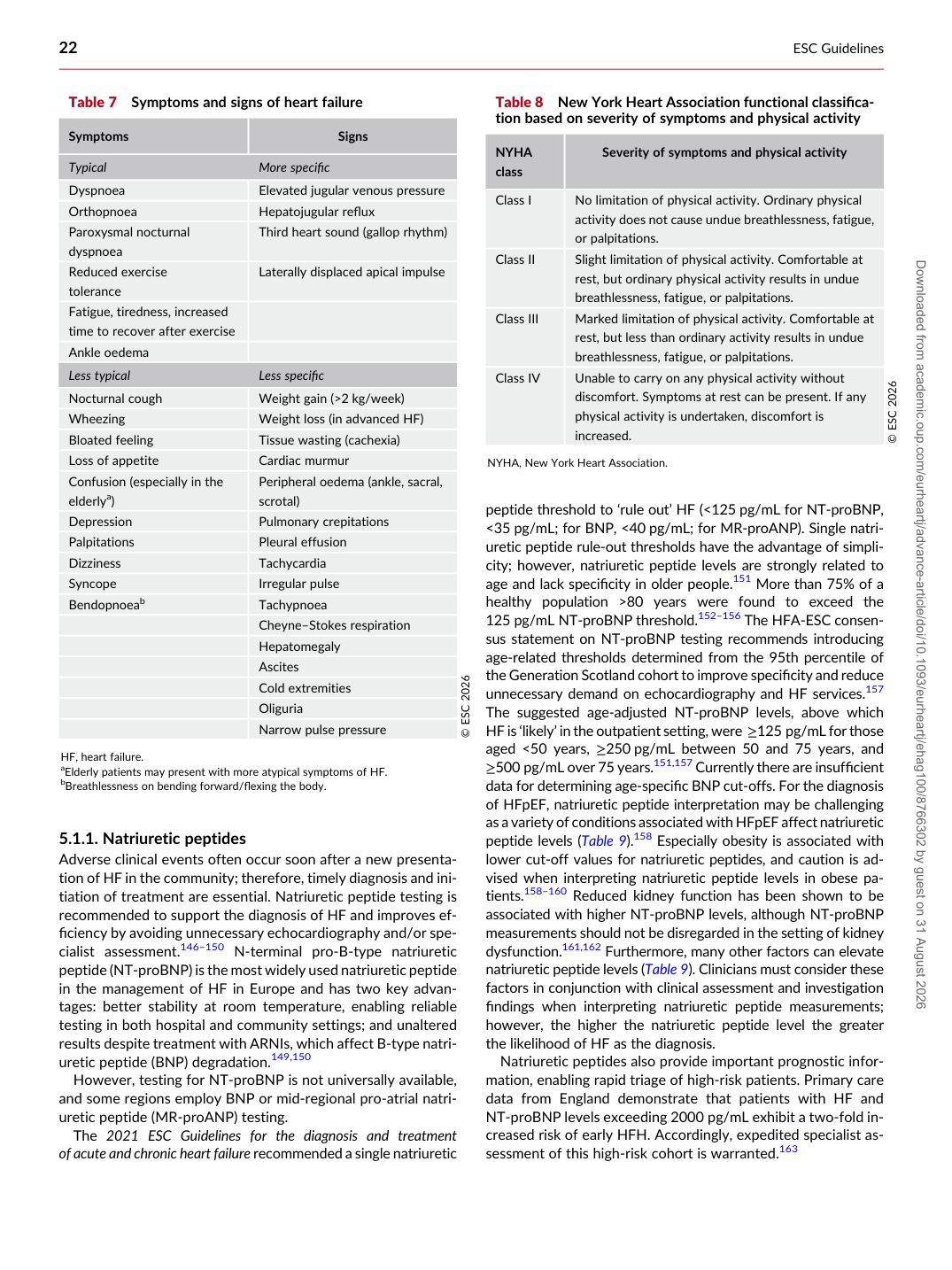
Table 7 Symptoms and signs of heart failure

Symptoms Signs

Typical More specific Dyspnoea Elevated jugular venous pressure Orthopnoea Hepatojugular reflux Paroxysmal nocturnal dyspnoea Third heart sound (gallop rhythm) Reduced exercise tolerance Laterally displaced apical impulse Fatigue, tiredness, increased time to recover after exercise Ankle oedema Less typical Less specific Nocturnal cough Weight gain (>2 kg/week) Wheezing Weight loss (in advanced HF) Bloated feeling Tissue wasting (cachexia) Loss of appetite Cardiac murmur Confusion (especially in the elderlya) Peripheral oedema (ankle, sacral,

scrotal)

Depression Pulmonary crepitations Palpitations Pleural effusion Dizziness Tachycardia Syncope Irregular pulse Bendopnoeab Tachypnoea

Cheyne–Stokes respiration Hepatomegaly Ascites Cold extremities Oliguria Narrow pulse pressure © ESC 2026

HF, heart failure. aElderly patients may present with more atypical symptoms of HF. bBreathlessness on bending forward/flexing the body. Table 8 New York Heart Association functional classification based on severity of symptoms and physical activity

NYHA class Severity of symptoms and physical activity Class I No limitation of physical activity. Ordinary physical activity does not cause undue breathlessness, fatigue,

or palpitations.

Class II Slight limitation of physical activity. Comfortable at

rest, but ordinary physical activity results in undue breathlessness, fatigue, or palpitations.

Class III Marked limitation of physical activity. Comfortable at

rest, but less than ordinary activity results in undue breathlessness, fatigue, or palpitations.

Class IV Unable to carry on any physical activity without discomfort. Symptoms at rest can be present. If any

physical activity is undertaken, discomfort is increased. © ESC 2026

NYHA, New York Heart Association. Downloaded from academic.oup.com/eurheartj/advance-article/doi/10.1093/eurheartj/ehag100/8766302 by guest on 31 August 2026