p.17 抽出テキスト
3.3.2 Classification based on heart failure stages

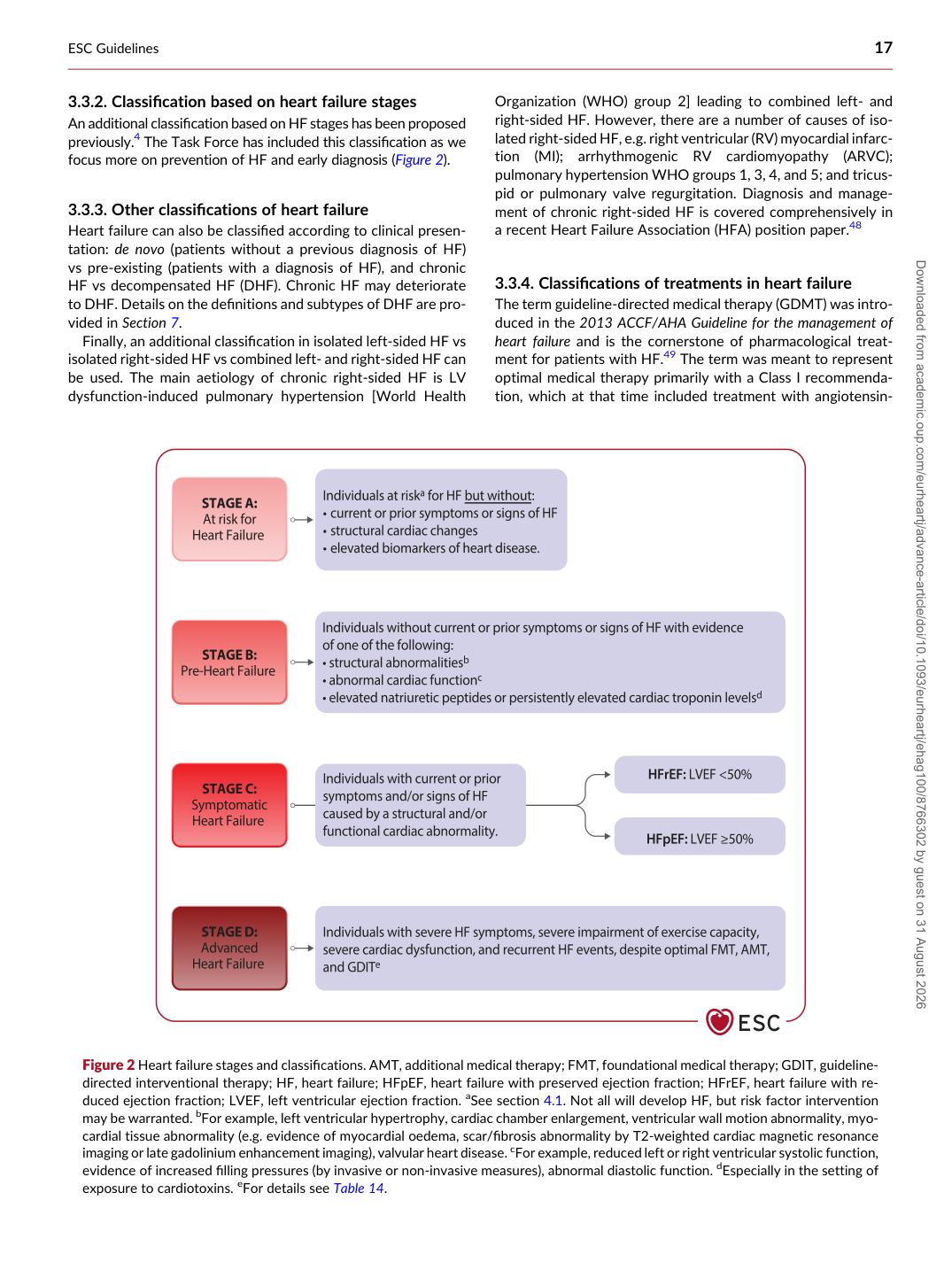
An additional classification based on HF stages has been proposed previously.4 The Task Force has included this classification as we focus more on prevention of HF and early diagnosis (Figure 2).

3.3.3 Other classifications of heart failure

Heart failure can also be classified according to clinical presentation: de novo (patients without a previous diagnosis of HF) vs pre-existing (patients with a diagnosis of HF), and chronic HF vs decompensated HF (DHF). Chronic HF may deteriorate to DHF. Details on the definitions and subtypes of DHF are provided in Section 7. Finally, an additional classification in isolated left-sided HF vs isolated right-sided HF vs combined left- and right-sided HF can be used. The main aetiology of chronic right-sided HF is LV dysfunction-induced pulmonary hypertension [World Health Organization (WHO) group 2] leading to combined left- and right-sided HF. However, there are a number of causes of isolated right-sided HF, e.g. right ventricular (RV) myocardial infarction (MI); arrhythmogenic RV cardiomyopathy (ARVC); pulmonary hypertension WHO groups 1, 3, 4, and 5; and tricuspid or pulmonary valve regurgitation. Diagnosis and management of chronic right-sided HF is covered comprehensively in a recent Heart Failure Association (HFA) position paper.48

3.3.4 Classifications of treatments in heart failure

The term guideline-directed medical therapy (GDMT) was introduced in the 2013 ACCF/AHA Guideline for the management of heart failure and is the cornerstone of pharmacological treatment for patients with HF.49 The term was meant to represent optimal medical therapy primarily with a Class I recommendation, which at that time included treatment with angiotensin-

Figure 2 Heart failure stages and classifications. AMT, additional medical therapy; FMT, foundational medical therapy; GDIT, guidelinedirected interventional therapy; HF, heart failure; HFpEF, heart failure with preserved ejection fraction; HFrEF, heart failure with reduced ejection fraction; LVEF, left ventricular ejection fraction. aSee section 4.1. Not all will develop HF, but risk factor intervention may be warranted. bFor example, left ventricular hypertrophy, cardiac chamber enlargement, ventricular wall motion abnormality, myocardial tissue abnormality (e.g. evidence of myocardial oedema, scar/fibrosis abnormality by T2-weighted cardiac magnetic resonance imaging or late gadolinium enhancement imaging), valvular heart disease. cFor example, reduced left or right ventricular systolic function, evidence of increased filling pressures (by invasive or non-invasive measures), abnormal diastolic function. dEspecially in the setting of exposure to cardiotoxins. eFor details see Table 14. Downloaded from academic.oup.com/eurheartj/advance-article/doi/10.1093/eurheartj/ehag100/8766302 by guest on 31 August 2026