p.12 抽出テキスト
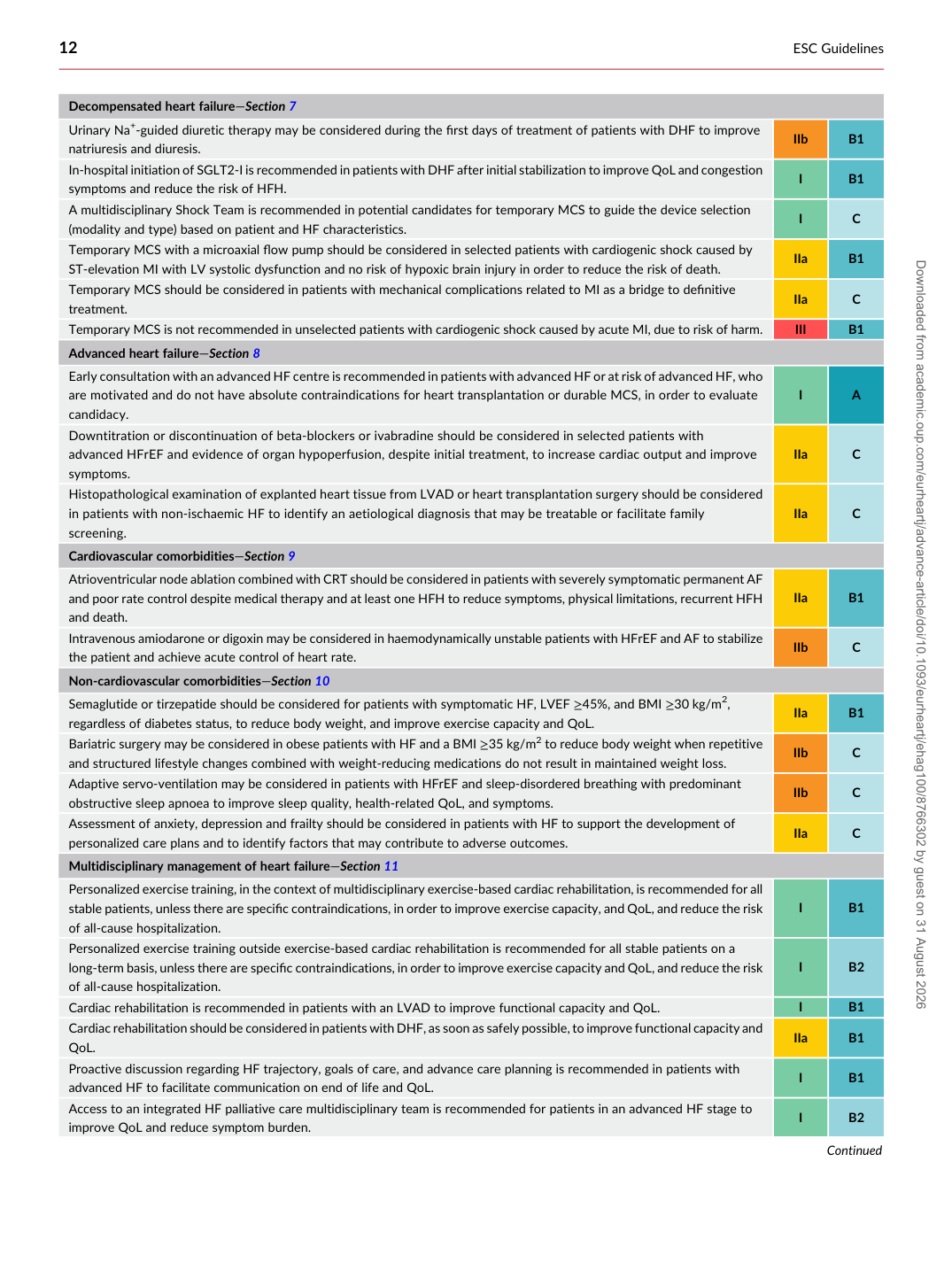
Decompensated heart failure—Section 7 Urinary Na+-guided diuretic therapy may be considered during the first days of treatment of patients with DHF to improve natriuresis and diuresis. IIb B1 In-hospital initiation of SGLT2-I is recommended in patients with DHF after initial stabilization to improve QoL and congestion symptoms and reduce the risk of HFH. I B1 A multidisciplinary Shock Team is recommended in potential candidates for temporary MCS to guide the device selection (modality and type) based on patient and HF characteristics. I C Temporary MCS with a microaxial flow pump should be considered in selected patients with cardiogenic shock caused by ST-elevation MI with LV systolic dysfunction and no risk of hypoxic brain injury in order to reduce the risk of death. IIa B1 Temporary MCS should be considered in patients with mechanical complications related to MI as a bridge to definitive treatment. IIa C Temporary MCS is not recommended in unselected patients with cardiogenic shock caused by acute MI, due to risk of harm. III B1 Advanced heart failure—Section 8 Early consultation with an advanced HF centre is recommended in patients with advanced HF or at risk of advanced HF, who are motivated and do not have absolute contraindications for heart transplantation or durable MCS, in order to evaluate candidacy. I A Downtitration or discontinuation of beta-blockers or ivabradine should be considered in selected patients with advanced HFrEF and evidence of organ hypoperfusion, despite initial treatment, to increase cardiac output and improve symptoms. IIa C Histopathological examination of explanted heart tissue from LVAD or heart transplantation surgery should be considered in patients with non-ischaemic HF to identify an aetiological diagnosis that may be treatable or facilitate family screening. IIa C Cardiovascular comorbidities—Section 9 Atrioventricular node ablation combined with CRT should be considered in patients with severely symptomatic permanent AF and poor rate control despite medical therapy and at least one HFH to reduce symptoms, physical limitations, recurrent HFH and death. IIa B1 Intravenous amiodarone or digoxin may be considered in haemodynamically unstable patients with HFrEF and AF to stabilize the patient and achieve acute control of heart rate. IIb C Non-cardiovascular comorbidities—Section 10 Semaglutide or tirzepatide should be considered for patients with symptomatic HF, LVEF ≥45%, and BMI ≥30 kg/m2, regardless of diabetes status, to reduce body weight, and improve exercise capacity and QoL. IIa B1 Bariatric surgery may be considered in obese patients with HF and a BMI ≥35 kg/m2 to reduce body weight when repetitive and structured lifestyle changes combined with weight-reducing medications do not result in maintained weight loss. IIb C Adaptive servo-ventilation may be considered in patients with HFrEF and sleep-disordered breathing with predominant obstructive sleep apnoea to improve sleep quality, health-related QoL, and symptoms. IIb C Assessment of anxiety, depression and frailty should be considered in patients with HF to support the development of personalized care plans and to identify factors that may contribute to adverse outcomes. IIa C Multidisciplinary management of heart failure—Section 11 Personalized exercise training, in the context of multidisciplinary exercise-based cardiac rehabilitation, is recommended for all stable patients, unless there are specific contraindications, in order to improve exercise capacity, and QoL, and reduce the risk of all-cause hospitalization. I B1 Personalized exercise training outside exercise-based cardiac rehabilitation is recommended for all stable patients on a long-term basis, unless there are specific contraindications, in order to improve exercise capacity and QoL, and reduce the risk of all-cause hospitalization. I B2 Cardiac rehabilitation is recommended in patients with an LVAD to improve functional capacity and QoL. I B1 Cardiac rehabilitation should be considered in patients with DHF, as soon as safely possible, to improve functional capacity and QoL. IIa B1 Proactive discussion regarding HF trajectory, goals of care, and advance care planning is recommended in patients with advanced HF to facilitate communication on end of life and QoL. I B1 Access to an integrated HF palliative care multidisciplinary team is recommended for patients in an advanced HF stage to improve QoL and reduce symptom burden. I B2

Continued Downloaded from academic.oup.com/eurheartj/advance-article/doi/10.1093/eurheartj/ehag100/8766302 by guest on 31 August 2026