p.65 抽出テキスト
OR

Signs and symptoms of MHV thrombosis

Large thrombus (≥10 mm)

complicated by embolism

Acute heart failure with NYHA Class III or IV

due to obstructive thrombosis

Evidence for inadequate OAC

Fibrinolysis (low-dose slow infusion)

Favoured if: • High surgical risk • Right-sided valve prosthesis

Surgery

Favoured if: • Recurrent event • Possible pannus • Cardiogenic shock • Large thrombus • Thromboembolic event • Contraindication to fibrinolysis

Surgery (Class IIa)

Heart Team evaluation

(Class I)

Heart Team evaluation

Bridge until target INR, identify and correct causes

of inadequate OAC

Continue VKA ± ASA with more intense monitoring

Repeat imaging for monitoring of thrombus resolution

or persistence

Persistent thrombus with clinically relevant obstruction or

thromboembolic event

Increase VKA intensity or

add low-dose ASA

(Class IIa)

TTE plus TOE and/or CCT or fluoroscopy (Class I)

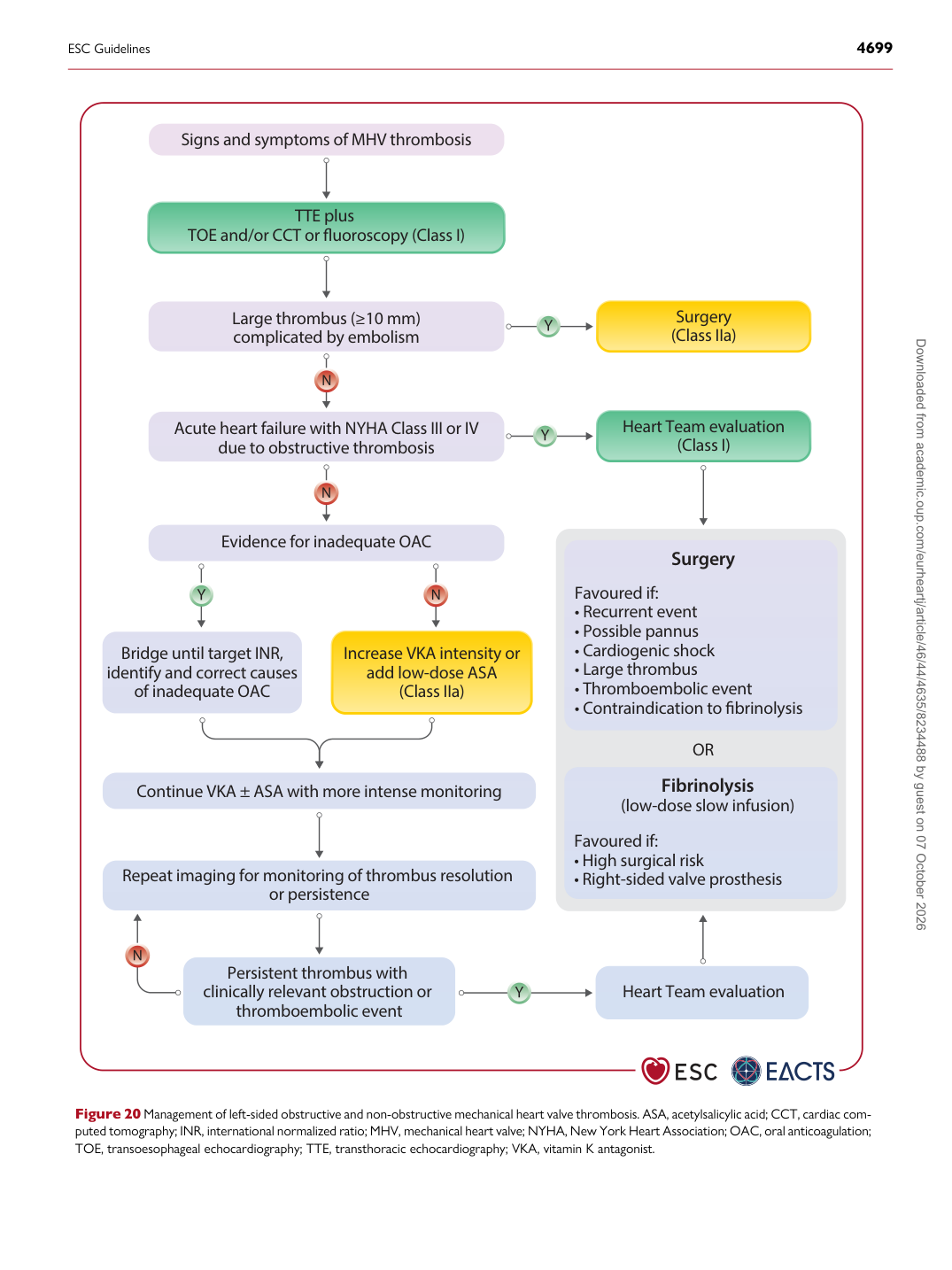
Figure 20 Management of left-sided obstructive and non-obstructive mechanical heart valve thrombosis. ASA, acetylsalicylic acid; CCT, cardiac computed tomography; INR, international normalized ratio; MHV, mechanical heart valve; NYHA, New York Heart Association; OAC, oral anticoagulation; TOE, transoesophageal echocardiography; TTE, transthoracic echocardiography; VKA, vitamin K antagonist.

ESC Guidelines                                                                                                                                                                                          4699

Downloaded from academic.oup.com/eurheartj/article/46/44/4635/8234488 by guest on 07 October 2026