p.43 抽出テキスト
exist, SMR reduction by at least one grade has been described in 40%– 60% of patients and is associated with reverse LV remodelling and improved clinical outcomes.597,599,600

9.2.4.2 Indications for intervention

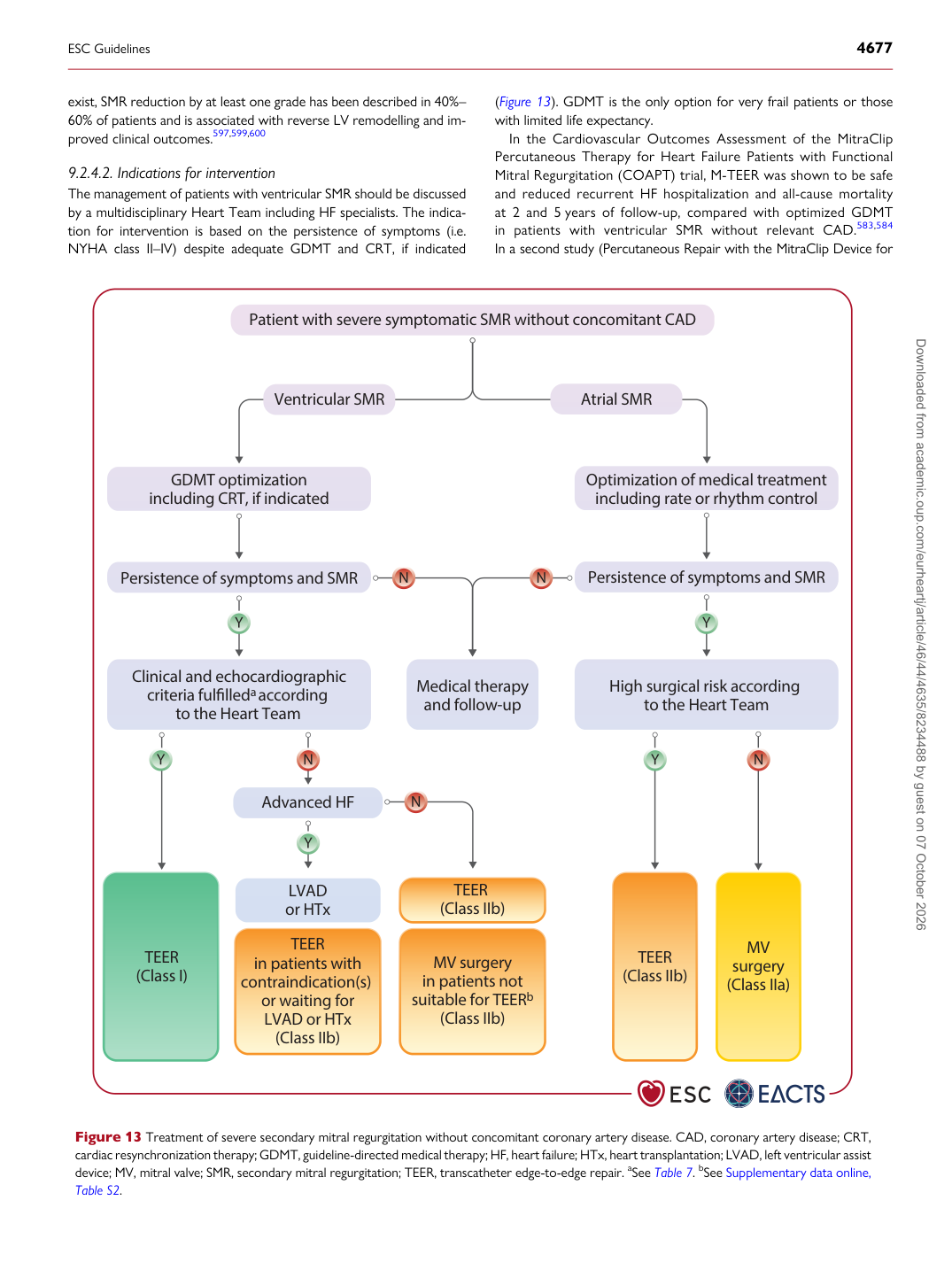
The management of patients with ventricular SMR should be discussed by a multidisciplinary Heart Team including HF specialists. The indication for intervention is based on the persistence of symptoms (i.e. NYHA class II–IV) despite adequate GDMT and CRT, if indicated (Figure 13). GDMT is the only option for very frail patients or those with limited life expectancy.

In the Cardiovascular Outcomes Assessment of the MitraClip Percutaneous Therapy for Heart Failure Patients with Functional Mitral Regurgitation (COAPT) trial, M-TEER was shown to be safe and reduced recurrent HF hospitalization and all-cause mortality at 2 and 5 years of follow-up, compared with optimized GDMT in patients with ventricular SMR without relevant CAD.583,584 In a second study (Percutaneous Repair with the MitraClip Device for

Ventricular SMR

Persistence of symptoms and SMR Atrial SMR

Patient with severe symptomatic SMR without concomitant CAD

High surgical risk according

to the Heart Team

Clinical and echocardiographic

criteria fulfilleda according

to the Heart Team

Advanced HF

LVAD or HTx

GDMT optimization including CRT, if indicated

Persistence of symptoms and SMR

TEER (Class IIb)

MV surgery in patients not suitable for TEERb

(Class IIb)

TEER in patients with contraindication(s)

or waiting for

LVAD or HTx

(Class IIb) Medical therapy

and follow-up Optimization of medical treatment

including rate or rhythm control

TEER (Class I) MV surgery (Class IIa)

TEER (Class IIb)

Figure 13 Treatment of severe secondary mitral regurgitation without concomitant coronary artery disease. CAD, coronary artery disease; CRT, cardiac resynchronization therapy; GDMT, guideline-directed medical therapy; HF, heart failure; HTx, heart transplantation; LVAD, left ventricular assist device; MV, mitral valve; SMR, secondary mitral regurgitation; TEER, transcatheter edge-to-edge repair. aSee Table 7. bSee Supplementary data online, Table S2.

ESC Guidelines                                                                                                                                                                                          4677

Downloaded from academic.oup.com/eurheartj/article/46/44/4635/8234488 by guest on 07 October 2026