p.39 抽出テキスト
Patient with severe primary mitral regurgitation

Symptoms

LVEF ≤60% or LV dilatation (LVESD ≥40 mm or LVESDi ≥20 mm/m2) High surgical risk according

to the Heart Team

Anatomical suitability

for TEERa Presence of at least 3 of the following: • AF • SPAP at rest >50 mmHg • LAVI ≥60 mL/m2 or diameter ≥55 mm • Concomitant secondary TR ≥moderate

Significant LA dilatation (LAVI ≥60 mL/m2 or diameter ≥55 mm)

and high likelihood of durable repair

Watchful

waiting MV surgery

(preferably

repair) (Class IIa) TEER (Class IIa)

Surgical MV repair

(Class IIa)

AF or SPAP at rest >50 mmHg

MV surgery

(preferably

repair) (Class I) TMVI if feasible

High risk surgery in

selected

patients

Medical treatment

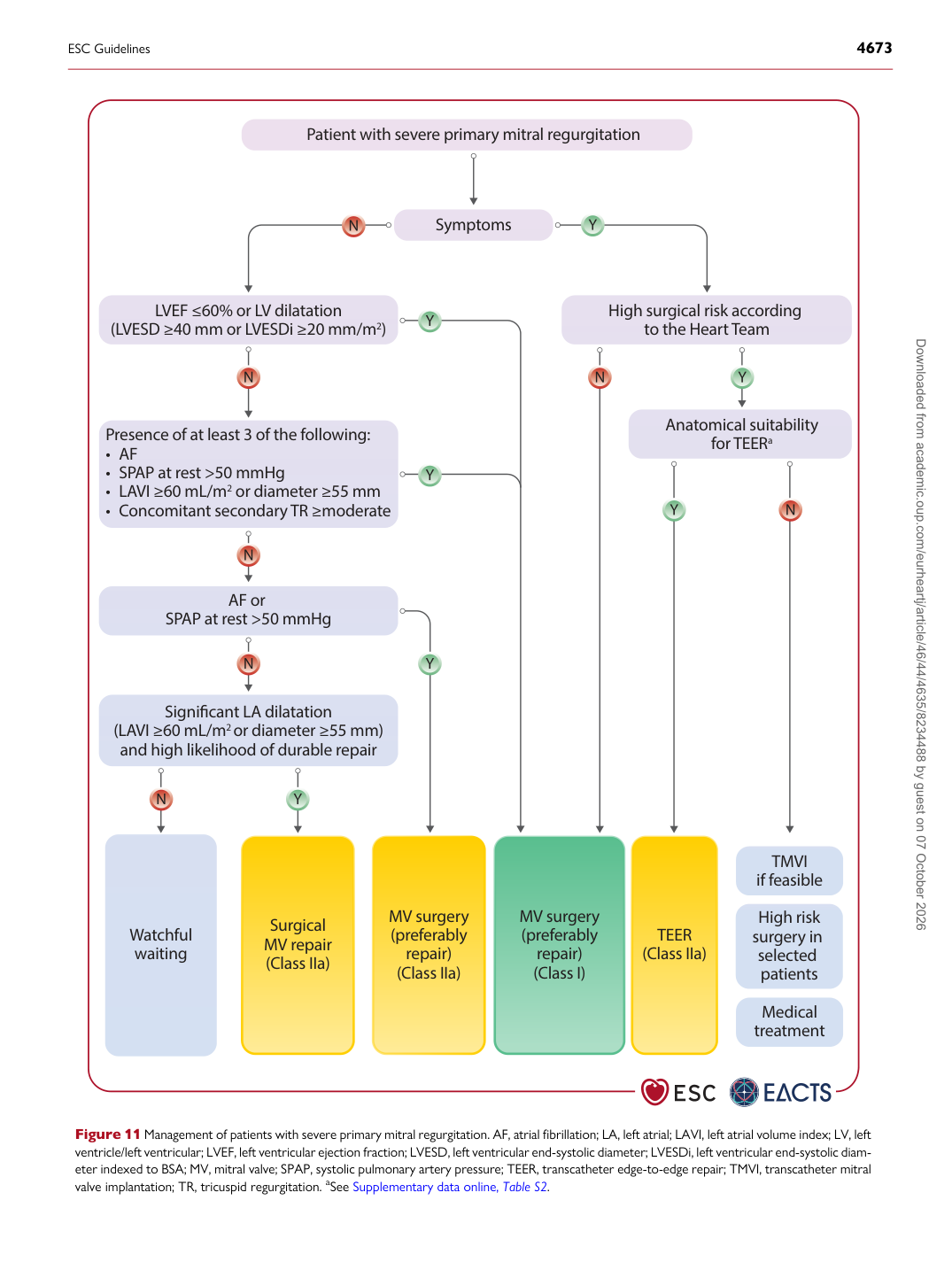
Figure 11 Management of patients with severe primary mitral regurgitation. AF, atrial fibrillation; LA, left atrial; LAVI, left atrial volume index; LV, left ventricle/left ventricular; LVEF, left ventricular ejection fraction; LVESD, left ventricular end-systolic diameter; LVESDi, left ventricular end-systolic diameter indexed to BSA; MV, mitral valve; SPAP, systolic pulmonary artery pressure; TEER, transcatheter edge-to-edge repair; TMVI, transcatheter mitral valve implantation; TR, tricuspid regurgitation. aSee Supplementary data online, Table S2.

ESC Guidelines                                                                                                                                                                                          4673

Downloaded from academic.oup.com/eurheartj/article/46/44/4635/8234488 by guest on 07 October 2026