p.32 抽出テキスト
TAVI (Class I) SAVR (Class I)

Symptomsb

LVEF <50% without another cause

Presence of one or more of the following: • High-gradient AS • Severe valve calcificationc and Vmax progression ≥0.3 m/s/year • Elevated BNP or NT-proBNP levels attributable to ASd • LVEF <55% attributable to AS • Exercise test with sustained fall in BP >20 mmHg

Close active surveillancee Heart Team evaluationf

(Class I)

Low procedural risk

Intervention

(Class IIa)

SAVR or TAVI

(Class I)

Patients <70 years if surgical risk is low All remaining candidates for a bioprosthesis Patients ≥70 years

with a tricuspid aortic valve if anatomy is suitable

Patients with severe ASa

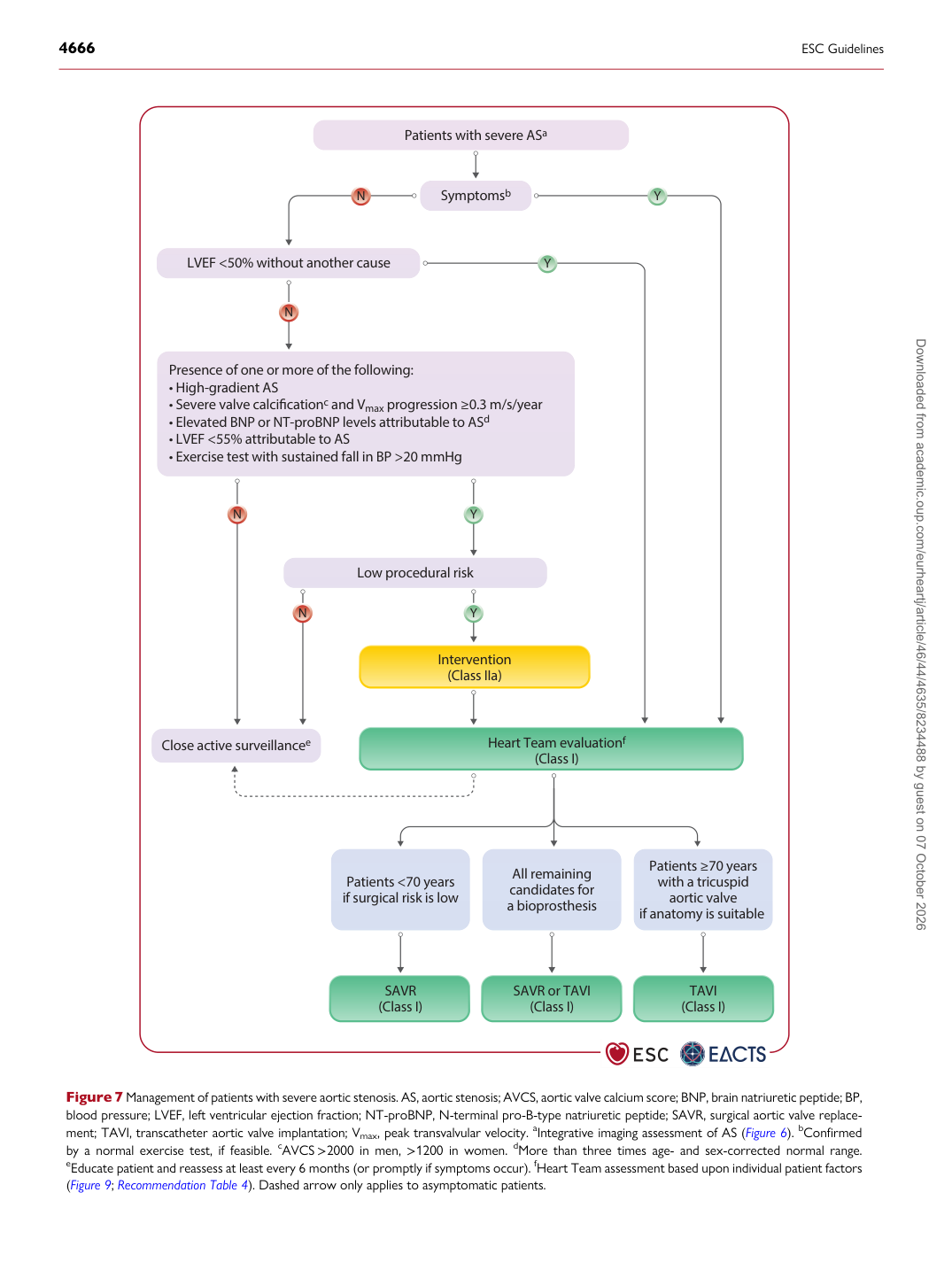
Figure 7 Management of patients with severe aortic stenosis. AS, aortic stenosis; AVCS, aortic valve calcium score; BNP, brain natriuretic peptide; BP, blood pressure; LVEF, left ventricular ejection fraction; NT-proBNP, N-terminal pro-B-type natriuretic peptide; SAVR, surgical aortic valve replacement; TAVI, transcatheter aortic valve implantation; Vmax, peak transvalvular velocity. aIntegrative imaging assessment of AS (Figure 6). bConfirmed by a normal exercise test, if feasible. cAVCS >2000 in men, >1200 in women. dMore than three times age- and sex-corrected normal range. eEducate patient and reassess at least every 6 months (or promptly if symptoms occur). fHeart Team assessment based upon individual patient factors (Figure 9; Recommendation Table 4). Dashed arrow only applies to asymptomatic patients. Downloaded from academic.oup.com/eurheartj/article/46/44/4635/8234488 by guest on 07 October 2026