p.70 抽出テキスト
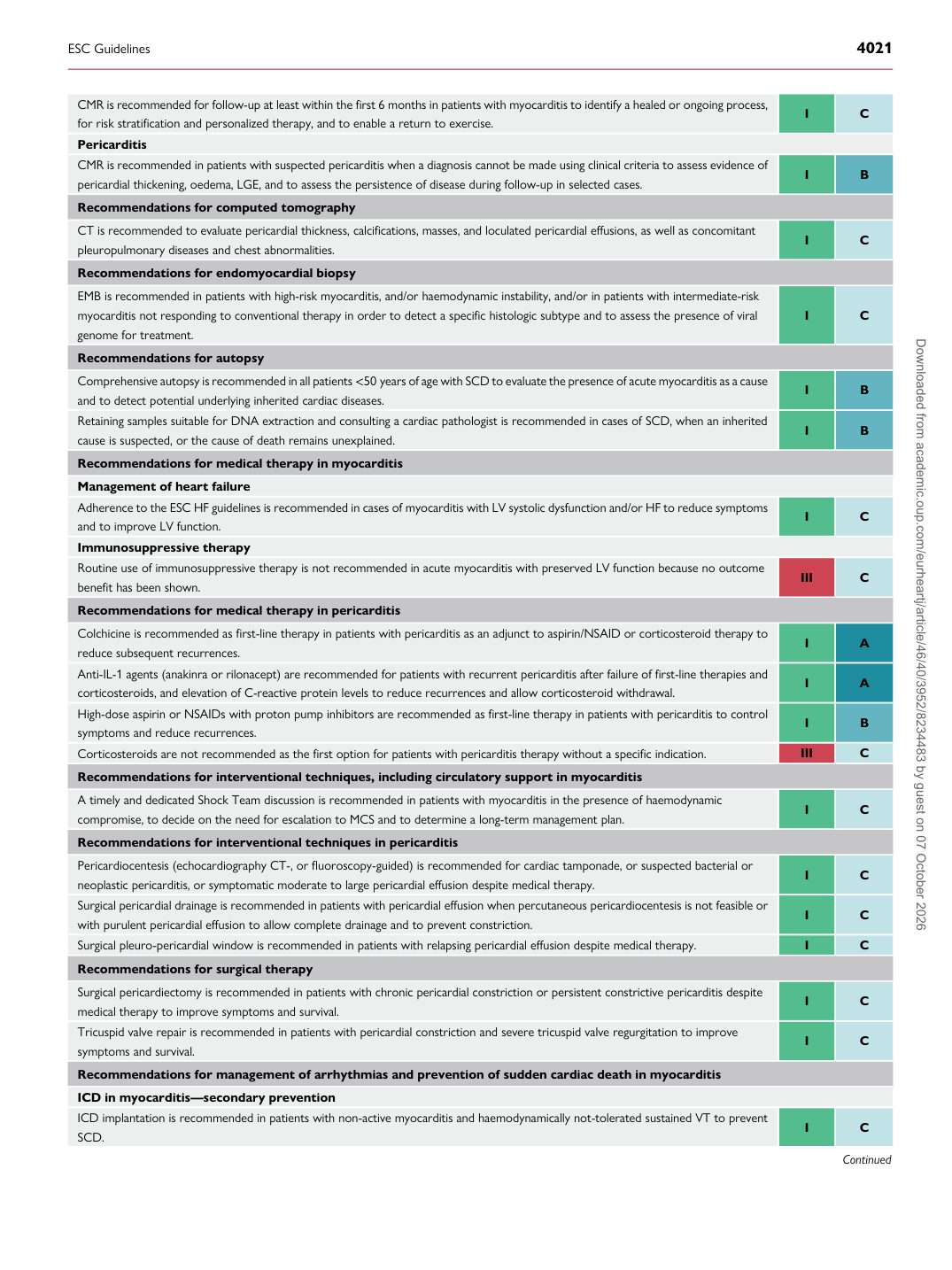
CMR is recommended for follow-up at least within the first 6 months in patients with myocarditis to identify a healed or ongoing process, for risk stratification and personalized therapy, and to enable a return to exercise. I C Pericarditis CMR is recommended in patients with suspected pericarditis when a diagnosis cannot be made using clinical criteria to assess evidence of pericardial thickening, oedema, LGE, and to assess the persistence of disease during follow-up in selected cases. I B Recommendations for computed tomography CT is recommended to evaluate pericardial thickness, calcifications, masses, and loculated pericardial effusions, as well as concomitant pleuropulmonary diseases and chest abnormalities. I C Recommendations for endomyocardial biopsy EMB is recommended in patients with high-risk myocarditis, and/or haemodynamic instability, and/or in patients with intermediate-risk myocarditis not responding to conventional therapy in order to detect a specific histologic subtype and to assess the presence of viral genome for treatment. I C Recommendations for autopsy Comprehensive autopsy is recommended in all patients <50 years of age with SCD to evaluate the presence of acute myocarditis as a cause and to detect potential underlying inherited cardiac diseases. I B Retaining samples suitable for DNA extraction and consulting a cardiac pathologist is recommended in cases of SCD, when an inherited cause is suspected, or the cause of death remains unexplained. I B Recommendations for medical therapy in myocarditis Management of heart failure Adherence to the ESC HF guidelines is recommended in cases of myocarditis with LV systolic dysfunction and/or HF to reduce symptoms and to improve LV function. I C Immunosuppressive therapy Routine use of immunosuppressive therapy is not recommended in acute myocarditis with preserved LV function because no outcome benefit has been shown. III C Recommendations for medical therapy in pericarditis Colchicine is recommended as first-line therapy in patients with pericarditis as an adjunct to aspirin/NSAID or corticosteroid therapy to reduce subsequent recurrences. I A Anti-IL-1 agents (anakinra or rilonacept) are recommended for patients with recurrent pericarditis after failure of first-line therapies and corticosteroids, and elevation of C-reactive protein levels to reduce recurrences and allow corticosteroid withdrawal. I A High-dose aspirin or NSAIDs with proton pump inhibitors are recommended as first-line therapy in patients with pericarditis to control symptoms and reduce recurrences. I B Corticosteroids are not recommended as the first option for patients with pericarditis therapy without a specific indication. III C Recommendations for interventional techniques, including circulatory support in myocarditis A timely and dedicated Shock Team discussion is recommended in patients with myocarditis in the presence of haemodynamic compromise, to decide on the need for escalation to MCS and to determine a long-term management plan. I C Recommendations for interventional techniques in pericarditis Pericardiocentesis (echocardiography CT-, or fluoroscopy-guided) is recommended for cardiac tamponade, or suspected bacterial or neoplastic pericarditis, or symptomatic moderate to large pericardial effusion despite medical therapy. I C Surgical pericardial drainage is recommended in patients with pericardial effusion when percutaneous pericardiocentesis is not feasible or with purulent pericardial effusion to allow complete drainage and to prevent constriction. I C Surgical pleuro-pericardial window is recommended in patients with relapsing pericardial effusion despite medical therapy. I C Recommendations for surgical therapy Surgical pericardiectomy is recommended in patients with chronic pericardial constriction or persistent constrictive pericarditis despite medical therapy to improve symptoms and survival. I C Tricuspid valve repair is recommended in patients with pericardial constriction and severe tricuspid valve regurgitation to improve symptoms and survival. I C Recommendations for management of arrhythmias and prevention of sudden cardiac death in myocarditis ICD in myocarditis—secondary prevention ICD implantation is recommended in patients with non-active myocarditis and haemodynamically not-tolerated sustained VT to prevent SCD. I C

Continued

ESC Guidelines                                                                                                                                                                                          4021

Downloaded from academic.oup.com/eurheartj/article/46/40/3952/8234483 by guest on 07 October 2026