p.69 抽出テキスト
Currently, quantitative immunohistochemistry criteria for the diagnosis of LM are under discussion among cardio-pathologists to present more definite criteria for EMB. Furthermore, a better understanding of the pathogenic and prognostic role of viral loads is needed (e.g. active/causative vs latent/innocent bystanders in cardiac viral infections). Moreover, the role of genetic predisposition in recurrent myocarditis is not thoroughly clarified. Research into the role of genetic predisposition is evolving to change the classification of disease and may influence therapeutic pathways in the future. An increase of ‘overlapping’ conditions, especially DCM and ARVC, can be expected and may change our understanding of the disease in the future. That means, more research is warranted on the prognosis and SCD risk stratification.

16.2 Pericarditis

There are significant knowledge gaps in individualized treatment and pathogenesis of various types of pericarditis, as well as the understanding of the interaction among genetic background, inflammation, and autoimmune mechanisms. Better knowledge of the pathogenesis of recurrences may also help to develop more targeted and individualized therapies. The genetic background requires further evaluation in complicated, recurrent cases and could be helpful to elucidate the mechanisms leading to incessant/recurrent forms. New therapeutic options should also be considered and evaluated in clinical trials to explore new drugs for more complicated, incessant, or recurrent cases to develop a more individualized and efficacious approach for the treatment of pericarditis. A significant management issue is the treatment of patients not responding to colchicine and anti-IL-1 agents, as well as the causes of drug dependence to maintain stable clinical remission, such as for corticosteroids and anti-IL-1 agents.

Additional research is also warranted to understand the prognostic significance of persistent LGE of the pericardium. There are limited data to support the best timing of return to work and physical activity, and further research is needed on this topic with appropriate clinical trials or observational studies.

17 Sex differences

There is limited published evidence on this topic. Inflammatory myopericardial syndrome seems to affect males more than females from a young age. Myocarditis complicated by VA is more common in males, while in females, a relatively higher proportion of cases presents with complicated forms compared with males, and systemic autoimmune disorders are more commonly diagnosed. This was addressed in the relevant sections. The diagnostic approaches are similar, but care should be taken when applying normal values, especially in imaging. Medication should be adapted in women of childbearing age, pregnancy, and during lactation (more details are specified in specific sections).

18 ‘What to do’ and ‘What not to do’ messages from the Guidelines

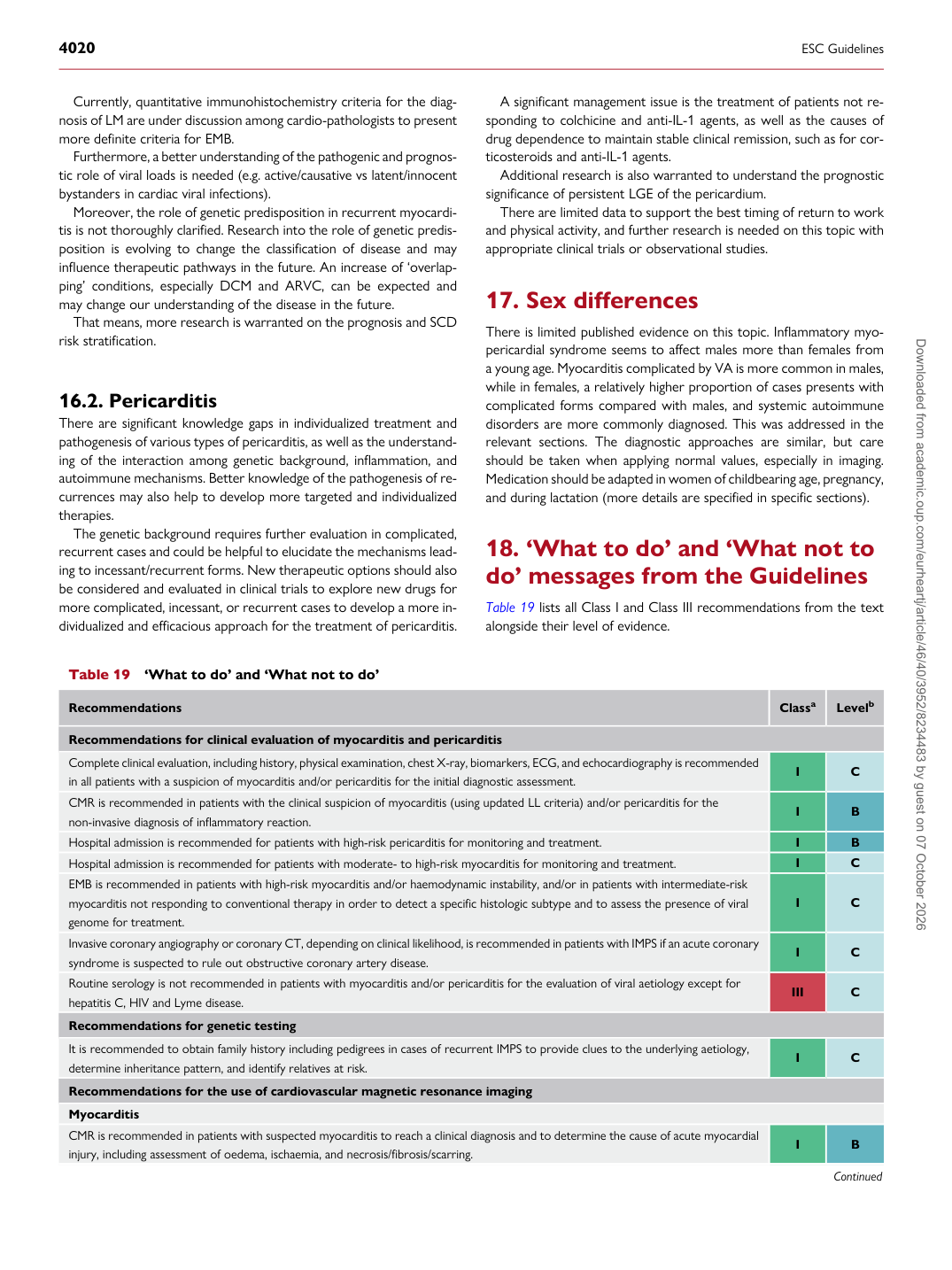
Table 19 lists all Class I and Class III recommendations from the text alongside their level of evidence.

Table 19 ‘What to do’ and ‘What not to do’

Recommendations Classa Levelb

Recommendations for clinical evaluation of myocarditis and pericarditis Complete clinical evaluation, including history, physical examination, chest X-ray, biomarkers, ECG, and echocardiography is recommended in all patients with a suspicion of myocarditis and/or pericarditis for the initial diagnostic assessment. I C CMR is recommended in patients with the clinical suspicion of myocarditis (using updated LL criteria) and/or pericarditis for the non-invasive diagnosis of inflammatory reaction. I B Hospital admission is recommended for patients with high-risk pericarditis for monitoring and treatment. I B Hospital admission is recommended for patients with moderate- to high-risk myocarditis for monitoring and treatment. I C EMB is recommended in patients with high-risk myocarditis and/or haemodynamic instability, and/or in patients with intermediate-risk myocarditis not responding to conventional therapy in order to detect a specific histologic subtype and to assess the presence of viral genome for treatment. I C Invasive coronary angiography or coronary CT, depending on clinical likelihood, is recommended in patients with IMPS if an acute coronary syndrome is suspected to rule out obstructive coronary artery disease. I C Routine serology is not recommended in patients with myocarditis and/or pericarditis for the evaluation of viral aetiology except for hepatitis C, HIV and Lyme disease. III C Recommendations for genetic testing It is recommended to obtain family history including pedigrees in cases of recurrent IMPS to provide clues to the underlying aetiology, determine inheritance pattern, and identify relatives at risk. I C Recommendations for the use of cardiovascular magnetic resonance imaging Myocarditis CMR is recommended in patients with suspected myocarditis to reach a clinical diagnosis and to determine the cause of acute myocardial injury, including assessment of oedema, ischaemia, and necrosis/fibrosis/scarring. I B

Continued Downloaded from academic.oup.com/eurheartj/article/46/40/3952/8234483 by guest on 07 October 2026