p.41 抽出テキスト
proposed for a non-inflammatory presentation (so-called noninflammatory phenotype).288,289 More recently, hydroxychloroquine has shown a steroid-sparing effect and increased flare-free survival in RP in patients with colchicine resistance and corticosteroid dependence.290 Treatment duration with aspirin/NSAIDs and steroids should be extended in an individualized manner, and the tapering process should be slower than for a first episode of AP.1

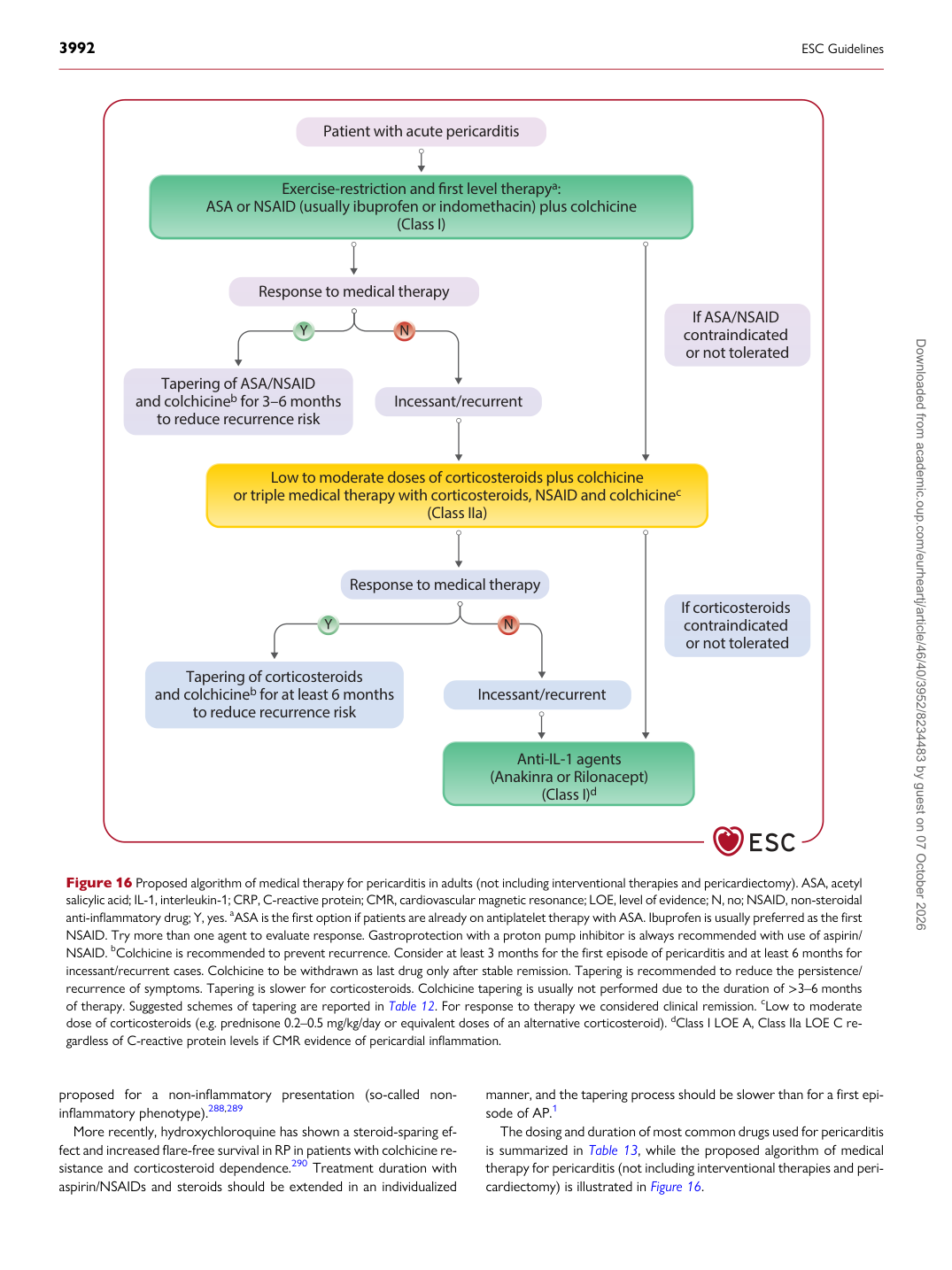
The dosing and duration of most common drugs used for pericarditis is summarized in Table 13, while the proposed algorithm of medical therapy for pericarditis (not including interventional therapies and pericardiectomy) is illustrated in Figure 16.

Patient with acute pericarditis

Exercise-restriction and first level therapya: ASA or NSAID (usually ibuprofen or indomethacin) plus colchicine

(Class I)

Tapering of ASA/NSAID and colchicineb for 3–6 months

to reduce recurrence risk Incessant/recurrent If ASA/NSAID contraindicated

or not tolerated

Response to medical therapy

Low to moderate doses of corticosteroids plus colchicine or triple medical therapy with corticosteroids, NSAID and colchicinec

(Class IIa)

Incessant/recurrent

Response to medical therapy

Tapering of corticosteroids and colchicineb for at least 6 months

to reduce recurrence risk

Anti-IL-1 agents (Anakinra or Rilonacept)

(Class I)d If corticosteroids

contraindicated or not tolerated

Figure 16 Proposed algorithm of medical therapy for pericarditis in adults (not including interventional therapies and pericardiectomy). ASA, acetyl salicylic acid; IL-1, interleukin-1; CRP, C-reactive protein; CMR, cardiovascular magnetic resonance; LOE, level of evidence; N, no; NSAID, non-steroidal anti-inflammatory drug; Y, yes. aASA is the first option if patients are already on antiplatelet therapy with ASA. Ibuprofen is usually preferred as the first NSAID. Try more than one agent to evaluate response. Gastroprotection with a proton pump inhibitor is always recommended with use of aspirin/ NSAID. bColchicine is recommended to prevent recurrence. Consider at least 3 months for the first episode of pericarditis and at least 6 months for incessant/recurrent cases. Colchicine to be withdrawn as last drug only after stable remission. Tapering is recommended to reduce the persistence/ recurrence of symptoms. Tapering is slower for corticosteroids. Colchicine tapering is usually not performed due to the duration of >3–6 months of therapy. Suggested schemes of tapering are reported in Table 12. For response to therapy we considered clinical remission. cLow to moderate dose of corticosteroids (e.g. prednisone 0.2–0.5 mg/kg/day or equivalent doses of an alternative corticosteroid). dClass I LOE A, Class IIa LOE C regardless of C-reactive protein levels if CMR evidence of pericardial inflammation. Downloaded from academic.oup.com/eurheartj/article/46/40/3952/8234483 by guest on 07 October 2026