p.35 抽出テキスト
5.9.2 Pericardial biopsy

In clinical practice, pericardial biopsy is rarely indicated in complicated cases not responding to conventional anti-inflammatory therapy and with a high suspicion of a specific aetiology (e.g. primary pericardial tumours and metastases), which cannot be determined by non-invasive diagnostic methods. Pericardial biopsy can be performed by pericardioscopy (an endoscopic study of the pericardium that is available in a limited number of tertiary referral centres). It is more commonly performed with a thoracoscopic or surgical approach, usually during a pericardial drainage or a pericardial window.1,232

5.10 Role of autopsy

In autopsy studies of SCD, myocarditis has been described as a common finding, with incidences of myocarditis in children and adults ranging from 0.3% to 14.8%.87,88,233–235 In the majority of these studies, the incidence of myocarditis in SCD was higher in people aged under 35 years.236,237 A nationwide unselected cohort of 14 294 deaths in Denmark suggested that 6% of all autopsied SCD was caused by myocarditis. Males have a significantly higher incidence.88 In the UK, between 1994 and 2022, myocarditis was reported as a rare cause of SCD in non-hospitalized individuals (1.1%) in 7702 consecutive cases of SCD. Here, the most common reported form was LM (56%), which corresponds well with data obtained from EMBs of patients with suspected myocarditis.10,63,87,238

In the guidelines for the histopathological diagnosis of myocarditis, ‘fulminant’ or ‘multifocal’ myocarditis can be generally considered as a reliable or acceptable cause of death, especially when inflammation is the only substantial histopathological finding. This approach is endorsed by the Association of European Cardiovascular Pathology.239 In addition to LM, other types of cardiac inflammation are observed in autopsies. In 558 of 49 612 (1.1%) forensic autopsies, myocarditis was detected by histology. In a Finnish study consisting of 351 patients with CS, 14% experienced fatal and aborted SCD as a presenting manifestation. In 64%, undiagnosed granulomas in the heart were the cause of fatalities.240 The likelihood that a case of unexplained SCD is caused by an underlying inherited disorder has led to the emerging role of genetic testing of DNA obtained at autopsy (also called molecular autopsy or post-mortem genetic testing).239 Therefore, pathologists play an important role in the identification of families at risk by reporting whether it is recommended to refer first-degree family members for clinical screening and/or to perform additional post-mortem genetic testing to identify the underlying cause of cardiac inflammation.241,242 Legal and ethical issues related to genetic testing in deceased subjects who did not give their consent are not universally regulated by law.

5.11 Role of cardiac catheterization and

coronary angiography Given the overlap of symptoms (especially chest pain), as well as the elevation of biomarkers (such as troponin in the case of myocardial involvement and NT-proBNP) and ECG changes, ACS is the main differential diagnosis for IMPS. Depending on the initial clinical assessment, ACS should be ruled out according to current guidelines (Figure 9). The recommended methods are coronary CT or invasive coronary angiography depending on likelihood of obstructive CAD.72,248 Coronary angiography is preferable in patients with a high likelihood of ACS. It should be noted that CAD may coexist with myocarditis in particular scenarios, including EM and ICI-induced myocarditis.249–251 Cardiac catheterization is also indicated to monitor and guide HF therapy, as well as the early need for more advanced support (HT or MCS) in the case of refractory haemodynamic deterioration.12

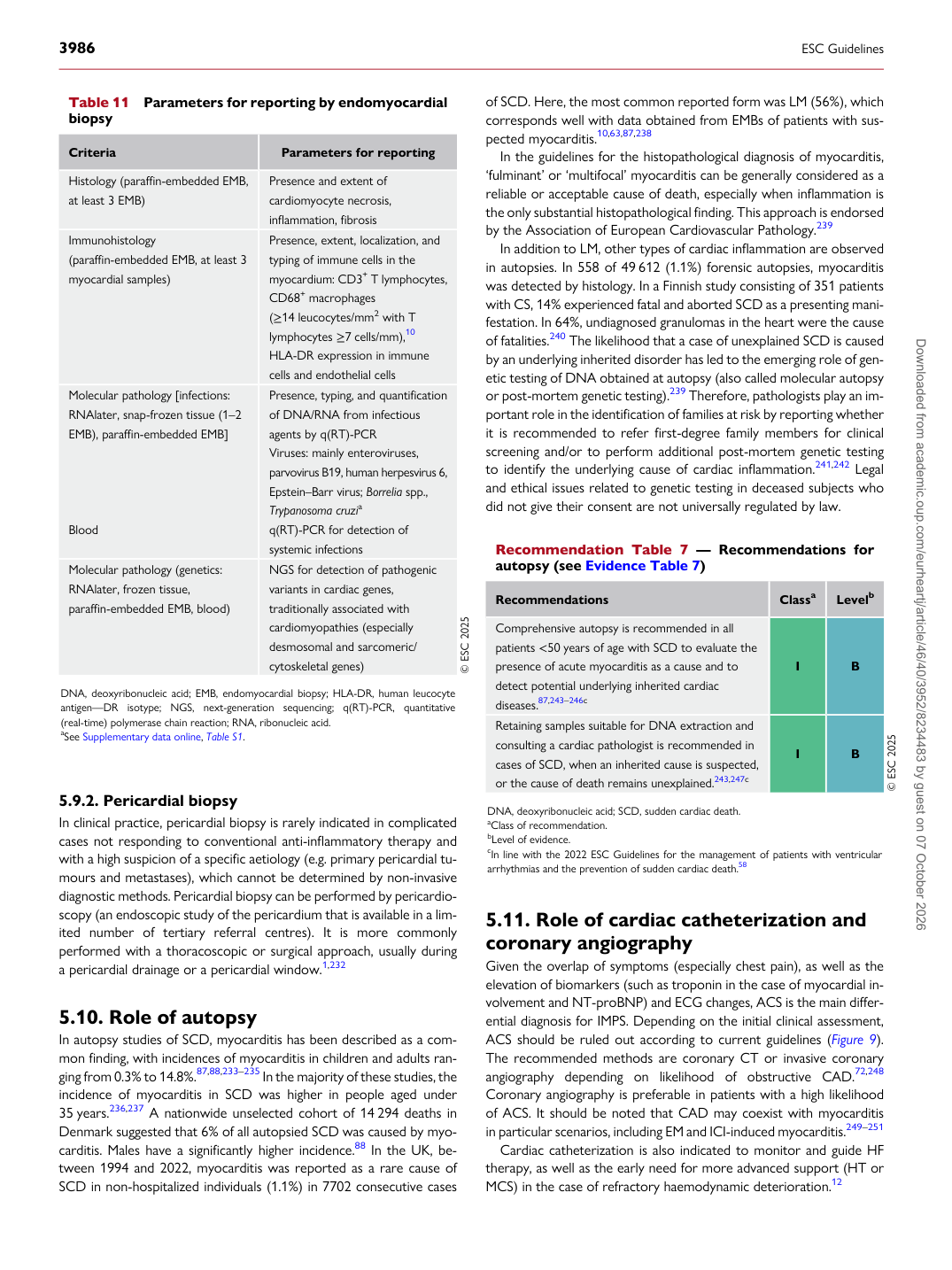
Table 11 Parameters for reporting by endomyocardial biopsy

Criteria Parameters for reporting

Histology (paraffin-embedded EMB, at least 3 EMB) Presence and extent of

cardiomyocyte necrosis, inflammation, fibrosis

Immunohistology (paraffin-embedded EMB, at least 3 myocardial samples) Presence, extent, localization, and typing of immune cells in the

myocardium: CD3+ T lymphocytes, CD68+ macrophages (≥14 leucocytes/mm2 with T lymphocytes ≥7 cells/mm),10 HLA-DR expression in immune cells and endothelial cells

Molecular pathology [infections: RNAlater, snap-frozen tissue (1–2 EMB), paraffin-embedded EMB]

Blood Presence, typing, and quantification of DNA/RNA from infectious

agents by q(RT)-PCR Viruses: mainly enteroviruses, parvovirus B19, human herpesvirus 6, Epstein–Barr virus; Borrelia spp., Trypanosoma cruzia q(RT)-PCR for detection of systemic infections

Molecular pathology (genetics: RNAlater, frozen tissue, paraffin-embedded EMB, blood) NGS for detection of pathogenic

variants in cardiac genes, traditionally associated with cardiomyopathies (especially desmosomal and sarcomeric/ cytoskeletal genes) © ESC 2025

DNA, deoxyribonucleic acid; EMB, endomyocardial biopsy; HLA-DR, human leucocyte antigen—DR isotype; NGS, next-generation sequencing; q(RT)-PCR, quantitative (real-time) polymerase chain reaction; RNA, ribonucleic acid. aSee Supplementary data online, Table S1. Recommendation Table 7 — Recommendations for autopsy (see Evidence Table 7)

Recommendations Classa Levelb

Comprehensive autopsy is recommended in all patients <50 years of age with SCD to evaluate the presence of acute myocarditis as a cause and to detect potential underlying inherited cardiac diseases.87,243–246c I B Retaining samples suitable for DNA extraction and consulting a cardiac pathologist is recommended in cases of SCD, when an inherited cause is suspected, or the cause of death remains unexplained.243,247c I B © ESC 2025

DNA, deoxyribonucleic acid; SCD, sudden cardiac death. aClass of recommendation. bLevel of evidence. cIn line with the 2022 ESC Guidelines for the management of patients with ventricular arrhythmias and the prevention of sudden cardiac death.58 Downloaded from academic.oup.com/eurheartj/article/46/40/3952/8234483 by guest on 07 October 2026