p.26 抽出テキスト
4.5.5 Constrictive pericarditis

Pericardial constriction is a chronic condition characterized by a thickened, fibrotic, and often calcified pericardium that leads to impaired diastolic filling of the heart. It should be named CP when associated with pericarditis. Constrictive pericarditis is a consequence of chronic pericardial inflammation and is characterized by scarring, fibrosis, and loss of elasticity of the pericardium. The main symptoms are dyspnoea, oedema, orthopnoea, and fatigue. The classic clinical picture is usually characterized by isolated right HF with normal or nearly normal natriuretic peptide levels. Venous congestion, hepatomegaly, pleural effusions, and ascites may occur.110,115,119 Constrictive pericarditis should be treated empirically with anti-inflammatory therapy. Cases after failure of medical therapy and pericardial constriction without pericarditis should be referred for pericardiectomy without delay (Figure 13).

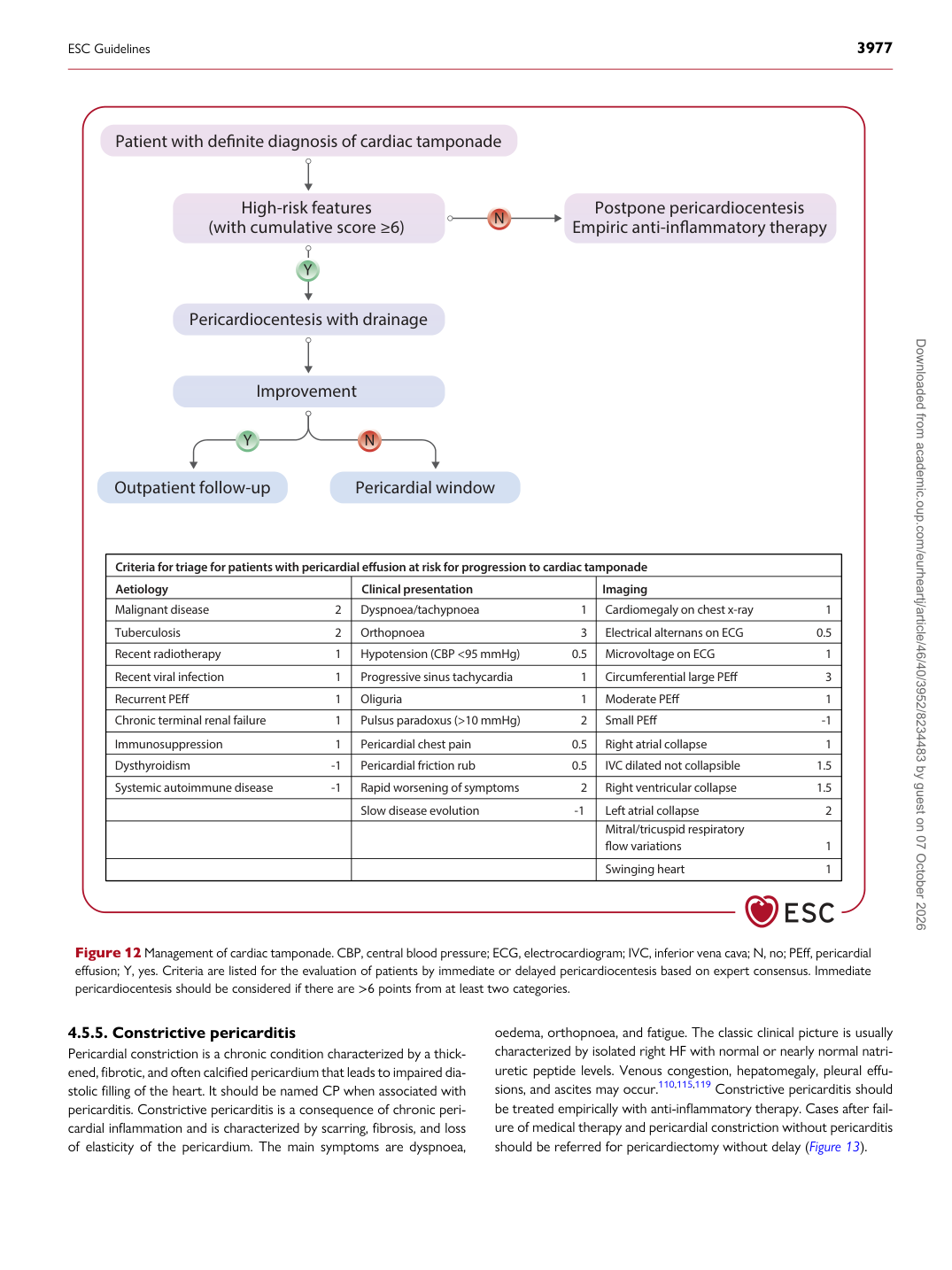
Patient with definite diagnosis of cardiac tamponade

High-risk features (with cumulative score ≥6)

Outpatient follow-up Pericardial window

Improvement Postpone pericardiocentesis Empiric anti-inflammatory therapy

Pericardiocentesis with drainage

Criteria for triage for patients with pericardial effusion at risk for progression to cardiac tamponade Imaging Clinical presentation Aetiology Malignant disease 2 Tuberculosis 2 Recent radiotherapy 1 Recent viral infection 1 Recurrent PEff 1 Chronic terminal renal failure 1 Immunosuppression 1 Dysthyroidism -1 Systemic autoimmune disease -1 Dyspnoea/tachypnoea                                     1

Orthopnoea                                                         3 Hypotension (CBP <95 mmHg)                  0.5 Progressive sinus tachycardia                        1 Oliguria                                                                 1 Pulsus paradoxus (>10 mmHg)                      2 Pericardial chest pain                                    0.5 Pericardial friction rub                                  0.5 Rapid worsening of symptoms                      2 Slow disease evolution                                  -1 Cardiomegaly on chest x-ray 1

Electrical alternans on ECG 0.5 Microvoltage on ECG 1 Circumferential large PEff 3 Moderate PEff 1 Small PEff -1 Right atrial collapse 1 IVC dilated not collapsible 1.5 Right ventricular collapse 1.5 Left atrial collapse 2 Mitral/tricuspid respiratory flow variations 1 Swinging heart 1

Figure 12 Management of cardiac tamponade. CBP, central blood pressure; ECG, electrocardiogram; IVC, inferior vena cava; N, no; PEff, pericardial effusion; Y, yes. Criteria are listed for the evaluation of patients by immediate or delayed pericardiocentesis based on expert consensus. Immediate pericardiocentesis should be considered if there are >6 points from at least two categories.

ESC Guidelines                                                                                                                                                                                          3977

Downloaded from academic.oup.com/eurheartj/article/46/40/3952/8234483 by guest on 07 October 2026