p.21 抽出テキスト
be considered as having a low-risk presentation with an excellent longterm prognosis.4,28,62,66,67 There are possible exceptions to this general rule in a few cases with EM and GCM. Myocardial scarring as detected by CMR can be present in cases with preserved LVEF.3,68–70 Focal scarring of any cause was shown to be relevant for outcome, and small scars (e.g. <2 segments) after >6 months seemed to be more benign.71

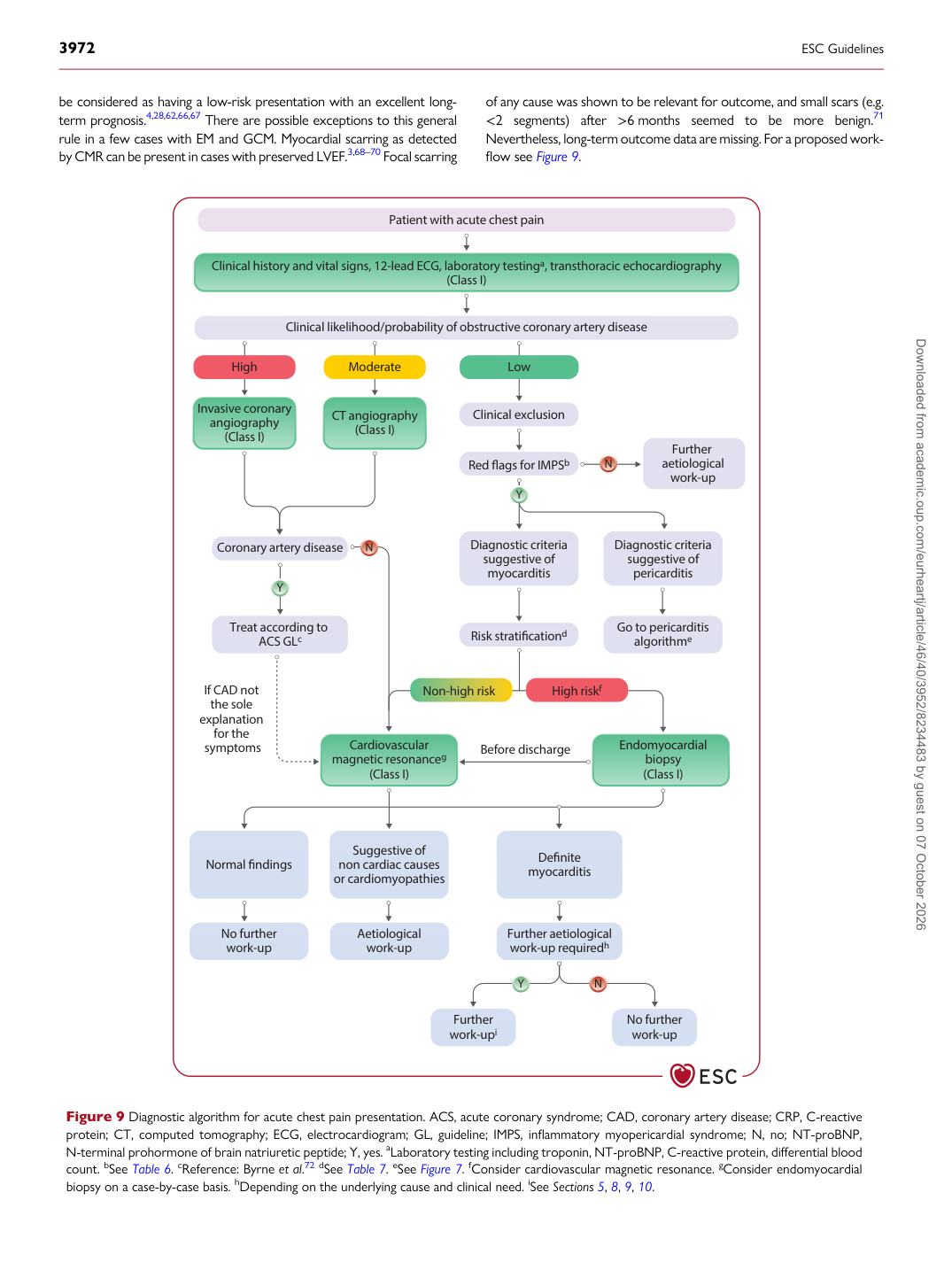
Nevertheless, long-term outcome data are missing. For a proposed workflow see Figure 9.

Patient with acute chest pain

Clinical history and vital signs, 12-lead ECG, laboratory testinga, transthoracic echocardiography

(Class I)

CT angiography

(Class I)

Definite myocarditis

Suggestive of non cardiac causes or cardiomyopathies

Treat according to

ACS GLc Risk stratificationd Further aetiological

work-up

Endomyocardial

biopsy (Class I)

Cardiovascular magnetic resonanceg

(Class I)

Further aetiological work-up requiredh

No further

work-up Further work-upi

Red flags for IMPSb

Aetiological

work-up

Coronary artery disease

Normal findings

No further work-up

Invasive coronary

angiography

(Class I)

Diagnostic criteria

suggestive of myocarditis Diagnostic criteria

suggestive of pericarditis

Go to pericarditis

algorithme

Clinical likelihood/probability of obstructive coronary artery disease

Clinical exclusion

Moderate Low

High riskf Non-high risk If CAD not the sole explanation for the symptoms Before discharge

High

Figure 9 Diagnostic algorithm for acute chest pain presentation. ACS, acute coronary syndrome; CAD, coronary artery disease; CRP, C-reactive protein; CT, computed tomography; ECG, electrocardiogram; GL, guideline; IMPS, inflammatory myopericardial syndrome; N, no; NT-proBNP, N-terminal prohormone of brain natriuretic peptide; Y, yes. aLaboratory testing including troponin, NT-proBNP, C-reactive protein, differential blood count. bSee Table 6. cReference: Byrne et al.72 dSee Table 7. eSee Figure 7. fConsider cardiovascular magnetic resonance. gConsider endomyocardial biopsy on a case-by-case basis. hDepending on the underlying cause and clinical need. iSee Sections 5, 8, 9, 10. Downloaded from academic.oup.com/eurheartj/article/46/40/3952/8234483 by guest on 07 October 2026