p.17 抽出テキスト
Obstructive CADc Treat CAD

High-risk clinical featuresd

Stay on ward/ICU

Establish HF/AA therapy and/or treatment of specific aetiology

Outpatient follow-up

Patient with symptoms and signsa of myocarditis presenting to the emergency room

First-line assessment with history, physical examination, ECG, transthoracic echocardiography, chest X-ray, laboratory assessmentb

(Class I)

Low risk Intermediate risk

Stay on ward and discharge when possible

(Class I)

Cardiovascular magnetic

resonancee

(Class I) Endomyocardial biopsyf

(Class I)

Admit to ward/ICU

(Class I)

Cardiovascular magnetic resonance

(if not done before)

Improvement

Multidisciplinary

IMPS team discussion

Discharge if possible Diagnosis

Complete risk classificationd Further work-up Further assessmentg

Possible Rejected/unlikely

Definitive

High risk

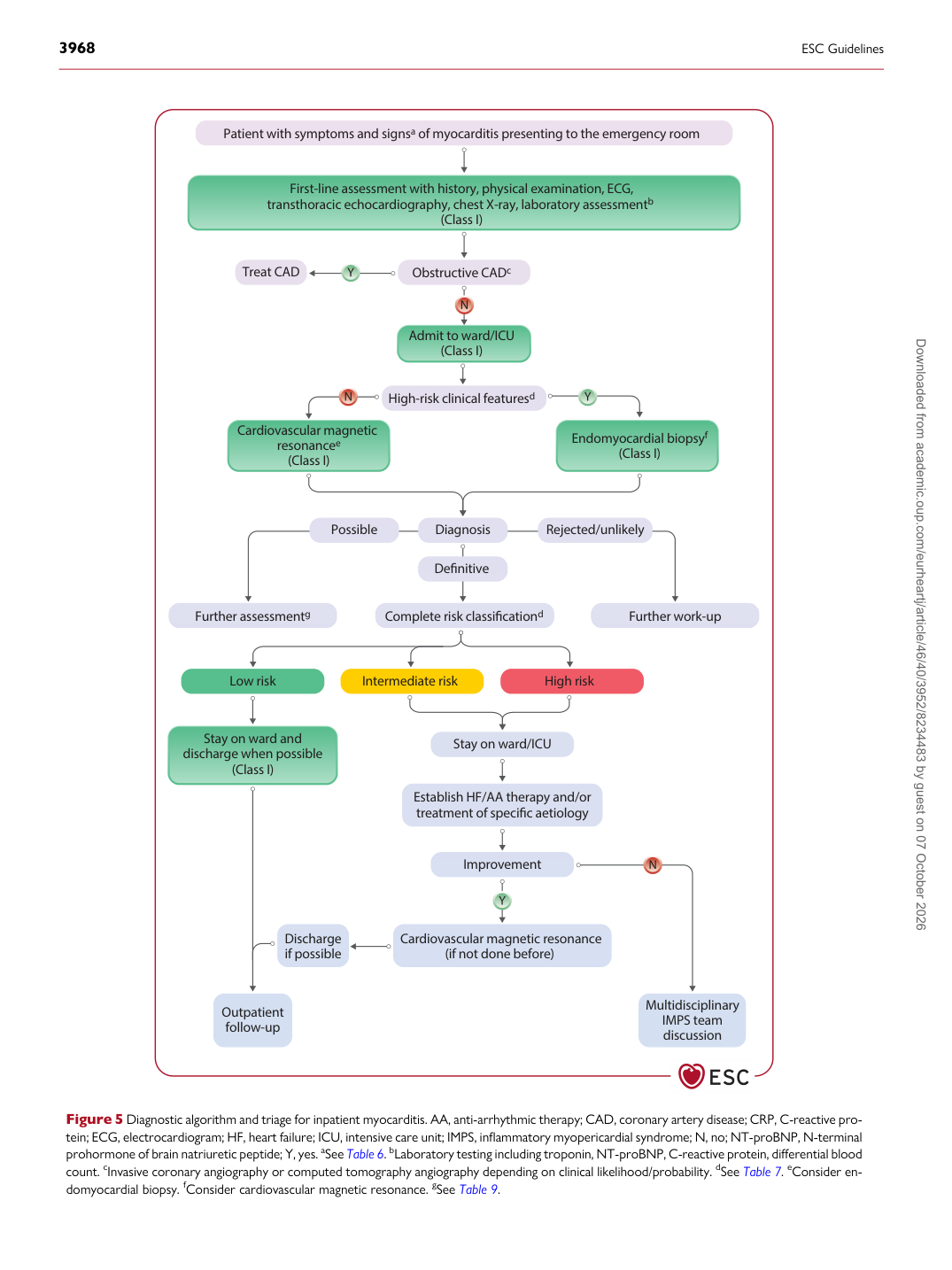
Figure 5 Diagnostic algorithm and triage for inpatient myocarditis. AA, anti-arrhythmic therapy; CAD, coronary artery disease; CRP, C-reactive protein; ECG, electrocardiogram; HF, heart failure; ICU, intensive care unit; IMPS, inflammatory myopericardial syndrome; N, no; NT-proBNP, N-terminal prohormone of brain natriuretic peptide; Y, yes. aSee Table 6. bLaboratory testing including troponin, NT-proBNP, C-reactive protein, differential blood count. cInvasive coronary angiography or computed tomography angiography depending on clinical likelihood/probability. dSee Table 7. eConsider endomyocardial biopsy. fConsider cardiovascular magnetic resonance. gSee Table 9. Downloaded from academic.oup.com/eurheartj/article/46/40/3952/8234483 by guest on 07 October 2026