p.15 抽出テキスト
compared with placebo and was well tolerated.130 As yet no data are available for the efficacy and safety of bempedoic acid or icosapent ethyl in PWH.

9 Patients with cancer at high or

very high chemotherapy-related cardiovascular toxicity risk

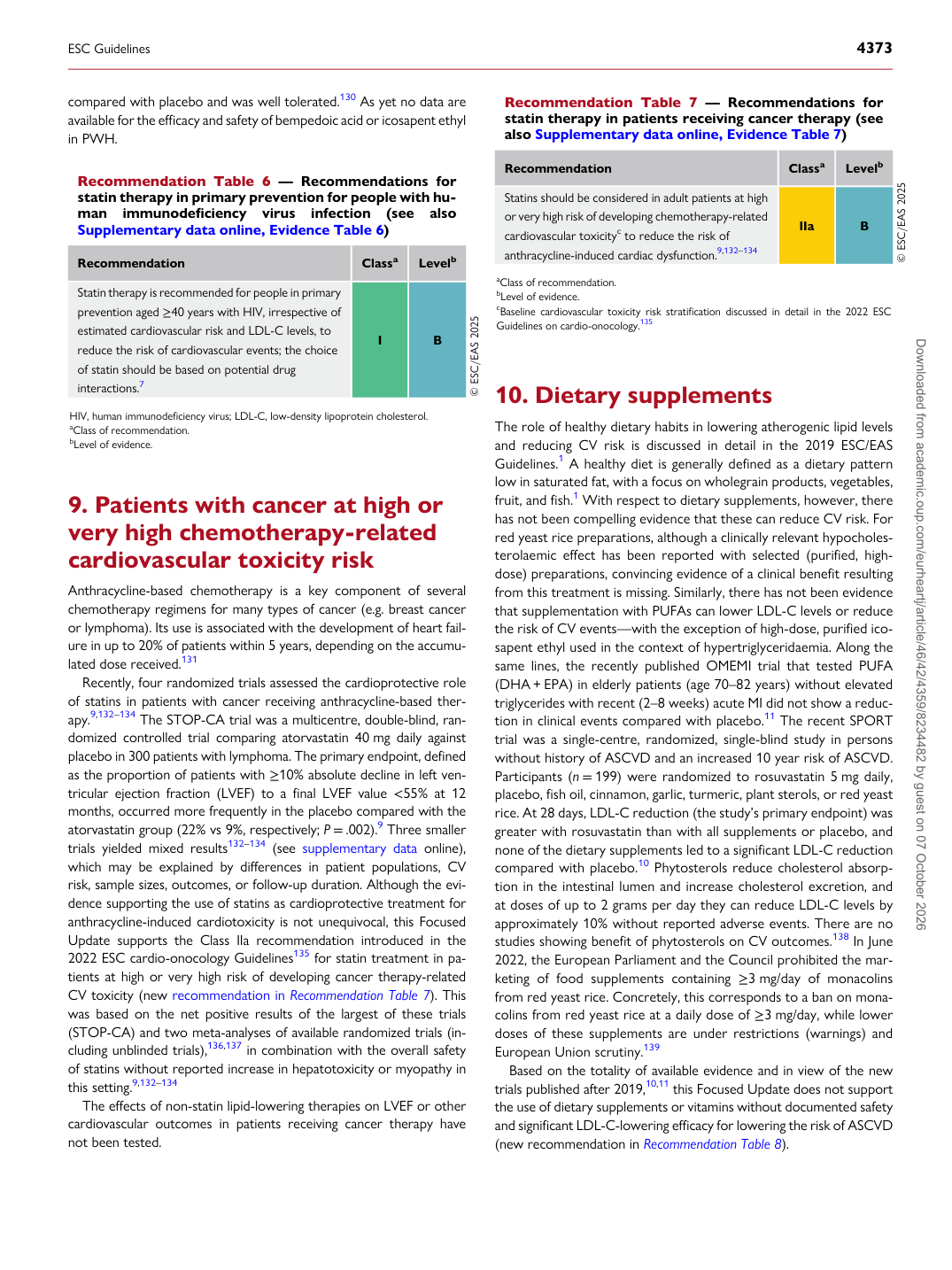
Anthracycline-based chemotherapy is a key component of several chemotherapy regimens for many types of cancer (e.g. breast cancer or lymphoma). Its use is associated with the development of heart failure in up to 20% of patients within 5 years, depending on the accumulated dose received.131 Recently, four randomized trials assessed the cardioprotective role of statins in patients with cancer receiving anthracycline-based therapy.9,132–134 The STOP-CA trial was a multicentre, double-blind, randomized controlled trial comparing atorvastatin 40 mg daily against placebo in 300 patients with lymphoma. The primary endpoint, defined as the proportion of patients with ≥10% absolute decline in left ventricular ejection fraction (LVEF) to a final LVEF value <55% at 12 months, occurred more frequently in the placebo compared with the atorvastatin group (22% vs 9%, respectively; P = .002).9 Three smaller trials yielded mixed results132–134 (see supplementary data online), which may be explained by differences in patient populations, CV risk, sample sizes, outcomes, or follow-up duration. Although the evidence supporting the use of statins as cardioprotective treatment for anthracycline-induced cardiotoxicity is not unequivocal, this Focused Update supports the Class IIa recommendation introduced in the 2022 ESC cardio-onocology Guidelines135 for statin treatment in patients at high or very high risk of developing cancer therapy-related CV toxicity (new recommendation in Recommendation Table 7). This was based on the net positive results of the largest of these trials (STOP-CA) and two meta-analyses of available randomized trials (including unblinded trials),136,137 in combination with the overall safety of statins without reported increase in hepatotoxicity or myopathy in this setting.9,132–134 The effects of non-statin lipid-lowering therapies on LVEF or other cardiovascular outcomes in patients receiving cancer therapy have not been tested. 10 Dietary supplements

The role of healthy dietary habits in lowering atherogenic lipid levels and reducing CV risk is discussed in detail in the 2019 ESC/EAS Guidelines.1 A healthy diet is generally defined as a dietary pattern low in saturated fat, with a focus on wholegrain products, vegetables, fruit, and fish.1 With respect to dietary supplements, however, there has not been compelling evidence that these can reduce CV risk. For red yeast rice preparations, although a clinically relevant hypocholesterolaemic effect has been reported with selected (purified, highdose) preparations, convincing evidence of a clinical benefit resulting from this treatment is missing. Similarly, there has not been evidence that supplementation with PUFAs can lower LDL-C levels or reduce the risk of CV events—with the exception of high-dose, purified icosapent ethyl used in the context of hypertriglyceridaemia. Along the same lines, the recently published OMEMI trial that tested PUFA (DHA + EPA) in elderly patients (age 70–82 years) without elevated triglycerides with recent (2–8 weeks) acute MI did not show a reduction in clinical events compared with placebo.11 The recent SPORT trial was a single-centre, randomized, single-blind study in persons without history of ASCVD and an increased 10 year risk of ASCVD. Participants (n = 199) were randomized to rosuvastatin 5 mg daily, placebo, fish oil, cinnamon, garlic, turmeric, plant sterols, or red yeast rice. At 28 days, LDL-C reduction (the study’s primary endpoint) was greater with rosuvastatin than with all supplements or placebo, and none of the dietary supplements led to a significant LDL-C reduction compared with placebo.10 Phytosterols reduce cholesterol absorption in the intestinal lumen and increase cholesterol excretion, and at doses of up to 2 grams per day they can reduce LDL-C levels by approximately 10% without reported adverse events. There are no studies showing benefit of phytosterols on CV outcomes.138 In June 2022, the European Parliament and the Council prohibited the marketing of food supplements containing ≥3 mg/day of monacolins from red yeast rice. Concretely, this corresponds to a ban on monacolins from red yeast rice at a daily dose of ≥3 mg/day, while lower doses of these supplements are under restrictions (warnings) and European Union scrutiny.139 Based on the totality of available evidence and in view of the new trials published after 2019,10,11 this Focused Update does not support the use of dietary supplements or vitamins without documented safety and significant LDL-C-lowering efficacy for lowering the risk of ASCVD (new recommendation in Recommendation Table 8).

Recommendation Table 6 — Recommendations for statin therapy in primary prevention for people with human immunodeficiency virus infection (see also Supplementary data online, Evidence Table 6)

Recommendation Classa Levelb

Statin therapy is recommended for people in primary prevention aged ≥40 years with HIV, irrespective of estimated cardiovascular risk and LDL-C levels, to reduce the risk of cardiovascular events; the choice of statin should be based on potential drug interactions.7 I B © ESC/EAS 2025

HIV, human immunodeficiency virus; LDL-C, low-density lipoprotein cholesterol. aClass of recommendation. bLevel of evidence. Recommendation Table 7 — Recommendations for statin therapy in patients receiving cancer therapy (see also Supplementary data online, Evidence Table 7)

Recommendation Classa Levelb

Statins should be considered in adult patients at high or very high risk of developing chemotherapy-related cardiovascular toxicityc to reduce the risk of anthracycline-induced cardiac dysfunction.9,132–134 IIa B © ESC/EAS 2025 aClass of recommendation. bLevel of evidence. cBaseline cardiovascular toxicity risk stratification discussed in detail in the 2022 ESC Guidelines on cardio-onocology.135

ESC Guidelines                                                                                                                                                                                          4373

Downloaded from academic.oup.com/eurheartj/article/46/42/4359/8234482 by guest on 07 October 2026