p.95 抽出テキスト
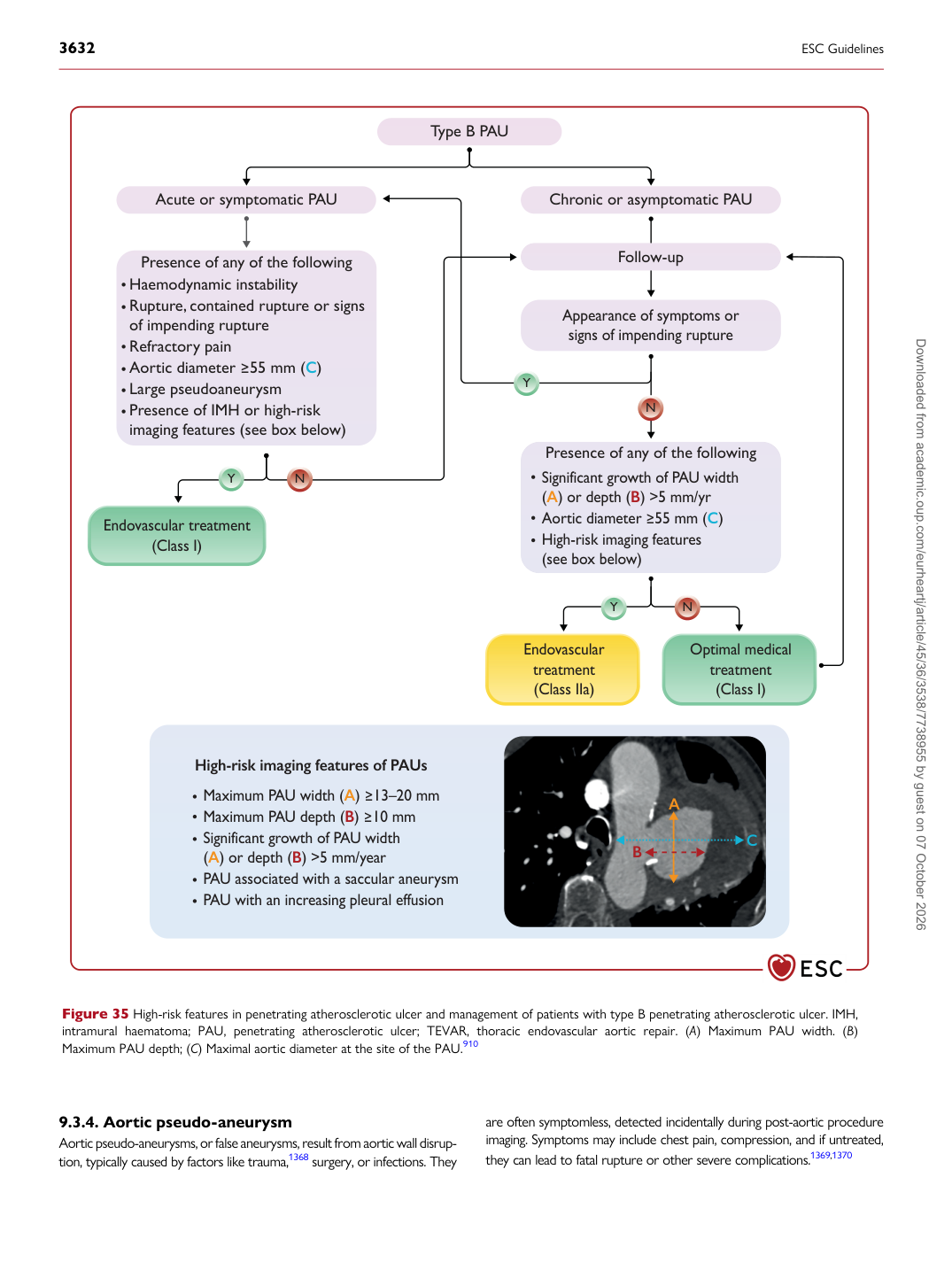
9.3.4 Aortic pseudo-aneurysm Aortic pseudo-aneurysms, or false aneurysms, result from aortic wall disruption, typically caused by factors like trauma,1368 surgery, or infections. They are often symptomless, detected incidentally during post-aortic procedure imaging. Symptoms may include chest pain, compression, and if untreated, they can lead to fatal rupture or other severe complications.1369,1370 Type B PAU Acute or symptomatic PAU Chronic or asymptomatic PAU Follow-up Appearance of symptoms or signs of impending rupture Endovascular treatment (Class IIa) Optimal medical treatment (Class I) Endovascular treatment (Class I) Haemodynamic instability Rupture, contained rupture or signs of impending rupture Refractory pain Aortic diameter 55 mm (C) Large pseudoaneurysm Presence of IMH or high-risk imaging features (see box below) High-risk imaging features of PAUs Maximum PAU width (A) 13–20 mm Maximum PAU depth (B) 10 mm Significant growth of PAU width (A) or depth (B) >5 mm/year PAU associated with a saccular aneurysm PAU with an increasing pleural effusion Significant growth of PAU width (A) or depth (B) >5 mm/yr Aortic diameter 55 mm (C) High-risk imaging features (see box below) N Y Y Y N N A B C Presence of any of the following Presence of any of the following Figure 35 High-risk features in penetrating atherosclerotic ulcer and management of patients with type B penetrating atherosclerotic ulcer. IMH, intramural haematoma; PAU, penetrating atherosclerotic ulcer; TEVAR, thoracic endovascular aortic repair. (A) Maximum PAU width. (B) Maximum PAU depth; (C) Maximal aortic diameter at the site of the PAU.910 Downloaded from academic.oup.com/eurheartj/article/45/36/3538/7738955 by guest on 07 October 2026