p.88 抽出テキスト
while others favour conventional central aortic repair.1275 The IRAD registry highlights the superiority of a surgical and hybrid approach over medical or endovascular therapy alone. Central aortic repair effectively restores perfusion, showing promising results for renal malperfusion, extremity malperfusion, uncomplicated mesenteric malperfusion, or combinations.

Cerebral malperfusion, equally grave, triggers treatment debates necessitating a multidisciplinary strategy. Evidence supports surgical

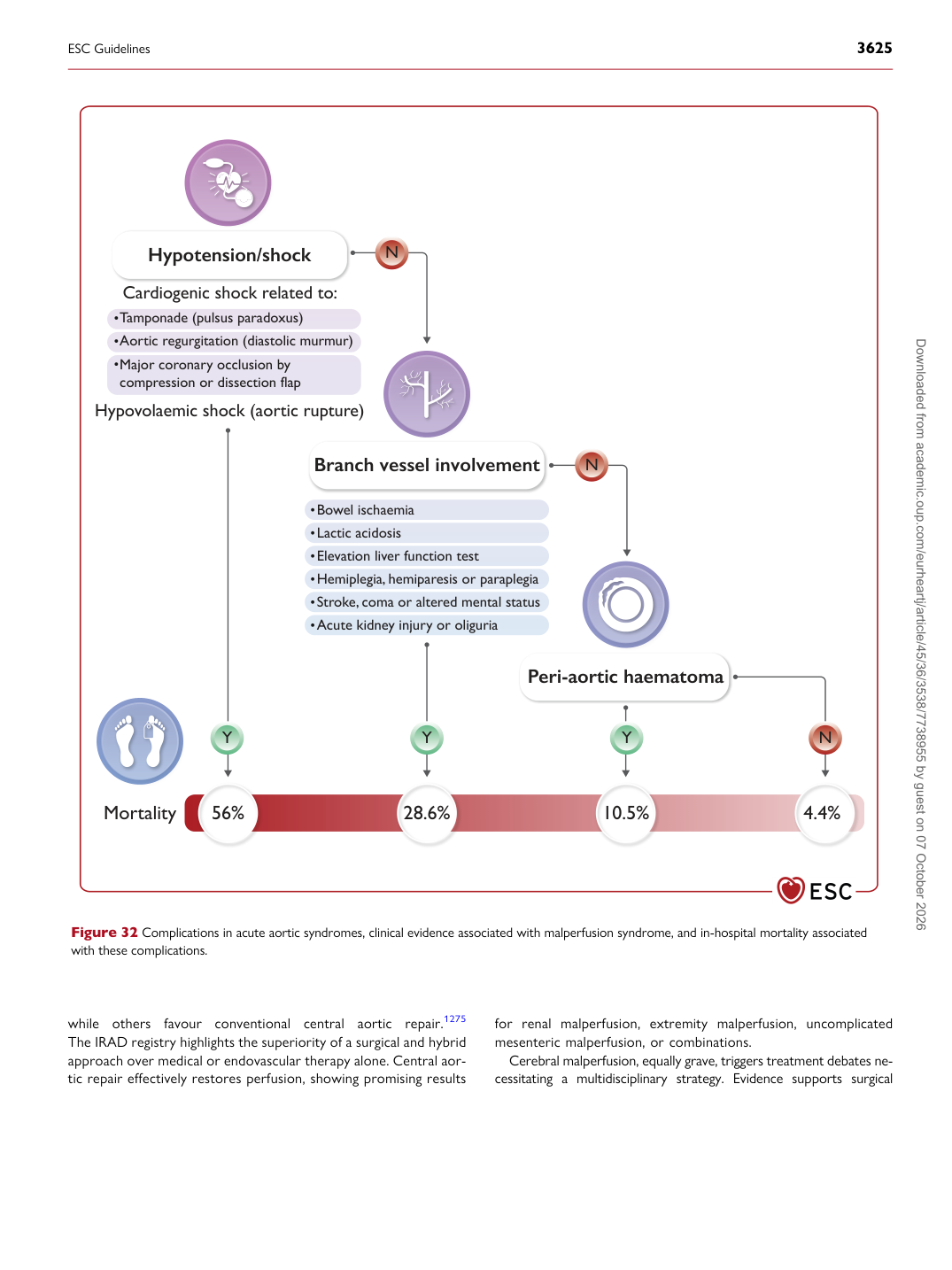
Hypotension/shock

Cardiogenic shock related to: Tamponade (pulsus paradoxus) Aortic regurgitation (diastolic murmur) Major coronary occlusion by compression or dissection flap

Hypovolaemic shock (aortic rupture)

Branch vessel involvement

Bowel ischaemia Lactic acidosis Elevation liver function test Hemiplegia, hemiparesis or paraplegia Stroke, coma or altered mental status Acute kidney injury or oliguria

Peri-aortic haematoma

Mortality 56% 28.6% 10.5% 4.4%

N

N

N

Y

Y

Y

Figure 32 Complications in acute aortic syndromes, clinical evidence associated with malperfusion syndrome, and in-hospital mortality associated with these complications.

ESC Guidelines                                                                                                                                                                                          3625

Downloaded from academic.oup.com/eurheartj/article/45/36/3538/7738955 by guest on 07 October 2026