p.42 抽出テキスト
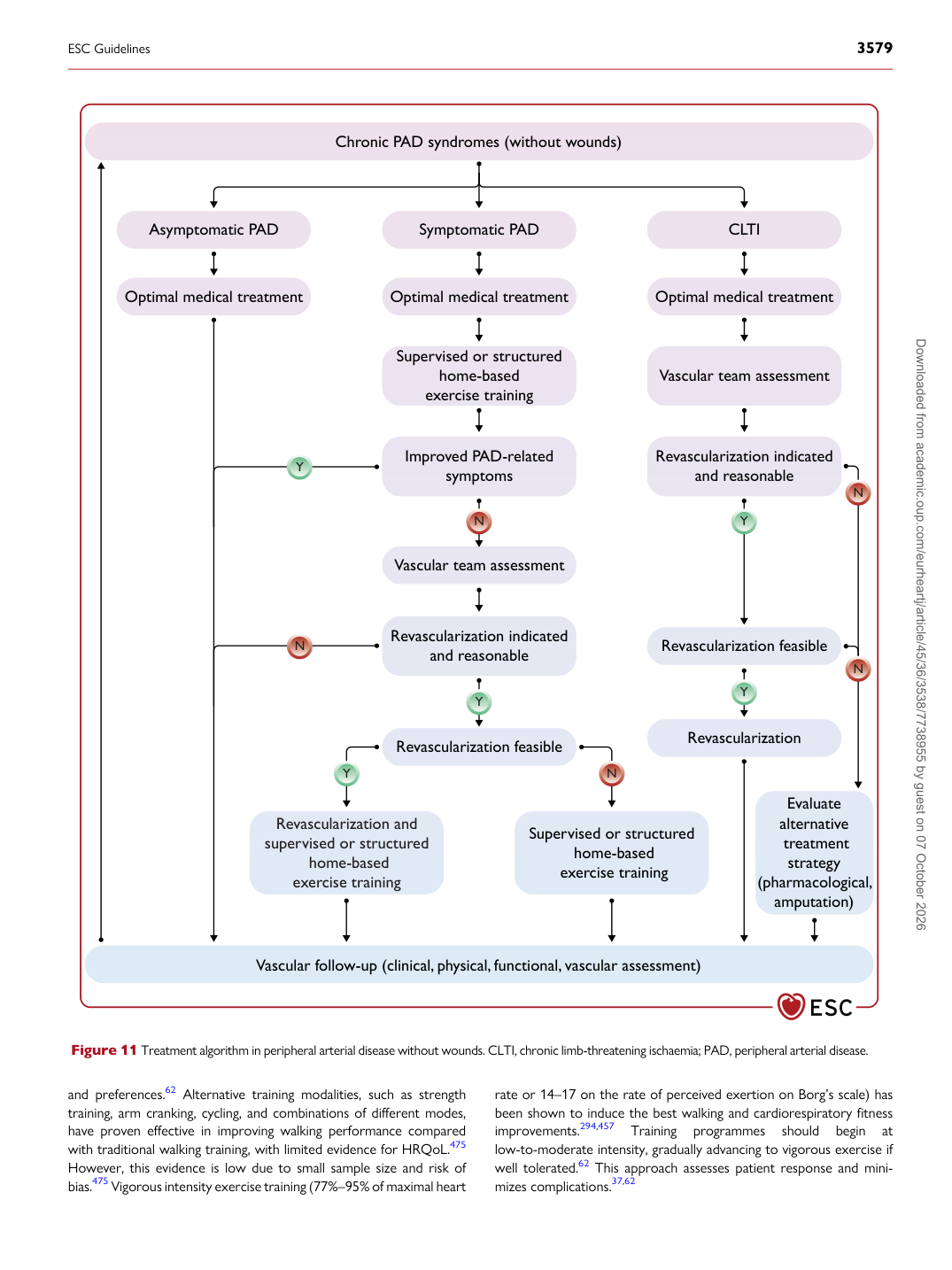
and preferences.62 Alternative training modalities, such as strength training, arm cranking, cycling, and combinations of different modes, have proven effective in improving walking performance compared with traditional walking training, with limited evidence for HRQoL.475 However, this evidence is low due to small sample size and risk of bias.475 Vigorous intensity exercise training (77%–95% of maximal heart rate or 14–17 on the rate of perceived exertion on Borg’s scale) has been shown to induce the best walking and cardiorespiratory fitness improvements.294,457 Training programmes should begin at low-to-moderate intensity, gradually advancing to vigorous exercise if well tolerated.62 This approach assesses patient response and minimizes complications.37,62

N

N

Chronic PAD syndromes (without wounds)

Vascular follow-up (clinical, physical, functional, vascular assessment)

Asymptomatic PAD Symptomatic PAD CLTI

Optimal medical treatment Optimal medical treatment Optimal medical treatment

Vascular team assessment

Revascularization feasible

Supervised or structured

home-based exercise training Vascular team assessment

Improved PAD-related

symptoms Revascularization indicated

and reasonable

Revascularization indicated

and reasonable

Revascularization and supervised or structured

home-based exercise training Supervised or structured

home-based exercise training Evaluate alternative treatment

strategy (pharmacological,

amputation)

Revascularization feasible

Revascularization

Y Y

Y N

N

Y

Y

N

Figure 11 Treatment algorithm in peripheral arterial disease without wounds. CLTI, chronic limb-threatening ischaemia; PAD, peripheral arterial disease.

ESC Guidelines                                                                                                                                                                                          3579

Downloaded from academic.oup.com/eurheartj/article/45/36/3538/7738955 by guest on 07 October 2026