p.40 抽出テキスト
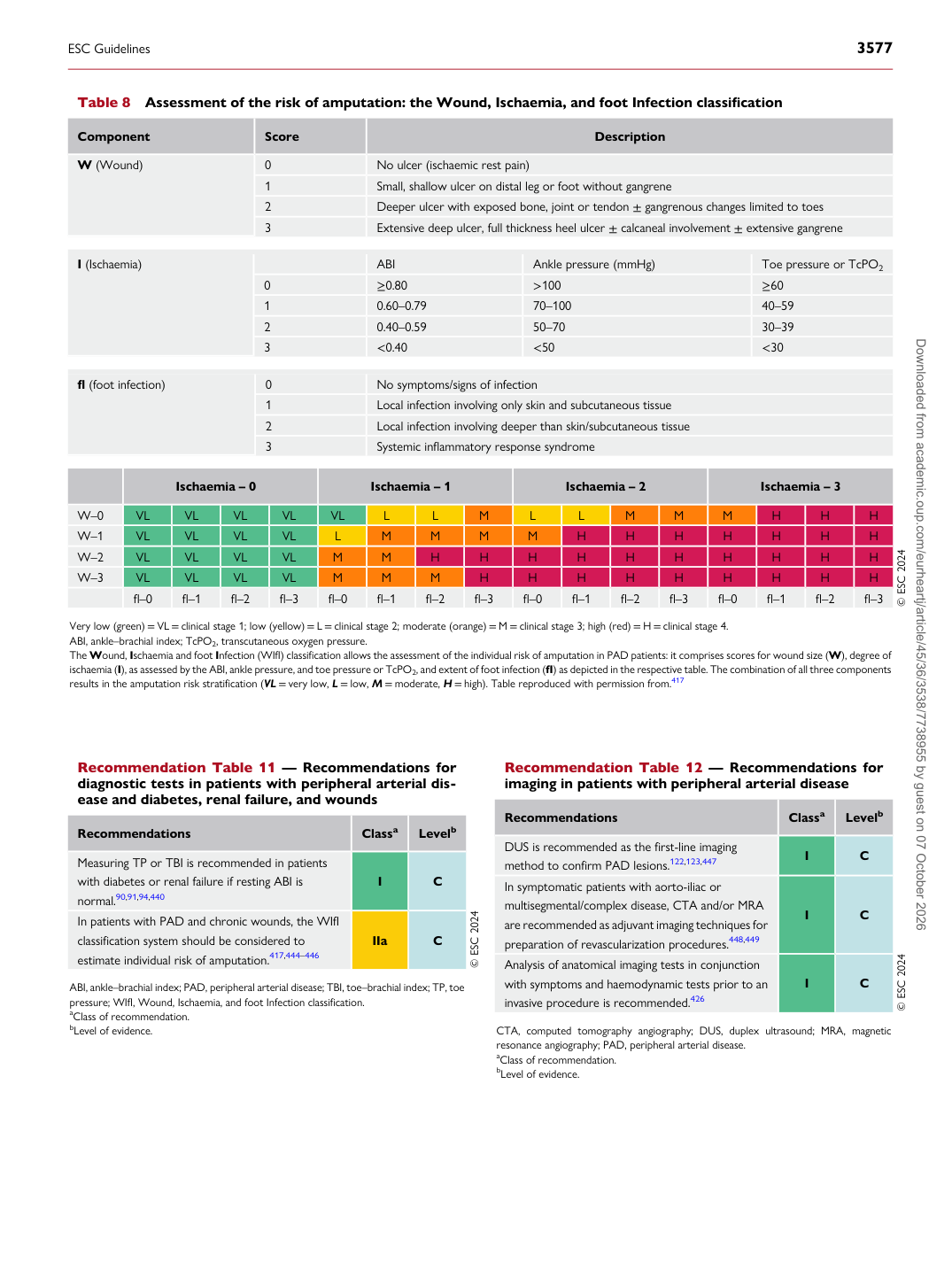
Table 8 Assessment of the risk of amputation: the Wound, Ischaemia, and foot Infection classification

Component Score Description

W (Wound) 0 No ulcer (ischaemic rest pain)

1 Small, shallow ulcer on distal leg or foot without gangrene

2 Deeper ulcer with exposed bone, joint or tendon ± gangrenous changes limited to toes

3 Extensive deep ulcer, full thickness heel ulcer ± calcaneal involvement ± extensive gangrene

I (Ischaemia) ABI Ankle pressure (mmHg) Toe pressure or TcPO2 0 ≥0.80 >100 ≥60

1 0.60–0.79 70–100 40–59 2 0.40–0.59 50–70 30–39 3 <0.40 <50 <30

fl (foot infection) 0 No symptoms/signs of infection

1 Local infection involving only skin and subcutaneous tissue

2 Local infection involving deeper than skin/subcutaneous tissue

3 Systemic inflammatory response syndrome

Ischaemia – 0 Ischaemia – 1 Ischaemia – 2 Ischaemia – 3

W–0 VL VL VL VL VL L L M L L M M M H H H W–1 VL VL VL VL L M M M M H H H H H H H W–2 VL VL VL VL M M H H H H H H H H H H W–3 VL VL VL VL M M M H H H H H H H H H

fl–0 fl–1 fl–2 fl–3 fl–0 fl–1 fl–2 fl–3 fl–0 fl–1 fl–2 fl–3 fl–0 fl–1 fl–2 fl–3 © ESC 2024

Very low (green) = VL = clinical stage 1; low (yellow) = L = clinical stage 2; moderate (orange) = M = clinical stage 3; high (red) = H = clinical stage 4. ABI, ankle–brachial index; TcPO2, transcutaneous oxygen pressure. The Wound, Ischaemia and foot Infection (WIfI) classification allows the assessment of the individual risk of amputation in PAD patients: it comprises scores for wound size (W), degree of ischaemia (I), as assessed by the ABI, ankle pressure, and toe pressure or TcPO2, and extent of foot infection (fI) as depicted in the respective table. The combination of all three components results in the amputation risk stratification (VL = very low, L = low, M = moderate, H = high). Table reproduced with permission from.417

Recommendation Table 11 — Recommendations for diagnostic tests in patients with peripheral arterial disease and diabetes, renal failure, and wounds

Recommendations Classa Levelb

Measuring TP or TBI is recommended in patients with diabetes or renal failure if resting ABI is normal.90,91,94,440 I C In patients with PAD and chronic wounds, the WIfI classification system should be considered to estimate individual risk of amputation.417,444–446 IIa C © ESC 2024

ABI, ankle–brachial index; PAD, peripheral arterial disease; TBI, toe–brachial index; TP, toe pressure; WIfI, Wound, Ischaemia, and foot Infection classification. aClass of recommendation. bLevel of evidence. Recommendation Table 12 — Recommendations for imaging in patients with peripheral arterial disease

Recommendations Classa Levelb

DUS is recommended as the first-line imaging method to confirm PAD lesions.122,123,447 I C In symptomatic patients with aorto-iliac or multisegmental/complex disease, CTA and/or MRA are recommended as adjuvant imaging techniques for preparation of revascularization procedures.448,449 I C Analysis of anatomical imaging tests in conjunction with symptoms and haemodynamic tests prior to an invasive procedure is recommended.426 I C © ESC 2024

CTA, computed tomography angiography; DUS, duplex ultrasound; MRA, magnetic resonance angiography; PAD, peripheral arterial disease. aClass of recommendation. bLevel of evidence.

ESC Guidelines                                                                                                                                                                                          3577

Downloaded from academic.oup.com/eurheartj/article/45/36/3538/7738955 by guest on 07 October 2026