p.32 抽出テキスト
7.1.2 Physical activity

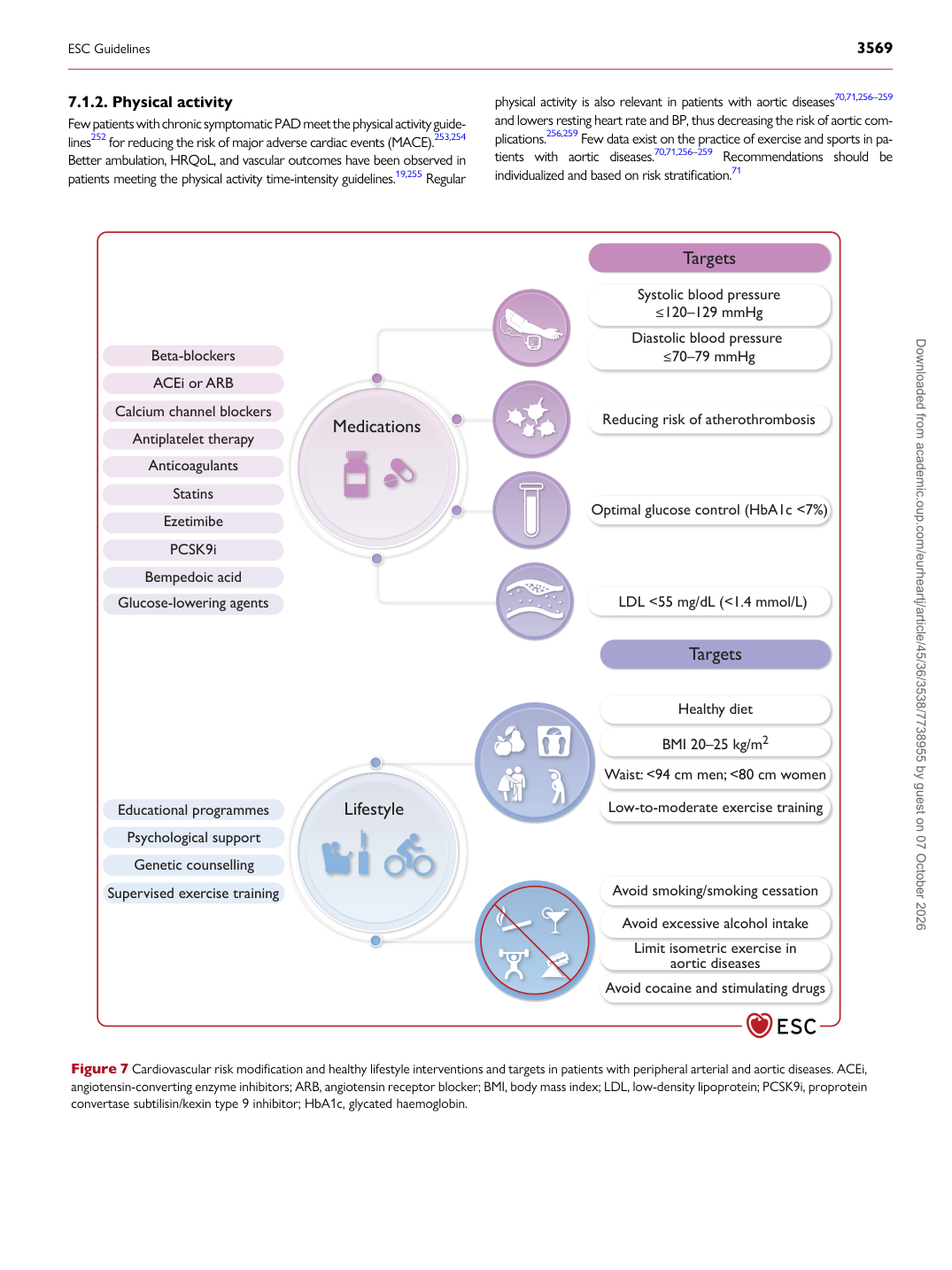
Few patients with chronic symptomatic PAD meet the physical activity guidelines252 for reducing the risk of major adverse cardiac events (MACE).253,254 Better ambulation, HRQoL, and vascular outcomes have been observed in patients meeting the physical activity time-intensity guidelines.19,255 Regular physical activity is also relevant in patients with aortic diseases70,71,256–259

and lowers resting heart rate and BP, thus decreasing the risk of aortic complications.256,259 Few data exist on the practice of exercise and sports in patients with aortic diseases.70,71,256–259 Recommendations should be individualized and based on risk stratification.71

Medications

Lifestyle Targets

Targets

Systolic blood pressure

≤120–129 mmHg

Beta-blockers ACEi or ARB Calcium channel blockers

Antiplatelet therapy

Statins Ezetimibe PCSK9i Bempedoic acid Reducing risk of atherothrombosis

Optimal glucose control (HbA1c <7%)

Educational programmes

Psychological support Genetic counselling Supervised exercise training LDL <55 mg/dL (<1.4 mmol/L)

Healthy diet BMI 20–25 kg/m2 Waist: <94 cm men; <80 cm women Low-to-moderate exercise training

Limit isometric exercise in

aortic diseases

Avoid excessive alcohol intake

Avoid smoking/smoking cessation

Avoid cocaine and stimulating drugs

Glucose-lowering agents Diastolic blood pressure

≤70–79 mmHg

Anticoagulants

Figure 7 Cardiovascular risk modification and healthy lifestyle interventions and targets in patients with peripheral arterial and aortic diseases. ACEi, angiotensin-converting enzyme inhibitors; ARB, angiotensin receptor blocker; BMI, body mass index; LDL, low-density lipoprotein; PCSK9i, proprotein convertase subtilisin/kexin type 9 inhibitor; HbA1c, glycated haemoglobin.

ESC Guidelines                                                                                                                                                                                          3569

Downloaded from academic.oup.com/eurheartj/article/45/36/3538/7738955 by guest on 07 October 2026