p.12 抽出テキスト
Diagnosis

Cardiologist

Angiologist

Vascular surgeon

Geneticist Cardiac surgeon CV radiologist

CV intensive care specialist

Neurologist Anaesthetist

Nurse Nephrologist

Exercise therapist

Follow-up

Treatment Prevention

Goals Initial steps

Clinical assessment Functional assessment QoL assessment Use of non-invasive tools Imaging, if appropriate

Optimal medical treatment Patient education CVRFs control Exercise/rehabilitation programmes Need for intervention/ surgery?

Regular follow-up Optimal medical treatment CVRFs management Patient education Patient’s tailored targets and goals Family screening, if appropriate

Increase awareness CVRFs management Screening Genetic counselling

Prevent development of peripheral and aortic atherosclerosis Prevent aortic dilation or lesions Improve patients’ QoL and functioning Reduce risk of MACE and MALE Improve survival Reduce the risk of hospitalization Reduce the need for intervention/surgery Screen patients at risk of PAAD Enable early access to treatment Ensure optimal medical treatment

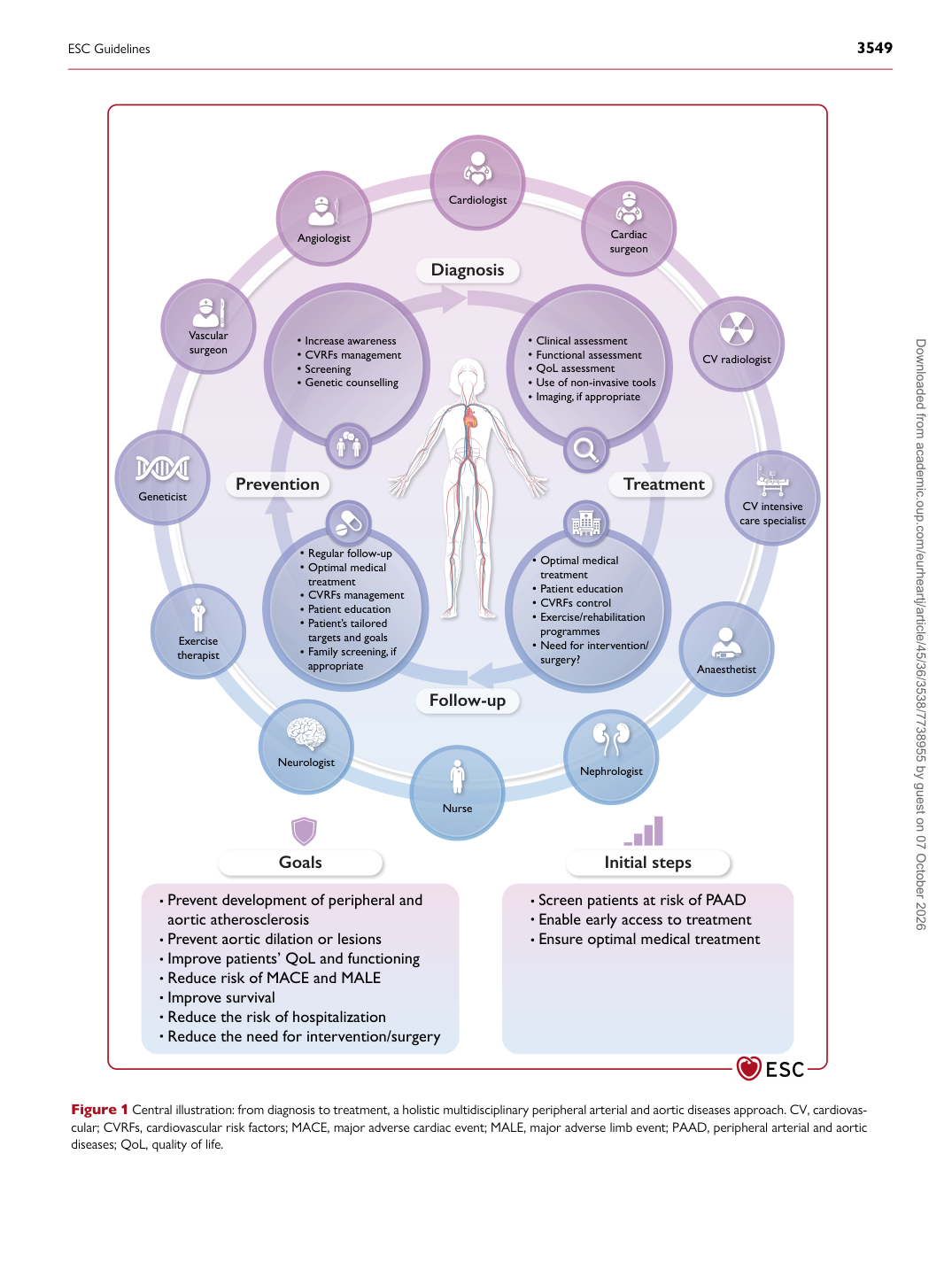
Figure 1 Central illustration: from diagnosis to treatment, a holistic multidisciplinary peripheral arterial and aortic diseases approach. CV, cardiovascular; CVRFs, cardiovascular risk factors; MACE, major adverse cardiac event; MALE, major adverse limb event; PAAD, peripheral arterial and aortic diseases; QoL, quality of life.

ESC Guidelines                                                                                                                                                                                          3549

Downloaded from academic.oup.com/eurheartj/article/45/36/3538/7738955 by guest on 07 October 2026