p.78 抽出テキスト
implementation of evidence-based guidelines in real-world clinical practice. (9) One of the most important changes in the 2024 Guidelines is the focus on evidence related to CVD outcomes of BP-lowering interventions rather than BP lowering alone. (10) Irrespective of the threshold BP above which BP-lowering treat-

ment (lifestyle or pharmacological or other treatment) is recommended, the on-treatment BP target is 120–129/70–79 mmHg for all adults, provided this treatment is well tolerated. There are several important exceptions to these targets and individualized decision-making is always the most important priority.

13 Gaps in the evidence

(1) Drivers of worsening trajectories of BP control in women and men. (2) Need for sex-specific data on epidemiology, risk factors, and pathophysiology of hypertension. Need for more prospective studies to assess women’s and men’s specific CVD risk factors pertinent to adults with elevated BP and hypertension, due to biological and socio-cultural conditions. This includes sex-specific weighting of traditional risk factors, as well as inclusion of sexdependent, non-traditional, vascular risk factors such as stress, socio-economic conditions, and others.1017,1018 We are also lacking data on sex-specific hormonal and genetic mechanisms and pathophysiology in the human.1019 Another important area in need of investigation is a better understanding of the role of gender in the management of elevated BP and hypertension (including gender-driven barriers in accessing medical care and adherence). (3) More widespread validation of home BP measuring devices. Validation protocols for cuffless BP measurement devices have just recently been proposed and need to be tested. (4) Clinical effectiveness of HMOD in directing intensity of care and personalized approaches in managing elevated BP and hypertension. (5) Best practice to screen and manage primary aldosteronism. (6) Clinical benefits of treating low CVD-risk individuals with elevated BP and further data strengthening the use of BP-lowering medication among high-risk persons with baseline systolic BP of 120–129 mmHg. (7) Need for more data on the sex-specific optimal dosing, effects, and adverse effects of BP-lowering drugs,1020 in particular from specifically planned prospective randomized trials. (8) More consideration for overall CVD outcomes of BP-lowering

interventions. (9) More European data (RCTs, real life) about the beneficial effect of

treating patients with elevated BP and hypertension with polypills (inclusive of non-BP lowering medications). (10) CVD outcomes-based data on MRAs as add-on therapy solely for resistant hypertension. (11) Trials on the BP-lowering effects of newer antidiabetic drugs (such as SGLT2 inhibitors and GLP-1 receptor agonists) or drugs that now have indications for other conditions, such as finerenone or sacubitril-valsartan. (12) Beneficial BP and CVD effects of increasing dietary potassium intake and other lifestyle interventions. Studies to disentangle the effect of sodium reduction vs. the effect of potassium supplementation on BP control and CVD outcomes. (13) RCTs comparing single-pill combination therapy with fixed doses vs. multiple monotherapies and their effects on CVD outcomes. (14) Cardiovascular outcomes trials of renal denervation. (15) BP-lowering treatment RCTs on different ethnic and migrant groups established in Europe. (16) Pharmacological BP management in young adults (aged <40 years)

and better data on the efficacy of a life-course approach for the drug management of BP.1021 (17) CVD outcomes in moderately to severely frail and/or very elderly persons where BP medications have been deprescribed, and the impact of competing risks. (18) Management of renal artery disease with haemodynamically stable but severe stenosis (i.e. without high-risk features). (19) Need for clinical trials on managing hypertension in patients treated with anticancer drugs or anti-rejection drugs in recipients of an allograft transplant. (20) Hypertension management in the setting of climate changes, global warming, air and other forms of pollution, pandemics, war zones, and in the context of drug restrictions experienced in some low-to-middle-income countries. (21) Need to improve implementation of guidelines by healthcare providers. (22) How to develop sustainable hypertension care at the intersection of growing numbers of patients and limited resources. (23) Treat-to-target trials specifically testing BP-lowering drugs among

drug-naïve persons with baseline BP of 120–129 mmHg and increased CVD risk.

14 ‘What to do’ and ‘what not to do’ messages from the guidelines

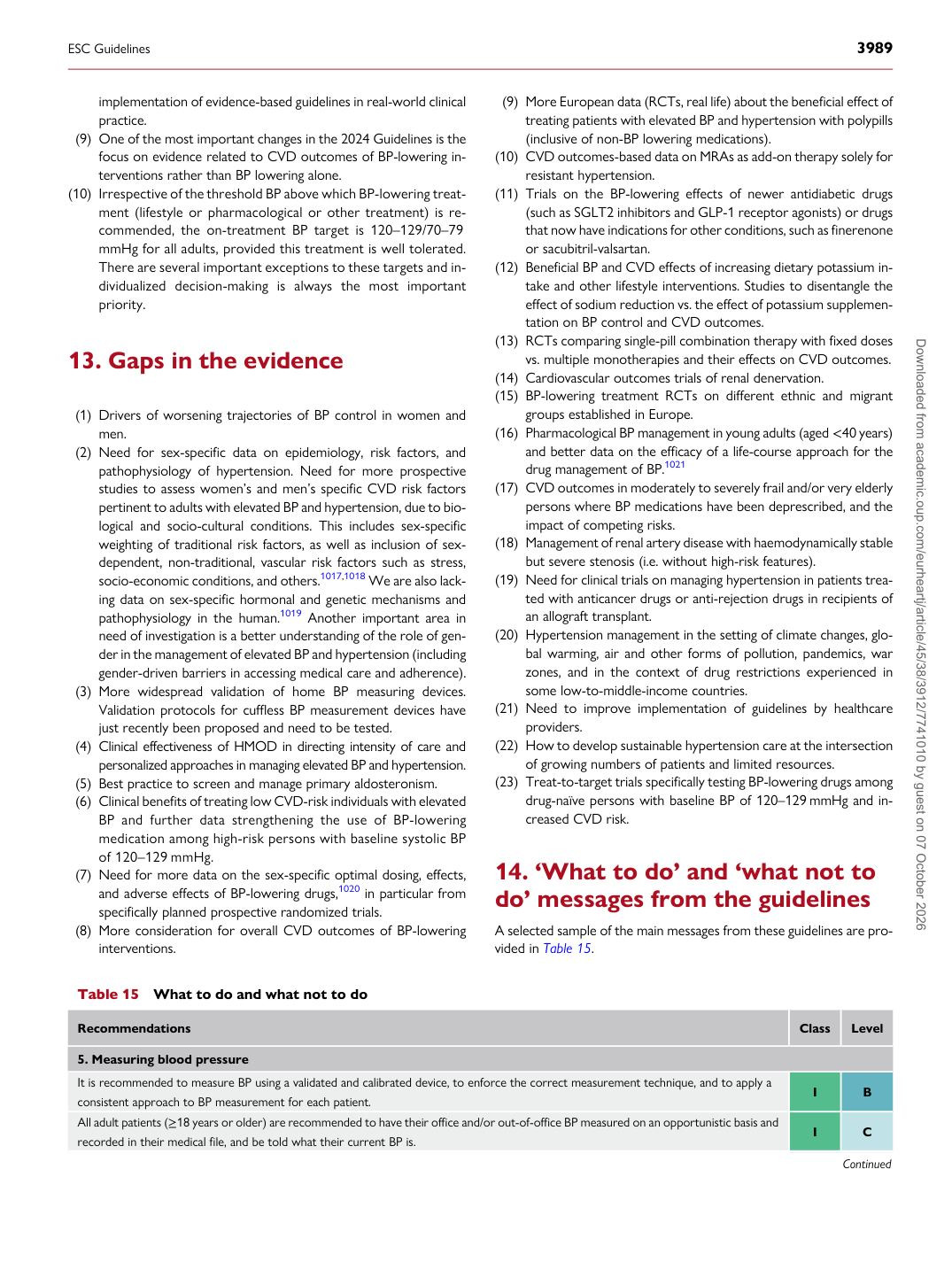
A selected sample of the main messages from these guidelines are provided in Table 15.

Table 15 What to do and what not to do

Recommendations Class Level

5 Measuring blood pressure

It is recommended to measure BP using a validated and calibrated device, to enforce the correct measurement technique, and to apply a consistent approach to BP measurement for each patient. I B All adult patients (≥18 years or older) are recommended to have their office and/or out-of-office BP measured on an opportunistic basis and recorded in their medical file, and be told what their current BP is. I C

Continued

ESC Guidelines                                                                                                                                                                                          3989

Downloaded from academic.oup.com/eurheartj/article/45/38/3912/7741010 by guest on 07 October 2026