p.45 抽出テキスト
and without moderate-to-advanced CKD, particularly women, an increase in potassium intake by 0.5–1.0 g/day may be considered to achieve a favourable Na+/K+ ratio of 1.5–2.0 and to reduce CVD risk. Potassium supplementation can be achieved by substituting sodium using potassium enriched salts (75% sodium chloride and 25% potassium chloride)368,379,380 or by increasing dietary potassium intake [e.g. a 125 g (medium) banana contains about 450 mg potassium, or unsalted boiled spinach (840 mg/ cup) or mashed avocado (710 mg/cup)]. In patients with CKD and/or those taking potassium-sparing medication, such as some diuretics, angiotensin-converting enzyme (ACE) inhibitors, angiotensin receptor blockers (ARBs) or spironolactone, serum levels of potassium should be monitored (noting that phlebotomy recommendations to avoid spuriously high potassium results should be followed). 8.2.2 Physical activity and exercise

In a systematic review and meta-analyses, aerobic (endurance) exercise was suggested as the first-line exercise therapy for reducing BP in patients with elevated BP and hypertension vs. alternative forms of exercise, such as dynamic or isometric resistance training.381 In patients with hypertension, regular aerobic exercise substantially lowers systolic BP by up to 7–8 mmHg and diastolic BP by up to 4–5 mmHg.381,382 For nonwhite patients with hypertension, dynamic resistance training elicits BP reductions that appear comparable to aerobic exercise.383 Isometric resistance training also achieves clinically relevant BP reductions in patients with hypertension, but results are inconsistent and more data from more high-quality intervention trials are required (see Supplementary data online).381,384,385 With respect to mode and intensity of aerobic exercise,

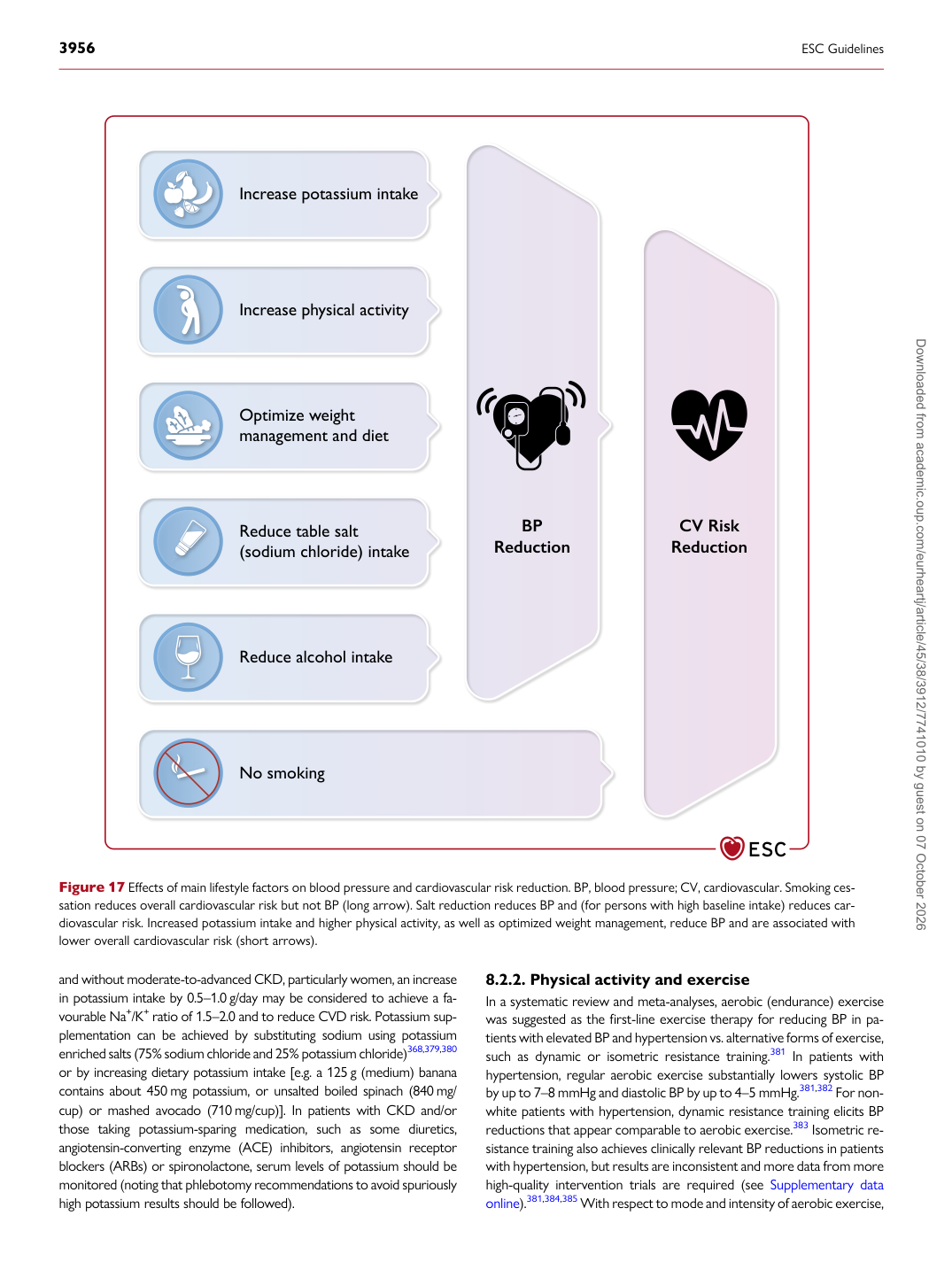
Increase physical activity

Increase potassium intake

Optimize weight management and diet

No smoking

Reduce alcohol intake

Reduce table salt (sodium chloride) intake BP Reduction CV Risk Reduction

Figure 17 Effects of main lifestyle factors on blood pressure and cardiovascular risk reduction. BP, blood pressure; CV, cardiovascular. Smoking cessation reduces overall cardiovascular risk but not BP (long arrow). Salt reduction reduces BP and (for persons with high baseline intake) reduces cardiovascular risk. Increased potassium intake and higher physical activity, as well as optimized weight management, reduce BP and are associated with lower overall cardiovascular risk (short arrows). Downloaded from academic.oup.com/eurheartj/article/45/38/3912/7741010 by guest on 07 October 2026