p.35 抽出テキスト
While the role of optional tests for HMOD (Table 9) in the management of elevated BP is emphasized in these guidelines, we also note that these tests may help to optimize treatment in hypertensive adults with BP of >140/90 mmHg who are prescribed BP-lowering therapy (e.g. by facilitating patient adherence and overcoming clinician inertia in achieving an intensive BP treatment target of as low as 120 mmHg systolic). The role of visualizing HMOD in helping motivate risk-reducing changes in patients and overcome physician inertia has been tested in interventional trials (Section 7.3).247,265–267

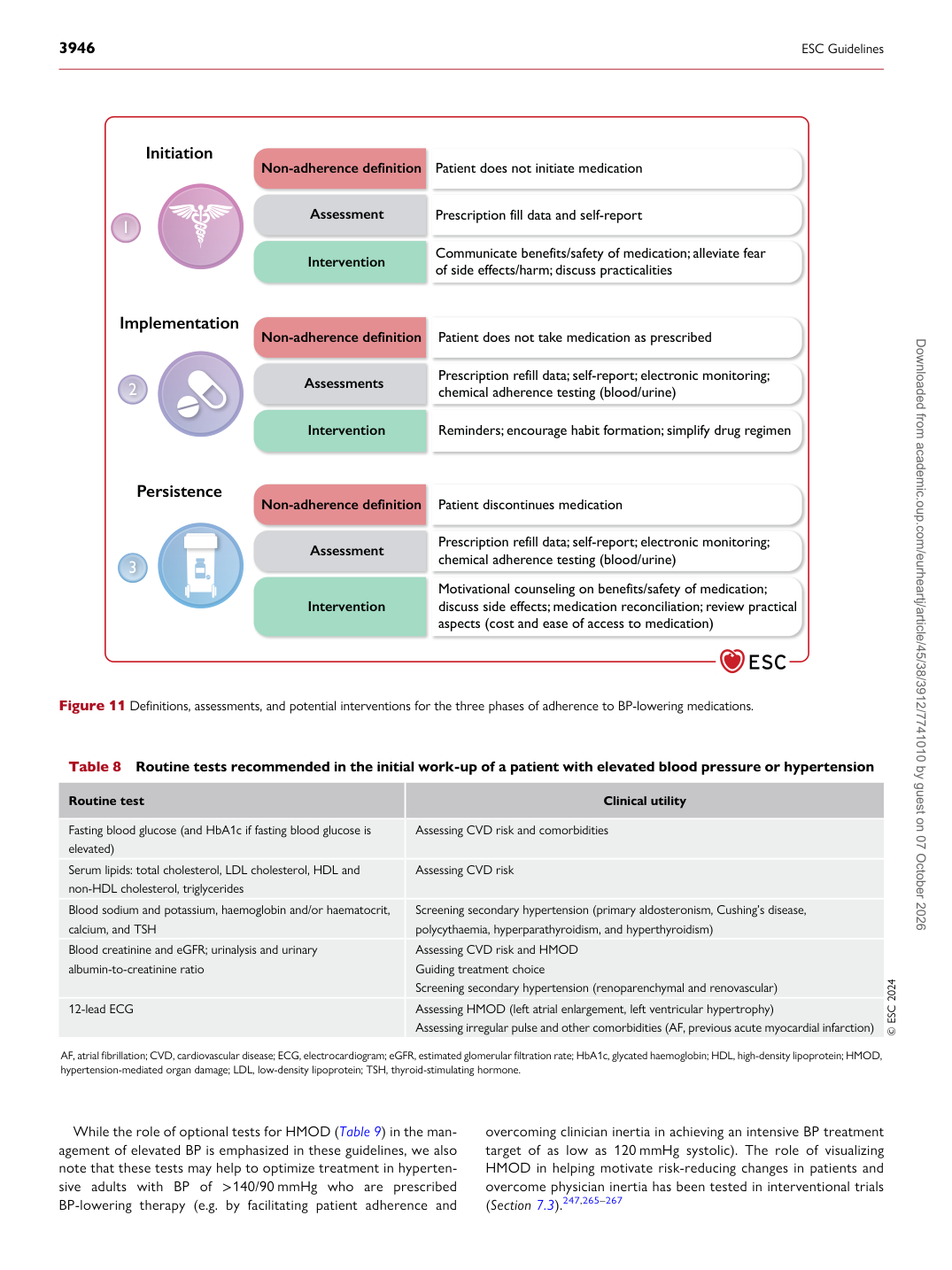
Non-adherence definition

Assessment

Intervention

Non-adherence definition

Assessments

Intervention

1

2

3 Patient does not initiate medication

Prescription fill data and self-report

Communicate benefits/safety of medication; alleviate fear of side effects/harm; discuss practicalities

Patient does not take medication as prescribed

Prescription refill data; self-report; electronic monitoring; chemical adherence testing (blood/urine)

Reminders; encourage habit formation; simplify drug regimen

Patient discontinues medication

Prescription refill data; self-report; electronic monitoring; chemical adherence testing (blood/urine) Motivational counseling on benefits/safety of medication; discuss side effects; medication reconciliation; review practical aspects (cost and ease of access to medication)

Non-adherence definition

Assessment

Intervention

Initiation

Implementation

Persistence

Figure 11 Definitions, assessments, and potential interventions for the three phases of adherence to BP-lowering medications.

Table 8 Routine tests recommended in the initial work-up of a patient with elevated blood pressure or hypertension

Routine test Clinical utility

Fasting blood glucose (and HbA1c if fasting blood glucose is elevated) Assessing CVD risk and comorbidities Serum lipids: total cholesterol, LDL cholesterol, HDL and non-HDL cholesterol, triglycerides Assessing CVD risk Blood sodium and potassium, haemoglobin and/or haematocrit, calcium, and TSH Screening secondary hypertension (primary aldosteronism, Cushing’s disease, polycythaemia, hyperparathyroidism, and hyperthyroidism) Blood creatinine and eGFR; urinalysis and urinary albumin-to-creatinine ratio Assessing CVD risk and HMOD Guiding treatment choice

Screening secondary hypertension (renoparenchymal and renovascular)

12-lead ECG Assessing HMOD (left atrial enlargement, left ventricular hypertrophy)

Assessing irregular pulse and other comorbidities (AF, previous acute myocardial infarction) © ESC 2024

AF, atrial fibrillation; CVD, cardiovascular disease; ECG, electrocardiogram; eGFR, estimated glomerular filtration rate; HbA1c, glycated haemoglobin; HDL, high-density lipoprotein; HMOD, hypertension-mediated organ damage; LDL, low-density lipoprotein; TSH, thyroid-stimulating hormone. Downloaded from academic.oup.com/eurheartj/article/45/38/3912/7741010 by guest on 07 October 2026