p.33 抽出テキスト
7.3 Communicating the diagnosis

Behavioural responses to health-related threats are strongly influenced by five core themes (termed ‘illness representations’), which are identity, timeline, cause, consequences, and control/cure.243,244 These illness representations form the basis of how patients understand a diagnosis, and can influence their responses after being diagnosed with hypertension.243 This conceptual framework can help guide the clinical communication of a diagnosis of hypertension. For example, patients’ understanding of the chronic nature of hypertension (i.e. timeline theme) is key for ensuring long-term engagement with medical treatment.245 Prior to commencing treatment, it is helpful to understand the extent to which patients believe that medications are necessary and ascertain if they have concerns.246 The core illness representations and beliefs about medicines for clinicians to consider are included in Table 7. The 2021 ESC Guidelines on cardiovascular disease prevention in clinical practice recommend “an informed discussion about CVD risk and treatment benefits—tailored to the needs of a patient” as part of a diagnosis communication in hypertension.170 This can be facilitated using an interdisciplinary healthcare-provided approach (see Section 11) and by visual information or other more accessible material that might optimally communicate hypertension-related risk.128 Visualizing risk by medical imaging to motivate risk-reducing behaviour changes may also be beneficial.247

7.4 Baseline assessment and diagnostic

approach 7.4.1. Medical history, medication history, and physical examination The purpose of clinical evaluation is to diagnose hypertension, delineate factors potentially contributing to hypertension, identify other CVD risk factors, define relevant comorbidities, screen for potential secondary causes of hypertension (where indicated), and establish whether

N Y

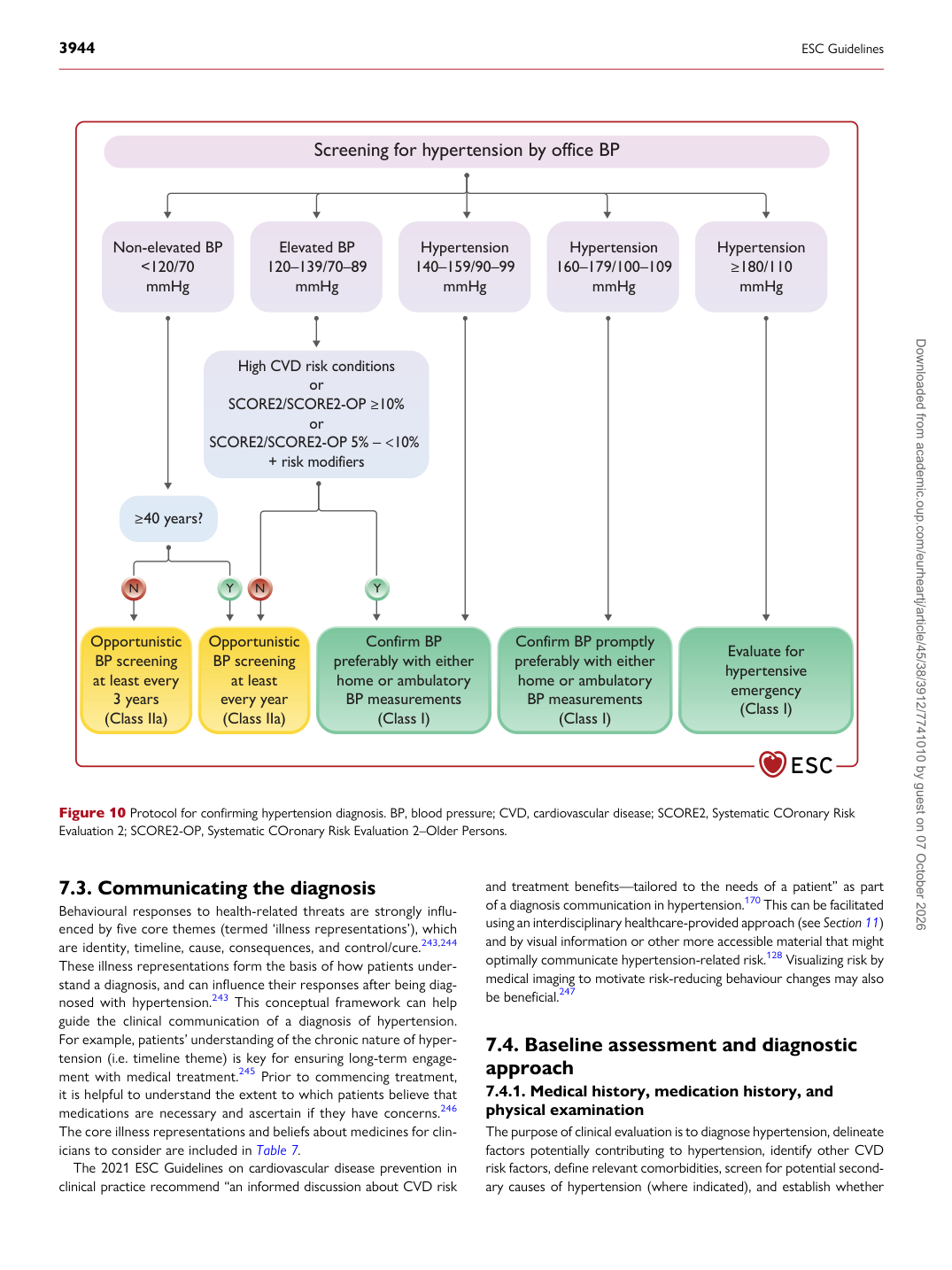
N Y Screening for hypertension by office BP

High CVD risk conditions or SCORE2/SCORE2-OP ≥10% or SCORE2/SCORE2-OP 5% – <10%

+ risk modifiers

≥40 years?

Non-elevated BP

<120/70 mmHg Elevated BP 120–139/70–89 mmHg Hypertension 140–159/90–99 mmHg Hypertension 160–179/100–109 mmHg Hypertension

≥180/110

mmHg

Opportunistic BP screening at least every

3 years (Class IIa) Opportunistic

BP screening at least every year (Class IIa) Evaluate for hypertensive

emergency

(Class I)

Confirm BP preferably with either home or ambulatory

BP measurements

(Class I) Confirm BP promptly preferably with either

home or ambulatory

BP measurements

(Class I)

Figure 10 Protocol for confirming hypertension diagnosis. BP, blood pressure; CVD, cardiovascular disease; SCORE2, Systematic COronary Risk Evaluation 2; SCORE2-OP, Systematic COronary Risk Evaluation 2–Older Persons. Downloaded from academic.oup.com/eurheartj/article/45/38/3912/7741010 by guest on 07 October 2026