p.29 抽出テキスト
6.4.2 Non-traditional cardiovascular disease risk

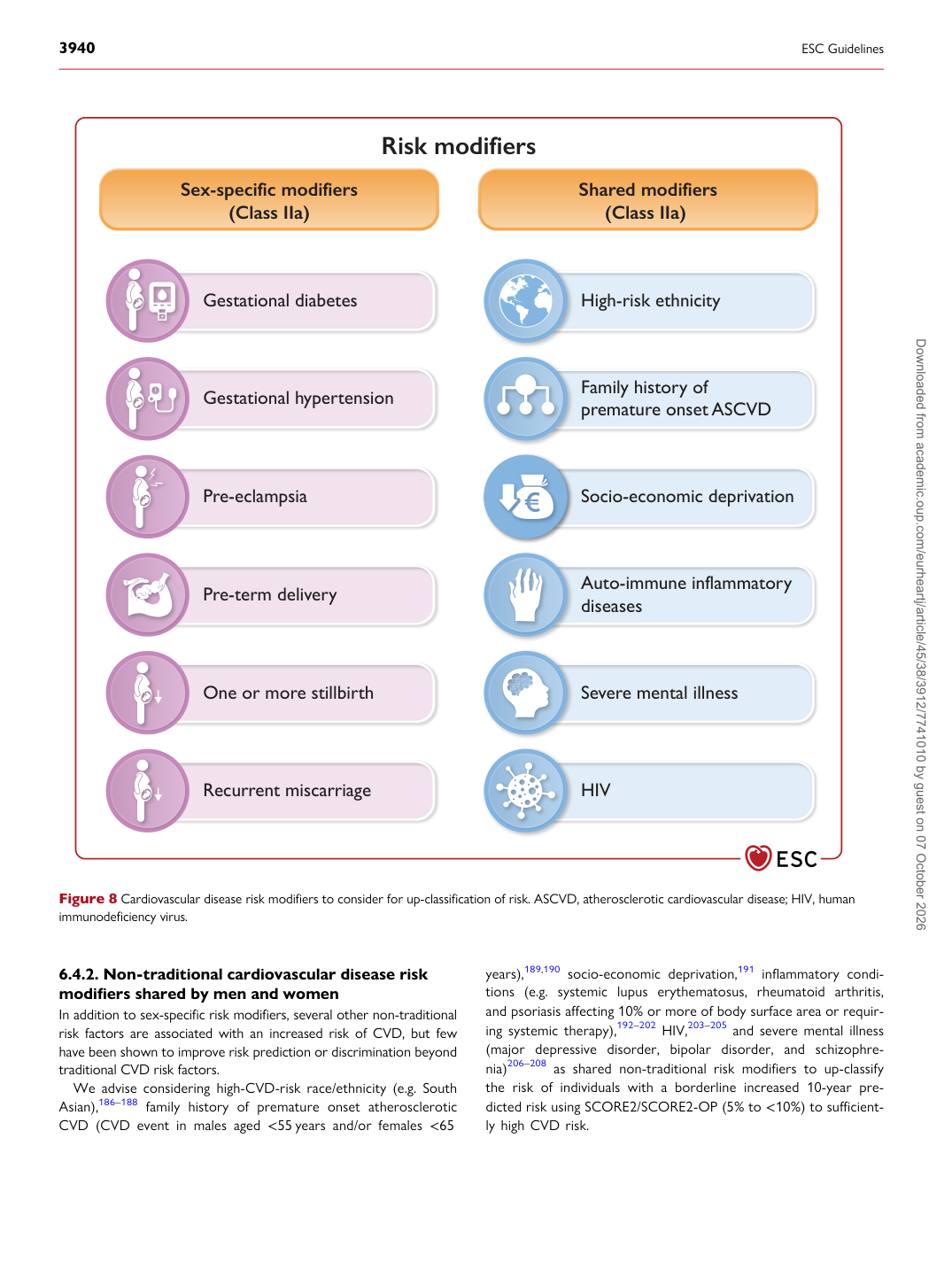
modifiers shared by men and women In addition to sex-specific risk modifiers, several other non-traditional risk factors are associated with an increased risk of CVD, but few have been shown to improve risk prediction or discrimination beyond traditional CVD risk factors. We advise considering high-CVD-risk race/ethnicity (e.g. South Asian),186–188 family history of premature onset atherosclerotic CVD (CVD event in males aged <55 years and/or females <65 years),189,190 socio-economic deprivation,191 inflammatory conditions (e.g. systemic lupus erythematosus, rheumatoid arthritis, and psoriasis affecting 10% or more of body surface area or requiring systemic therapy),192–202 HIV,203–205 and severe mental illness (major depressive disorder, bipolar disorder, and schizophrenia)206–208 as shared non-traditional risk modifiers to up-classify the risk of individuals with a borderline increased 10-year predicted risk using SCORE2/SCORE2-OP (5% to <10%) to sufficiently high CVD risk.

Sex-specific modifiers

(Class IIa) Shared modifiers

(Class IIa)

High-risk ethnicity

Gestational hypertension

Gestational diabetes

Pre-eclampsia

Pre-term delivery

One or more stillbirth

Recurrent miscarriage Family history of premature onset ASCVD

Socio-economic deprivation

Auto-immune inflammatory diseases

Severe mental illness

Risk modifiers

HIV

Figure 8 Cardiovascular disease risk modifiers to consider for up-classification of risk. ASCVD, atherosclerotic cardiovascular disease; HIV, human immunodeficiency virus. Downloaded from academic.oup.com/eurheartj/article/45/38/3912/7741010 by guest on 07 October 2026