p.26 抽出テキスト
hypertension diagnosis. As the efficacy of BP lowering on preventing CVD events extends down to a systolic BP of 120 mmHg and a diastolic BP of 70 mmHg,116,135,136,146 patients with elevated BP and increased CVD risk can also derive benefit from BP-lowering treatment.124,145 The heterogeneity in CVD risk among adults with elevated BP is larger than in those with hypertension, as such patients tend to be younger, and their absolute CVD risk depends more on the prevalence of concomitant CVD risk factors.123,147 Consequently, formally estimating the patient’s CVD risk, encapsulating demographics and other CVD risk factors, is recommended to guide BP-lowering treatment decisions among patients with elevated BP.148–151 6.3 Predicting cardiovascular disease risk

Certain conditions on their own are associated with sufficient CVD risk such that patients with elevated BP alongside these conditions can be considered for BP-lowering therapy (Figure 7). These include moderate or severe chronic kidney disease (CKD),152 established clinical CVD (coronary heart disease, cerebrovascular disease, peripheral arterial disease, or heart failure)153–158 concomitant HMOD (see Figure 7; Section 7; Supplementary data online, Table S1),31,159 diabetes mellitus, and familial hypercholesterolaemia (probable or definite).160–163 Regarding diabetes, some adults aged <60 years with type 2 diabetes and elevated BP have 10-year CVD risk of <10%. Accordingly, the diabetes-specific

Non-elevated blood pressure

Office BP

SBP <120 mmHg and DBP <70 mmHg

HBPM

SBP <120 mmHg and DBP <70 mmHg

ABPM

Daytime SBP <120 mmHg and Daytime DBP <70 mmHg Elevated blood pressure

Office BP

SBP 120–139 mmHg or DBP 70–89 mmHg

HBPM

SBP 120–134 mmHg or DBP 70–84 mmHg

ABPM

Daytime SBP 120–134 mmHg or Daytime DBP 70–84 mmHg Hypertension

Office BP

SBP ≥140 mmHg or DBP ≥90 mmHg

HBPM

SBP ≥135 mmHg or DBP ≥85 mmHg

ABPM

Daytime SBP ≥135 mmHg or Daytime DBP ≥85 mmHg

Insufficient evidence confirming

the efficacy and safety of BP pharmacological treatment Risk stratify to identify

individuals with high cardiovascular risk for BP pharmacological treatment Cardiovascular risk is sufficiently high to merit

BP pharmacological treatment initiation

Blood pressure classification

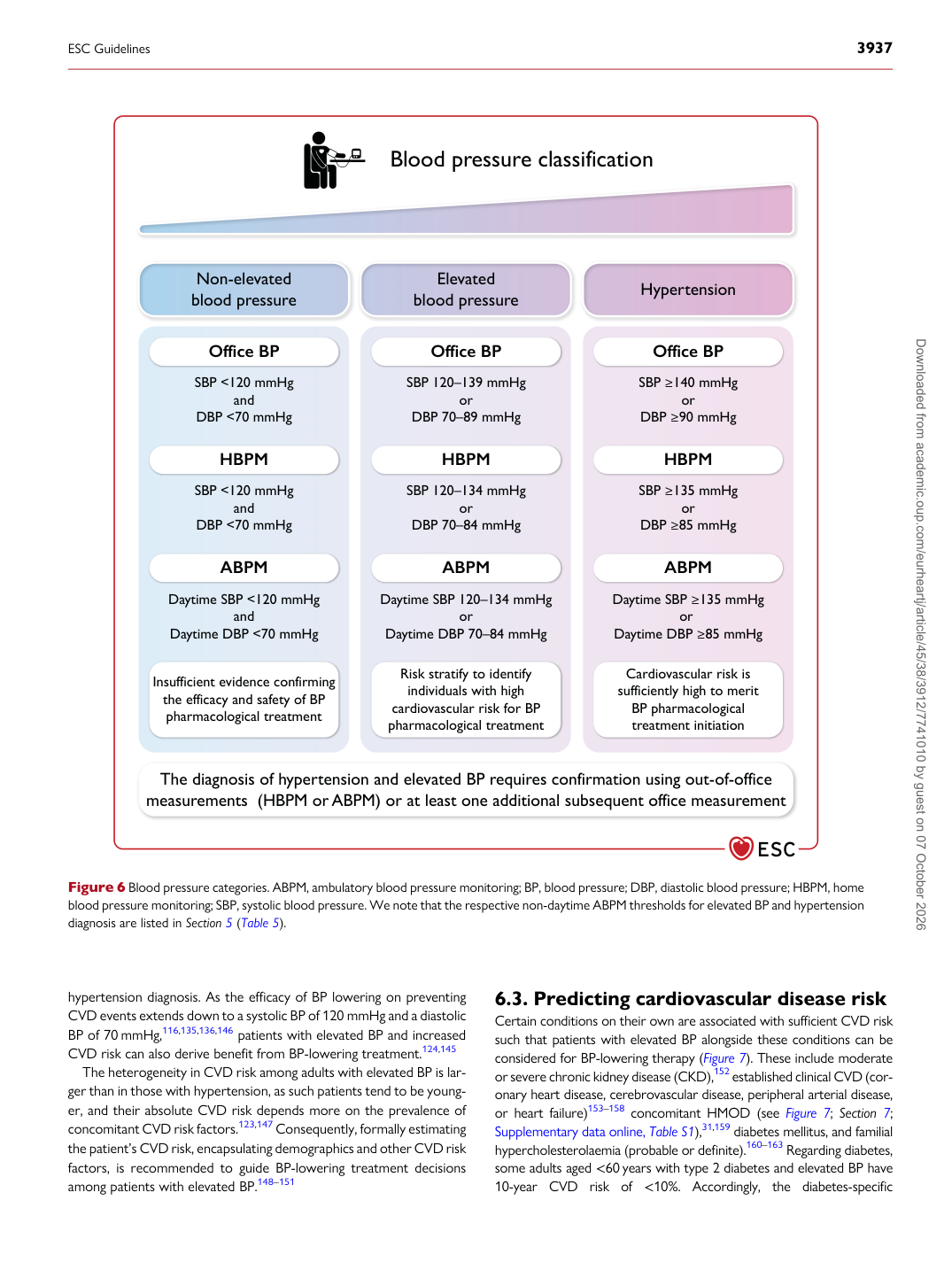
The diagnosis of hypertension and elevated BP requires confirmation using out-of-office measurements  (HBPM or ABPM) or at least one additional subsequent office measurement

Figure 6 Blood pressure categories. ABPM, ambulatory blood pressure monitoring; BP, blood pressure; DBP, diastolic blood pressure; HBPM, home blood pressure monitoring; SBP, systolic blood pressure. We note that the respective non-daytime ABPM thresholds for elevated BP and hypertension diagnosis are listed in Section 5 (Table 5).

ESC Guidelines                                                                                                                                                                                          3937

Downloaded from academic.oup.com/eurheartj/article/45/38/3912/7741010 by guest on 07 October 2026