p.17 抽出テキスト
3 Pathophysiology of elevated

blood pressure and hypertension

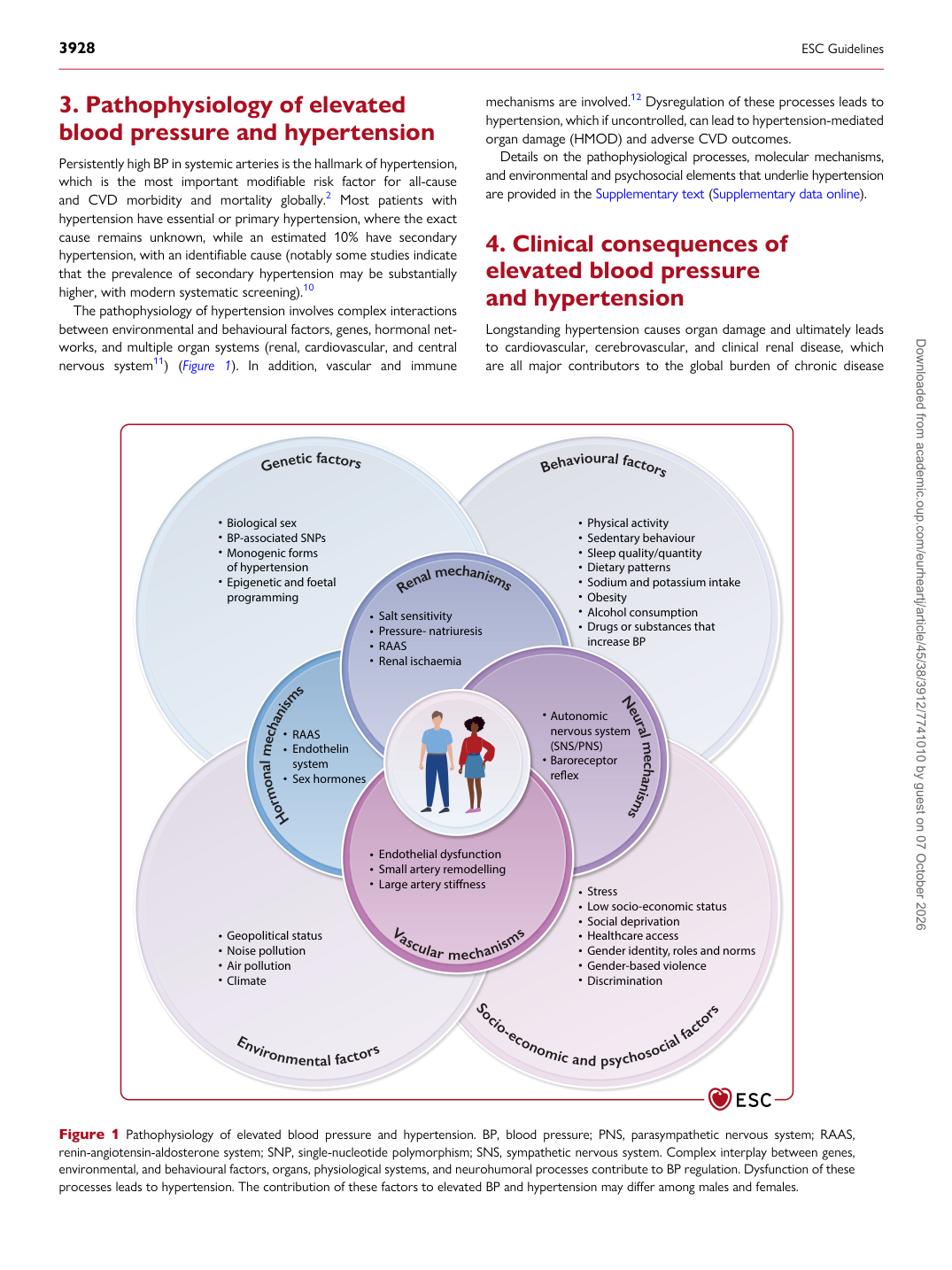
Persistently high BP in systemic arteries is the hallmark of hypertension, which is the most important modifiable risk factor for all-cause and CVD morbidity and mortality globally.2 Most patients with hypertension have essential or primary hypertension, where the exact cause remains unknown, while an estimated 10% have secondary hypertension, with an identifiable cause (notably some studies indicate that the prevalence of secondary hypertension may be substantially higher, with modern systematic screening).10 The pathophysiology of hypertension involves complex interactions between environmental and behavioural factors, genes, hormonal networks, and multiple organ systems (renal, cardiovascular, and central nervous system11) (Figure 1). In addition, vascular and immune mechanisms are involved.12 Dysregulation of these processes leads to hypertension, which if uncontrolled, can lead to hypertension-mediated organ damage (HMOD) and adverse CVD outcomes.

Details on the pathophysiological processes, molecular mechanisms, and environmental and psychosocial elements that underlie hypertension are provided in the Supplementary text (Supplementary data online).

4 Clinical consequences of

elevated blood pressure and hypertension

Longstanding hypertension causes organ damage and ultimately leads to cardiovascular, cerebrovascular, and clinical renal disease, which are all major contributors to the global burden of chronic disease

Physical activity Sedentary behaviour Sleep quality/quantity Dietary patterns Sodium and potassium intake Obesity Alcohol consumption Drugs or substances that increase BP

Geopolitical status Noise pollution Air pollution Climate Salt sensitivity Pressure- natriuresis RAAS Renal ischaemia

RAAS Endothelin system Sex hormones

Endothelial dysfunction Small artery remodelling Large artery stiffness

Biological sex BP-associated SNPs Monogenic forms of hypertension Epigenetic and foetal programming

Stress Low socio-economic status Social deprivation Healthcare access Gender identity, roles and norms Gender-based violence Discrimination

B e h a vi o u ra l fa ct o rs

G e n et ic f a ct o rs

S o ci

o -e

c

o

n

o m ic a n d p sy c h o s o

ci

al

f

a

ct

o

rs

E

n

vi r o n m e n ta l fa ct o rs

H

o

r

m

o

n

a

l

m

e

c

h

a

n

i

s

m

s R

e

n

a l m e c h a n i s

m

s

N e u r a l m e c h a n i s m s

V

a

s

c

u l a r m e c h a n

i

s

m

s Autonomic nervous system (SNS/PNS) Baroreceptor reflex

Figure 1 Pathophysiology of elevated blood pressure and hypertension. BP, blood pressure; PNS, parasympathetic nervous system; RAAS, renin-angiotensin-aldosterone system; SNP, single-nucleotide polymorphism; SNS, sympathetic nervous system. Complex interplay between genes, environmental, and behavioural factors, organs, physiological systems, and neurohumoral processes contribute to BP regulation. Dysfunction of these processes leads to hypertension. The contribution of these factors to elevated BP and hypertension may differ among males and females. Downloaded from academic.oup.com/eurheartj/article/45/38/3912/7741010 by guest on 07 October 2026