p.15 抽出テキスト
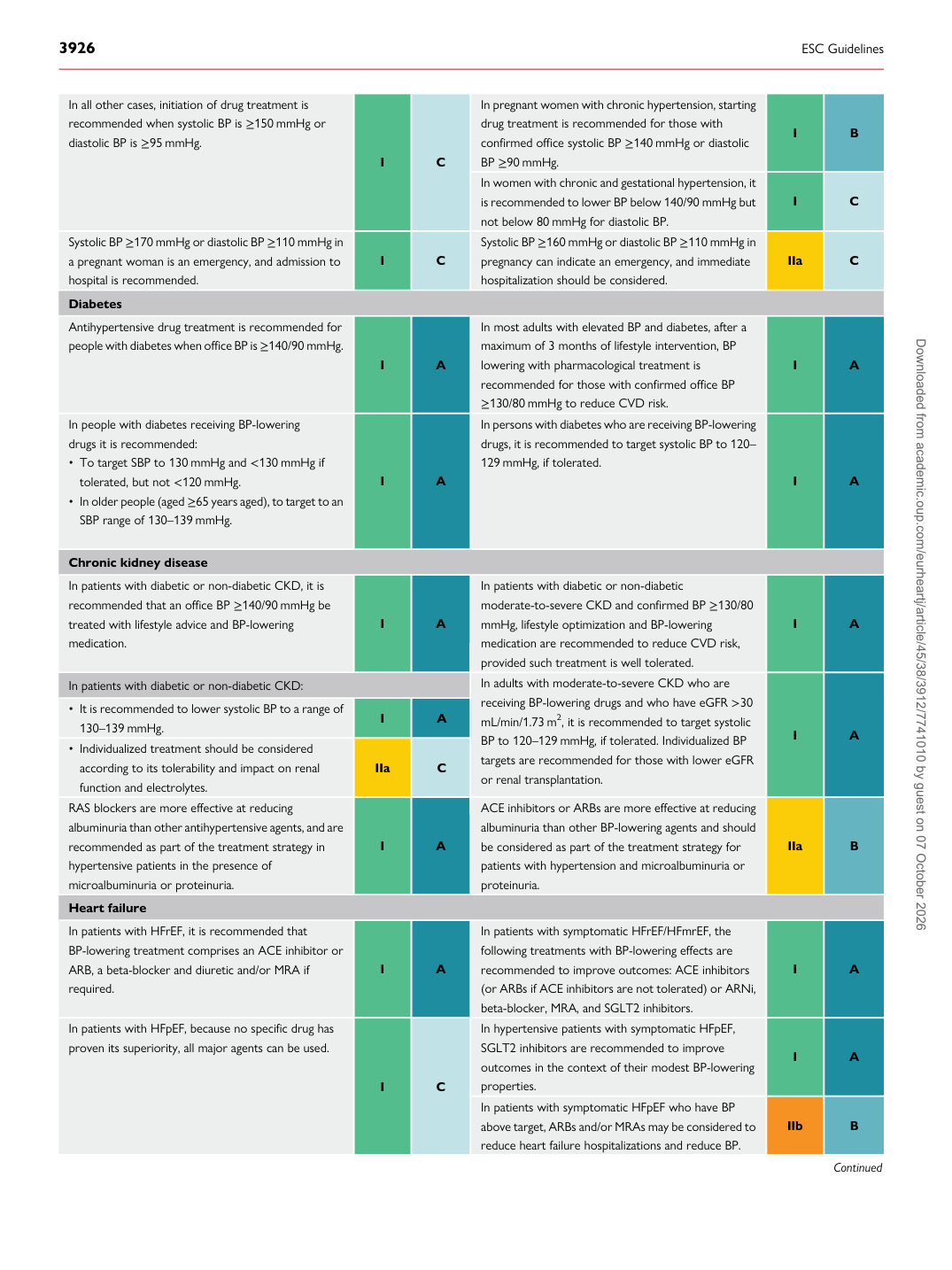
In all other cases, initiation of drug treatment is recommended when systolic BP is ≥150 mmHg or diastolic BP is ≥95 mmHg.

I C In pregnant women with chronic hypertension, starting

drug treatment is recommended for those with confirmed office systolic BP ≥140 mmHg or diastolic BP ≥90 mmHg. I B In women with chronic and gestational hypertension, it is recommended to lower BP below 140/90 mmHg but not below 80 mmHg for diastolic BP. I C

Systolic BP ≥170 mmHg or diastolic BP ≥110 mmHg in a pregnant woman is an emergency, and admission to hospital is recommended. I C Systolic BP ≥160 mmHg or diastolic BP ≥110 mmHg in

pregnancy can indicate an emergency, and immediate hospitalization should be considered. IIa C

Diabetes Antihypertensive drug treatment is recommended for people with diabetes when office BP is ≥140/90 mmHg.

I A In most adults with elevated BP and diabetes, after a

maximum of 3 months of lifestyle intervention, BP lowering with pharmacological treatment is recommended for those with confirmed office BP ≥130/80 mmHg to reduce CVD risk. I A

In people with diabetes receiving BP-lowering drugs it is recommended: • To target SBP to 130 mmHg and <130 mmHg if tolerated, but not <120 mmHg. • In older people (aged ≥65 years aged), to target to an

SBP range of 130–139 mmHg. I A In persons with diabetes who are receiving BP-lowering

drugs, it is recommended to target systolic BP to 120– 129 mmHg, if tolerated. I A

Chronic kidney disease In patients with diabetic or non-diabetic CKD, it is recommended that an office BP ≥140/90 mmHg be treated with lifestyle advice and BP-lowering medication. I A In patients with diabetic or non-diabetic moderate-to-severe CKD and confirmed BP ≥130/80

mmHg, lifestyle optimization and BP-lowering medication are recommended to reduce CVD risk, provided such treatment is well tolerated. I A

In patients with diabetic or non-diabetic CKD: In adults with moderate-to-severe CKD who are receiving BP-lowering drugs and who have eGFR >30

mL/min/1.73 m2, it is recommended to target systolic BP to 120–129 mmHg, if tolerated. Individualized BP targets are recommended for those with lower eGFR or renal transplantation. I A

• It is recommended to lower systolic BP to a range of

130–139 mmHg. I A • Individualized treatment should be considered

according to its tolerability and impact on renal function and electrolytes. IIa C RAS blockers are more effective at reducing albuminuria than other antihypertensive agents, and are recommended as part of the treatment strategy in hypertensive patients in the presence of microalbuminuria or proteinuria. I A ACE inhibitors or ARBs are more effective at reducing albuminuria than other BP-lowering agents and should

be considered as part of the treatment strategy for patients with hypertension and microalbuminuria or proteinuria. IIa B

Heart failure In patients with HFrEF, it is recommended that BP-lowering treatment comprises an ACE inhibitor or ARB, a beta-blocker and diuretic and/or MRA if required. I A In patients with symptomatic HFrEF/HFmrEF, the following treatments with BP-lowering effects are

recommended to improve outcomes: ACE inhibitors (or ARBs if ACE inhibitors are not tolerated) or ARNi, beta-blocker, MRA, and SGLT2 inhibitors. I A

In patients with HFpEF, because no specific drug has proven its superiority, all major agents can be used.

I C In hypertensive patients with symptomatic HFpEF, SGLT2 inhibitors are recommended to improve

outcomes in the context of their modest BP-lowering properties. I A In patients with symptomatic HFpEF who have BP above target, ARBs and/or MRAs may be considered to reduce heart failure hospitalizations and reduce BP. IIb B

Continued Downloaded from academic.oup.com/eurheartj/article/45/38/3912/7741010 by guest on 07 October 2026