p.20 抽出テキスト
Step 1

Step 2

Step 3

Step 4 History, symptoms, physical examination

Resting ECG. Biochemistry Pulmonary function testa

Chest X-raya

Initial evaluation

Non-cardiac reason for symptoms identified: treat underlying cause Unstable cardiac symptoms with angina, heart failure or arrhythmia: acute assessment by the ED

Assess clinical likelihood of obstructive CAD

Echocardiography at rest

Exercise ECGa

Further evaluation

Very low clinical likelihood of obstructive CAD (≤5%): consider deferring further testingb Severe comorbidities or low quality of life: consider no further testing and treat medically

Further non-invasive testing recommended based on clinical likelihood,

availability, local expertise, patient

characteristics and

preferenceb

Confirming diagnosis and estimating event-risk

CCTA: obstructive CAD?

Revascularization if:

high risk of adverse events

GDMT fails to relieve

symptoms

Treatment Invasive angiography if:

Very high clinical likelihood (>85%) Suspicion of high-risk obstructive CAD Severe myocardial ischaemia

Revascularization

To reduce symptoms To improve prognosis in patients with obstructive CAD who are at high risk of adverse events

Antianginal medical treatment

Lifestyle and risk factor modification

To improve prognosis

Disease-modifying medical treatment

To improve prognosis Functional imaging: myocardial ischaemia?

Selective second-line imaging to increase post-test likelihood

To reduce symptoms

In individuals with low and moderate (>5–50%) clinical likelihood In individuals with moderate and high (>15–85%) clinical likelihood

Consider ANOCA/INOCA

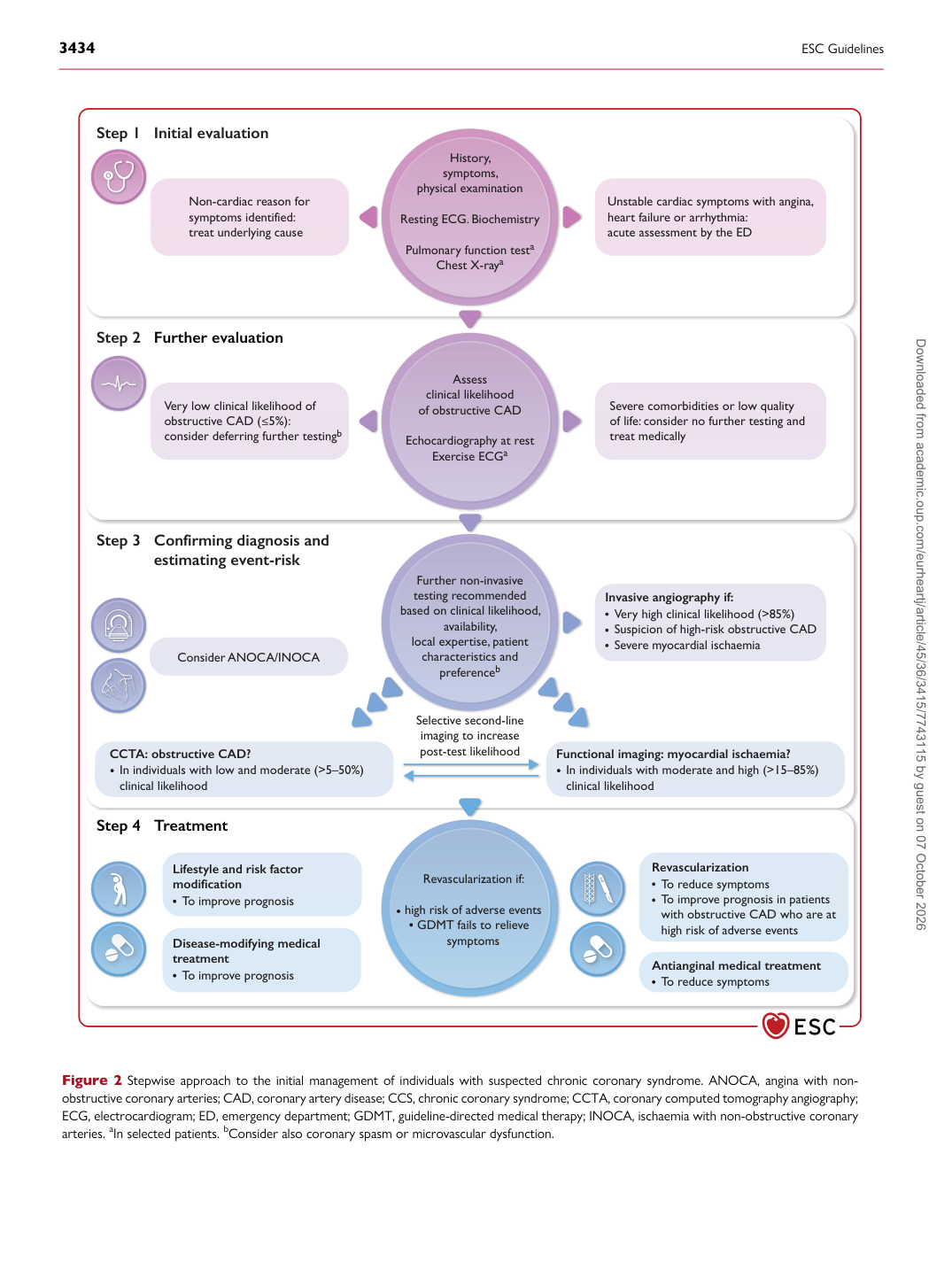
Figure 2 Stepwise approach to the initial management of individuals with suspected chronic coronary syndrome. ANOCA, angina with nonobstructive coronary arteries; CAD, coronary artery disease; CCS, chronic coronary syndrome; CCTA, coronary computed tomography angiography; ECG, electrocardiogram; ED, emergency department; GDMT, guideline-directed medical therapy; INOCA, ischaemia with non-obstructive coronary arteries. aIn selected patients. bConsider also coronary spasm or microvascular dysfunction. Downloaded from academic.oup.com/eurheartj/article/45/36/3415/7743115 by guest on 07 October 2026