p.12 抽出テキスト
2.4 What is new

The 2024 Guidelines contain a number of new and revised recommendations, which are summarized in Tables 3 and 4, respectively.

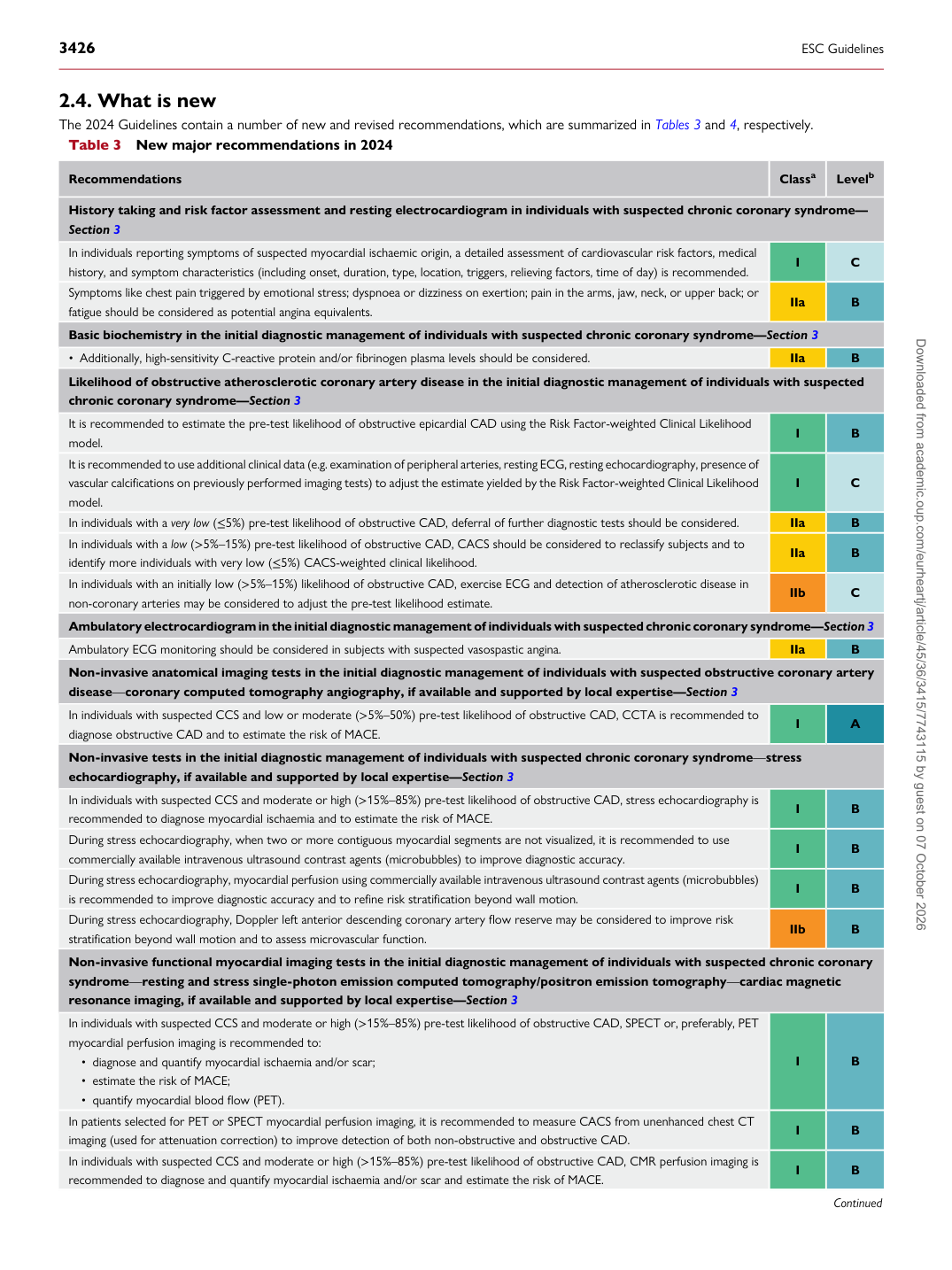
Table 3 New major recommendations in 2024

Recommendations Classa Levelb

History taking and risk factor assessment and resting electrocardiogram in individuals with suspected chronic coronary syndrome— Section 3 In individuals reporting symptoms of suspected myocardial ischaemic origin, a detailed assessment of cardiovascular risk factors, medical history, and symptom characteristics (including onset, duration, type, location, triggers, relieving factors, time of day) is recommended. I C Symptoms like chest pain triggered by emotional stress; dyspnoea or dizziness on exertion; pain in the arms, jaw, neck, or upper back; or fatigue should be considered as potential angina equivalents. IIa B Basic biochemistry in the initial diagnostic management of individuals with suspected chronic coronary syndrome—Section 3 • Additionally, high-sensitivity C-reactive protein and/or fibrinogen plasma levels should be considered. IIa B Likelihood of obstructive atherosclerotic coronary artery disease in the initial diagnostic management of individuals with suspected chronic coronary syndrome—Section 3 It is recommended to estimate the pre-test likelihood of obstructive epicardial CAD using the Risk Factor-weighted Clinical Likelihood model. I B It is recommended to use additional clinical data (e.g. examination of peripheral arteries, resting ECG, resting echocardiography, presence of vascular calcifications on previously performed imaging tests) to adjust the estimate yielded by the Risk Factor-weighted Clinical Likelihood model. I C In individuals with a very low (≤5%) pre-test likelihood of obstructive CAD, deferral of further diagnostic tests should be considered. IIa B In individuals with a low (>5%–15%) pre-test likelihood of obstructive CAD, CACS should be considered to reclassify subjects and to identify more individuals with very low (≤5%) CACS-weighted clinical likelihood. IIa B In individuals with an initially low (>5%–15%) likelihood of obstructive CAD, exercise ECG and detection of atherosclerotic disease in non-coronary arteries may be considered to adjust the pre-test likelihood estimate. IIb C Ambulatory electrocardiogram in the initial diagnostic management of individuals with suspected chronic coronary syndrome—Section 3 Ambulatory ECG monitoring should be considered in subjects with suspected vasospastic angina. IIa B Non-invasive anatomical imaging tests in the initial diagnostic management of individuals with suspected obstructive coronary artery disease—coronary computed tomography angiography, if available and supported by local expertise—Section 3 In individuals with suspected CCS and low or moderate (>5%–50%) pre-test likelihood of obstructive CAD, CCTA is recommended to diagnose obstructive CAD and to estimate the risk of MACE. I A Non-invasive tests in the initial diagnostic management of individuals with suspected chronic coronary syndrome—stress echocardiography, if available and supported by local expertise—Section 3 In individuals with suspected CCS and moderate or high (>15%–85%) pre-test likelihood of obstructive CAD, stress echocardiography is recommended to diagnose myocardial ischaemia and to estimate the risk of MACE. I B During stress echocardiography, when two or more contiguous myocardial segments are not visualized, it is recommended to use commercially available intravenous ultrasound contrast agents (microbubbles) to improve diagnostic accuracy. I B During stress echocardiography, myocardial perfusion using commercially available intravenous ultrasound contrast agents (microbubbles) is recommended to improve diagnostic accuracy and to refine risk stratification beyond wall motion. I B During stress echocardiography, Doppler left anterior descending coronary artery flow reserve may be considered to improve risk stratification beyond wall motion and to assess microvascular function. IIb B Non-invasive functional myocardial imaging tests in the initial diagnostic management of individuals with suspected chronic coronary syndrome—resting and stress single-photon emission computed tomography/positron emission tomography—cardiac magnetic resonance imaging, if available and supported by local expertise—Section 3 In individuals with suspected CCS and moderate or high (>15%–85%) pre-test likelihood of obstructive CAD, SPECT or, preferably, PET myocardial perfusion imaging is recommended to:

• diagnose and quantify myocardial ischaemia and/or scar; • estimate the risk of MACE; • quantify myocardial blood flow (PET). I B In patients selected for PET or SPECT myocardial perfusion imaging, it is recommended to measure CACS from unenhanced chest CT imaging (used for attenuation correction) to improve detection of both non-obstructive and obstructive CAD. I B In individuals with suspected CCS and moderate or high (>15%–85%) pre-test likelihood of obstructive CAD, CMR perfusion imaging is recommended to diagnose and quantify myocardial ischaemia and/or scar and estimate the risk of MACE. I B

Continued Downloaded from academic.oup.com/eurheartj/article/45/36/3415/7743115 by guest on 07 October 2026