p.66 抽出テキスト
13 ‘What to do’ and ‘What not to do’ messages from the guidelines

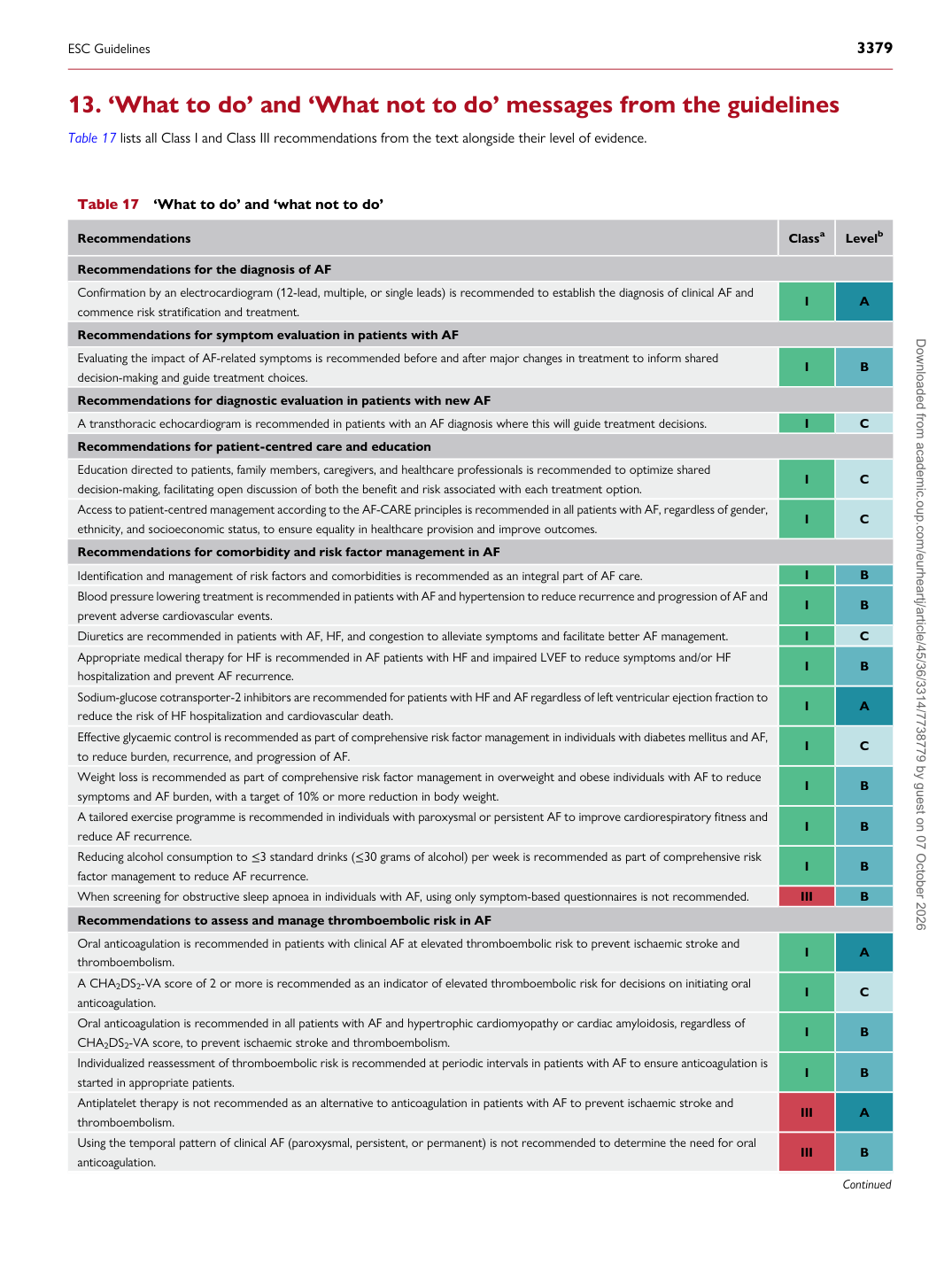
Table 17 lists all Class I and Class III recommendations from the text alongside their level of evidence.

Table 17 ‘What to do’ and ‘what not to do’

Recommendations Classa Levelb

Recommendations for the diagnosis of AF Confirmation by an electrocardiogram (12-lead, multiple, or single leads) is recommended to establish the diagnosis of clinical AF and commence risk stratification and treatment. I A Recommendations for symptom evaluation in patients with AF Evaluating the impact of AF-related symptoms is recommended before and after major changes in treatment to inform shared decision-making and guide treatment choices. I B Recommendations for diagnostic evaluation in patients with new AF A transthoracic echocardiogram is recommended in patients with an AF diagnosis where this will guide treatment decisions. I C Recommendations for patient-centred care and education Education directed to patients, family members, caregivers, and healthcare professionals is recommended to optimize shared decision-making, facilitating open discussion of both the benefit and risk associated with each treatment option. I C Access to patient-centred management according to the AF-CARE principles is recommended in all patients with AF, regardless of gender, ethnicity, and socioeconomic status, to ensure equality in healthcare provision and improve outcomes. I C Recommendations for comorbidity and risk factor management in AF Identification and management of risk factors and comorbidities is recommended as an integral part of AF care. I B Blood pressure lowering treatment is recommended in patients with AF and hypertension to reduce recurrence and progression of AF and prevent adverse cardiovascular events. I B Diuretics are recommended in patients with AF, HF, and congestion to alleviate symptoms and facilitate better AF management. I C Appropriate medical therapy for HF is recommended in AF patients with HF and impaired LVEF to reduce symptoms and/or HF hospitalization and prevent AF recurrence. I B Sodium-glucose cotransporter-2 inhibitors are recommended for patients with HF and AF regardless of left ventricular ejection fraction to reduce the risk of HF hospitalization and cardiovascular death. I A Effective glycaemic control is recommended as part of comprehensive risk factor management in individuals with diabetes mellitus and AF, to reduce burden, recurrence, and progression of AF. I C Weight loss is recommended as part of comprehensive risk factor management in overweight and obese individuals with AF to reduce symptoms and AF burden, with a target of 10% or more reduction in body weight. I B A tailored exercise programme is recommended in individuals with paroxysmal or persistent AF to improve cardiorespiratory fitness and reduce AF recurrence. I B Reducing alcohol consumption to ≤3 standard drinks (≤30 grams of alcohol) per week is recommended as part of comprehensive risk factor management to reduce AF recurrence. I B When screening for obstructive sleep apnoea in individuals with AF, using only symptom-based questionnaires is not recommended. III B Recommendations to assess and manage thromboembolic risk in AF Oral anticoagulation is recommended in patients with clinical AF at elevated thromboembolic risk to prevent ischaemic stroke and thromboembolism. I A A CHA2DS2-VA score of 2 or more is recommended as an indicator of elevated thromboembolic risk for decisions on initiating oral anticoagulation. I C Oral anticoagulation is recommended in all patients with AF and hypertrophic cardiomyopathy or cardiac amyloidosis, regardless of CHA2DS2-VA score, to prevent ischaemic stroke and thromboembolism. I B Individualized reassessment of thromboembolic risk is recommended at periodic intervals in patients with AF to ensure anticoagulation is started in appropriate patients. I B Antiplatelet therapy is not recommended as an alternative to anticoagulation in patients with AF to prevent ischaemic stroke and thromboembolism. III A Using the temporal pattern of clinical AF (paroxysmal, persistent, or permanent) is not recommended to determine the need for oral anticoagulation. III B

Continued

ESC Guidelines                                                                                                                                                                                          3379

Downloaded from academic.oup.com/eurheartj/article/45/36/3314/7738779 by guest on 07 October 2026