p.6 抽出テキスト
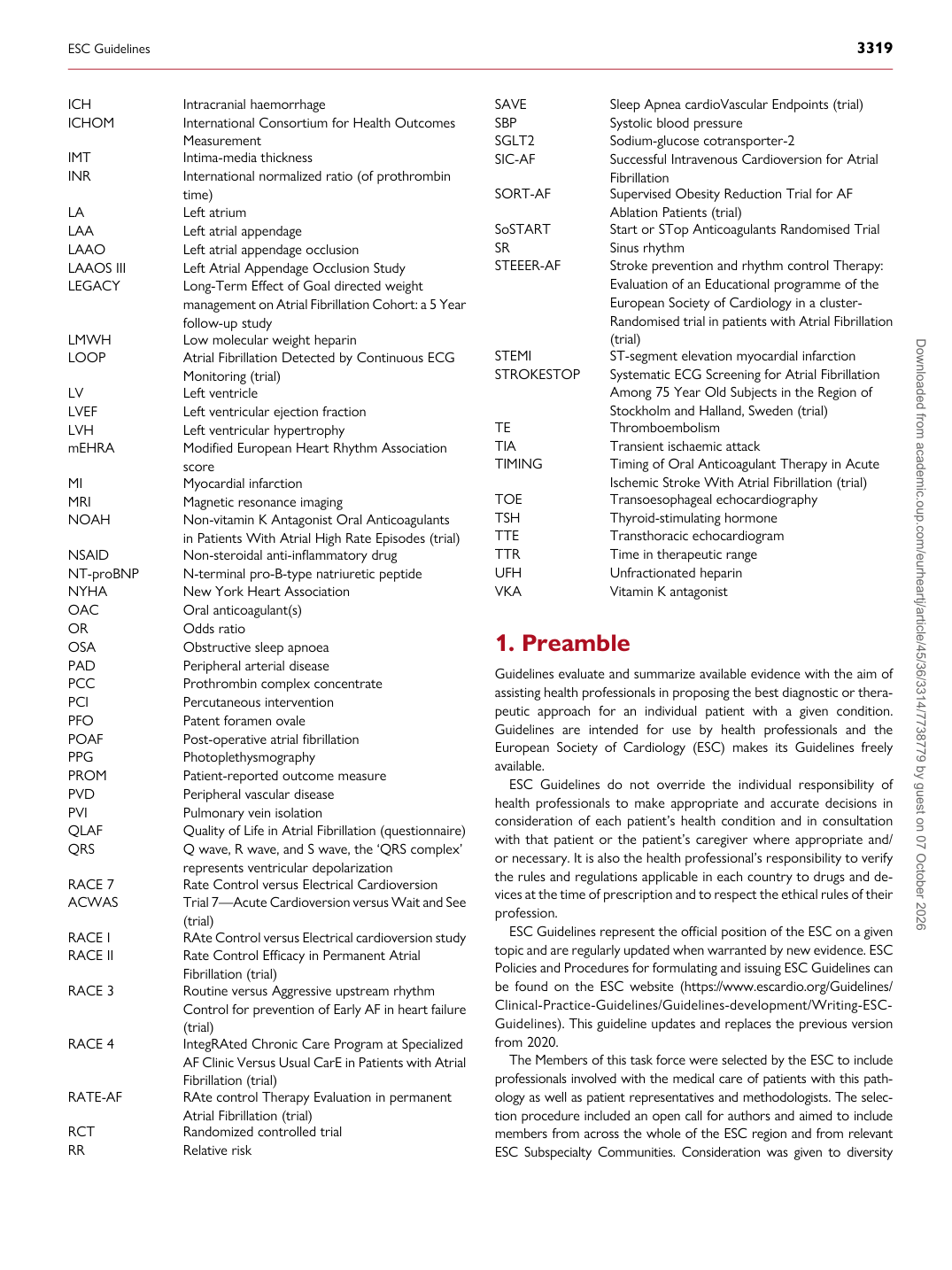
ICH Intracranial haemorrhage ICHOM International Consortium for Health Outcomes Measurement IMT Intima-media thickness INR International normalized ratio (of prothrombin time) LA Left atrium LAA Left atrial appendage LAAO Left atrial appendage occlusion LAAOS III Left Atrial Appendage Occlusion Study LEGACY Long-Term Effect of Goal directed weight management on Atrial Fibrillation Cohort: a 5 Year follow-up study LMWH Low molecular weight heparin LOOP Atrial Fibrillation Detected by Continuous ECG Monitoring (trial) LV Left ventricle LVEF Left ventricular ejection fraction LVH Left ventricular hypertrophy mEHRA Modified European Heart Rhythm Association score MI Myocardial infarction MRI Magnetic resonance imaging NOAH Non-vitamin K Antagonist Oral Anticoagulants in Patients With Atrial High Rate Episodes (trial) NSAID Non-steroidal anti-inflammatory drug NT-proBNP N-terminal pro-B-type natriuretic peptide NYHA New York Heart Association OAC Oral anticoagulant(s) OR Odds ratio OSA Obstructive sleep apnoea PAD Peripheral arterial disease PCC Prothrombin complex concentrate PCI Percutaneous intervention PFO Patent foramen ovale POAF Post-operative atrial fibrillation PPG Photoplethysmography PROM Patient-reported outcome measure PVD Peripheral vascular disease PVI Pulmonary vein isolation QLAF Quality of Life in Atrial Fibrillation (questionnaire) QRS Q wave, R wave, and S wave, the ‘QRS complex’ represents ventricular depolarization RACE 7 ACWAS

Rate Control versus Electrical Cardioversion Trial 7—Acute Cardioversion versus Wait and See (trial) RACE I RAte Control versus Electrical cardioversion study RACE II Rate Control Efficacy in Permanent Atrial Fibrillation (trial) RACE 3 Routine versus Aggressive upstream rhythm Control for prevention of Early AF in heart failure (trial) RACE 4 IntegRAted Chronic Care Program at Specialized AF Clinic Versus Usual CarE in Patients with Atrial Fibrillation (trial) RATE-AF RAte control Therapy Evaluation in permanent Atrial Fibrillation (trial) RCT Randomized controlled trial RR Relative risk SAVE Sleep Apnea cardioVascular Endpoints (trial) SBP Systolic blood pressure SGLT2 Sodium-glucose cotransporter-2 SIC-AF Successful Intravenous Cardioversion for Atrial Fibrillation SORT-AF Supervised Obesity Reduction Trial for AF Ablation Patients (trial) SoSTART Start or STop Anticoagulants Randomised Trial SR Sinus rhythm STEEER-AF Stroke prevention and rhythm control Therapy: Evaluation of an Educational programme of the European Society of Cardiology in a cluster- Randomised trial in patients with Atrial Fibrillation (trial) STEMI ST-segment elevation myocardial infarction STROKESTOP Systematic ECG Screening for Atrial Fibrillation Among 75 Year Old Subjects in the Region of Stockholm and Halland, Sweden (trial) TE Thromboembolism TIA Transient ischaemic attack TIMING Timing of Oral Anticoagulant Therapy in Acute Ischemic Stroke With Atrial Fibrillation (trial) TOE Transoesophageal echocardiography TSH Thyroid-stimulating hormone TTE Transthoracic echocardiogram TTR Time in therapeutic range UFH Unfractionated heparin VKA Vitamin K antagonist

1 Preamble

Guidelines evaluate and summarize available evidence with the aim of assisting health professionals in proposing the best diagnostic or therapeutic approach for an individual patient with a given condition. Guidelines are intended for use by health professionals and the European Society of Cardiology (ESC) makes its Guidelines freely available. ESC Guidelines do not override the individual responsibility of health professionals to make appropriate and accurate decisions in consideration of each patient’s health condition and in consultation with that patient or the patient’s caregiver where appropriate and/ or necessary. It is also the health professional’s responsibility to verify the rules and regulations applicable in each country to drugs and devices at the time of prescription and to respect the ethical rules of their profession. ESC Guidelines represent the official position of the ESC on a given topic and are regularly updated when warranted by new evidence. ESC Policies and Procedures for formulating and issuing ESC Guidelines can be found on the ESC website (https://www.escardio.org/Guidelines/ Clinical-Practice-Guidelines/Guidelines-development/Writing-ESC- Guidelines). This guideline updates and replaces the previous version from 2020. The Members of this task force were selected by the ESC to include professionals involved with the medical care of patients with this pathology as well as patient representatives and methodologists. The selection procedure included an open call for authors and aimed to include members from across the whole of the ESC region and from relevant ESC Subspecialty Communities. Consideration was given to diversity

ESC Guidelines                                                                                                                                                                                          3319

Downloaded from academic.oup.com/eurheartj/article/45/36/3314/7738779 by guest on 07 October 2026