p.59 抽出テキスト
of AF has been estimated to be as high as 1 in 3 for older individuals,1038 with age-standardized incidence rates higher for men than women. Populations of European ancestry are typically found to have higher AF prevalence, individuals of African ancestry have worse outcomes, and other groups may have less access to interventions.1039–1041 Socioeconomic and other factors likely play a role in racial and ethnic differences in AF, but studies are also limited due to differences in how groups access healthcare. Greater deprivation in socioeconomic and living status is associated with higher AF incidence.1042 10.2 Screening tools for AF

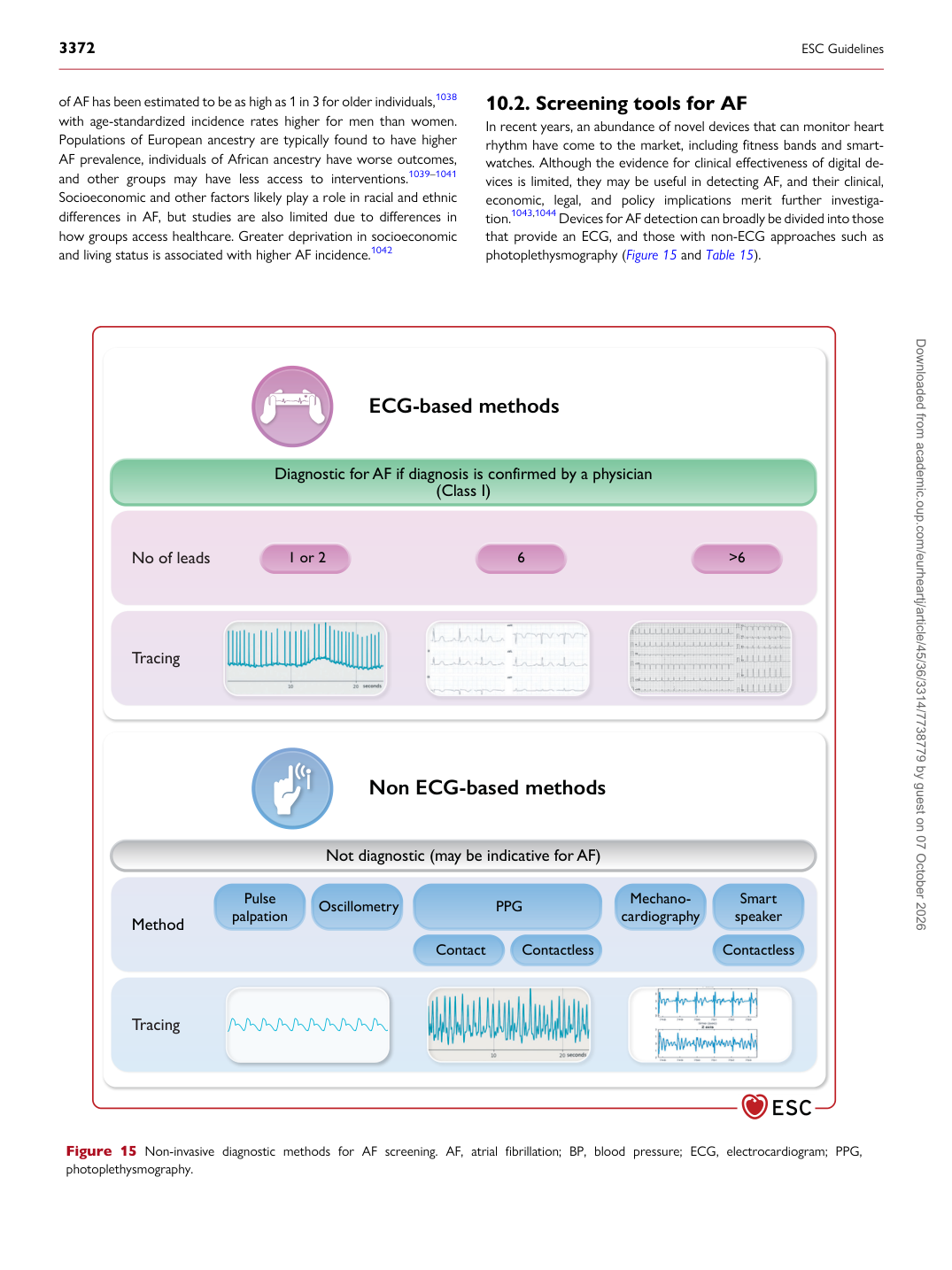
In recent years, an abundance of novel devices that can monitor heart rhythm have come to the market, including fitness bands and smartwatches. Although the evidence for clinical effectiveness of digital devices is limited, they may be useful in detecting AF, and their clinical, economic, legal, and policy implications merit further investigation.1043,1044 Devices for AF detection can broadly be divided into those that provide an ECG, and those with non-ECG approaches such as photoplethysmography (Figure 15 and Table 15).

Diagnostic for AF if diagnosis is confirmed by a physician

(Class I)

Not diagnostic (may be indicative for AF)

No of leads

Tracing 1 or 2 ECG-based methods

Non ECG-based methods

6 >6

Method

Tracing Pulse palpation Oscillometry Contact Contactless Contactless

PPG Smart speaker Mechanocardiography

Figure 15 Non-invasive diagnostic methods for AF screening. AF, atrial fibrillation; BP, blood pressure; ECG, electrocardiogram; PPG, photoplethysmography. Downloaded from academic.oup.com/eurheartj/article/45/36/3314/7738779 by guest on 07 October 2026