p.41 抽出テキスト
N

Cardioversion for atrial fibrillation

Y

Check OAC status as soon as possible and proceed to last step

Pharmacological or electrical cardioversion

(Class IIa)

Decide on continued OAC post-cardioversion Short-term OAC after cardioversion (4 weeks) for all patients, even if CHA2DS2-VA = 0

(optional if AF onset definitely <24 h and low thromboembolic risk) Long-term OAC for all patients according to thromboembolic risk assessment

Already on therapeutic OAC

for minimum 3 weeks Not already on OAC

Wait-and-see approach for spontaneous conversion (Class IIa) Initiation of DOAC

(or VKA, LMWH, or UFH) for unscheduled cardioversion as soon as possible

(Class IIa)

Therapeutic OAC for at least 3 weeks before scheduled

cardioversion (adherence to DOACs or INR ≥2.0 for VKAs)

(Class I)

Suitable for wait-and-see approach (Class IIa) Cardioversion

cannot wait

Haemodynamically stable

Emergency electrical cardioversion

(Class I)

AF onset ≥24 h or unknown AF onset <24 h

Elective electrical

cardioversion,

if needed

Check OAC status

Check current AF episode duration

Pharmacological or electrical cardioversion TOE guided cardioversion

(Class I)

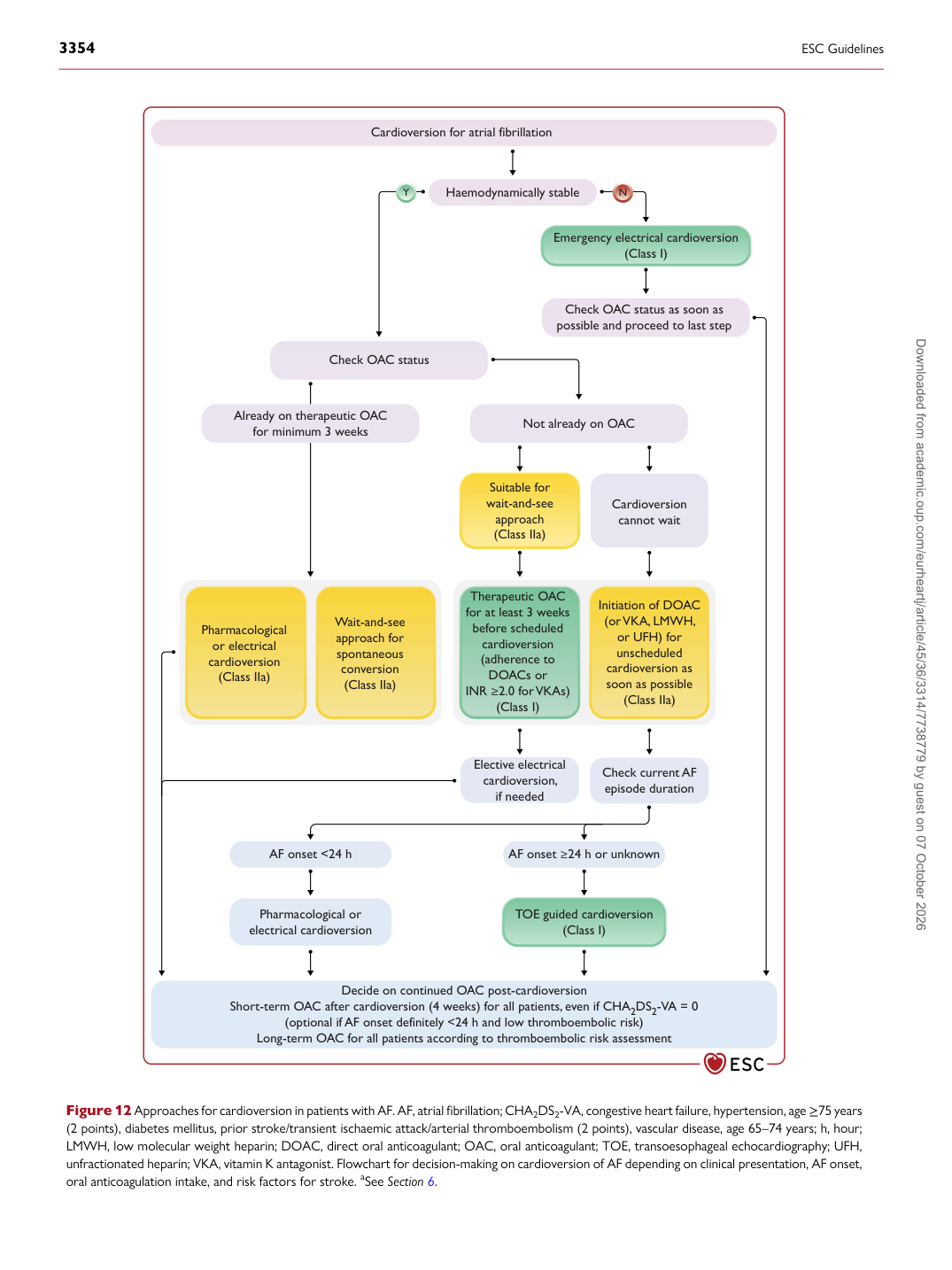
Figure 12 Approaches for cardioversion in patients with AF. AF, atrial fibrillation; CHA2DS2-VA, congestive heart failure, hypertension, age ≥75 years (2 points), diabetes mellitus, prior stroke/transient ischaemic attack/arterial thromboembolism (2 points), vascular disease, age 65–74 years; h, hour; LMWH, low molecular weight heparin; DOAC, direct oral anticoagulant; OAC, oral anticoagulant; TOE, transoesophageal echocardiography; UFH, unfractionated heparin; VKA, vitamin K antagonist. Flowchart for decision-making on cardioversion of AF depending on clinical presentation, AF onset, oral anticoagulation intake, and risk factors for stroke. aSee Section 6. Downloaded from academic.oup.com/eurheartj/article/45/36/3314/7738779 by guest on 07 October 2026