p.37 抽出テキスト
Assess haemodynamic status, basic coagulation parameters, blood count and kidney function

Determine dose and time of last OAC and all co-medications

Compress bleeding sites mechanically, if accessible

Patient with active bleeding

DOAC VKA

Interrupt anticoagulation and perform diagnostic

or treatment interventions

(Class I)

Aim to re-initiate anticoagulation in the absence of contraindications or if source of bleeding has been addressed Assess risk of repeat bleeding Intensify efforts to modify bleeding risk factors

Discuss benefits and risk of restarting OAC (shared decision-making approach)

Review choice and dose of OAC Institute close and ongoing monitoring

Management after the bleeding episode

Minor bleeding Non-lifethreatening major bleeding Life-threatening or bleeding into

a critical site

Delay VKA until INR <2 Delay DOAC for 1–2 doses (or more depending on recovery)

Interrupt anticoagulation and perform diagnostic

or treatment interventions

(Class I)

Minor bleeding Non-lifethreatening major bleeding Life-threatening or bleeding into

a critical site

Fluid replacement Blood transfusion Consider need for vitamin K, FFP, PCC Fluid replacement Blood transfusion

PCC (Class IIa) FFP if PCC not available Replacement of platelets where appropriate Fluid replacement Blood transfusion Consider oral charcoal or gastric lavage if DOAC taken within 2–4 hours Consider need for PCC Fluid replacement Blood transfusion Specific antidotes (Class IIa)

PCC if no antidotes available Replacement of platelets where appropriate Monitoring of DOAC levels

Multidisciplinary team approach Multidisciplinary team approach

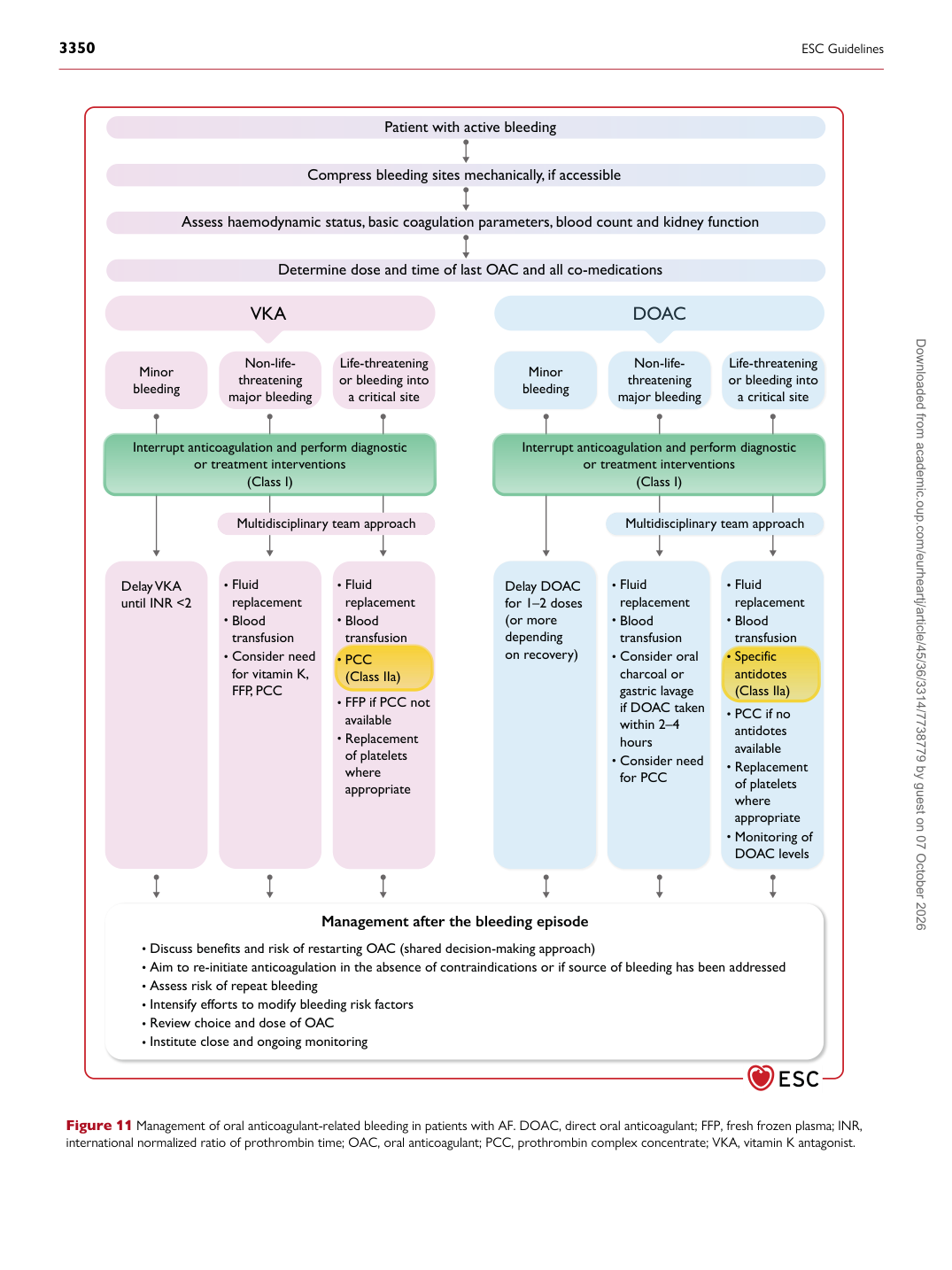
Figure 11 Management of oral anticoagulant-related bleeding in patients with AF. DOAC, direct oral anticoagulant; FFP, fresh frozen plasma; INR, international normalized ratio of prothrombin time; OAC, oral anticoagulant; PCC, prothrombin complex concentrate; VKA, vitamin K antagonist. Downloaded from academic.oup.com/eurheartj/article/45/36/3314/7738779 by guest on 07 October 2026