p.36 抽出テキスト
Hypertension

NSAIDs Other factors

Optimize blood pressure lowering

treatment (Class I) Do not use antiplatelet therapy beyond 12 months

in stable OAC-treated patients with chronic coronary/vascular disease

(Class III)

Do not add antiplatelet therapy to OAC to prevent

thromboembolic events

(Class III) or recurrent stroke

(Class III) Reduce alcohol to <3

standard drinks

per week (Class I)

DOAC instead of  VKA when antiplatelet treatment

is needed (Class I) Keep INR 2.0–3.0

(Class I) and TTR >70%

(Class IIa)

Switch to DOAC if eligible

and failed to maintain

TTR on VKA

(Class I)

Minimize duration of heparin-bridging therapy

Manage all modifiable bleeding risk factors with shared decision-making

(Class I)

Do not use bleeding risk scores to decide starting or withdrawing OAC

(Class III)

Comprehensive medical history to determine all bleeding risk factors at OAC initiation/follow-up

(Class I)

Review patient more regularly Work with multidisciplinary team

to monitor risk factors

If clear contraindications for OACa, consider

left atrial appendage occlusion

(Class IIb)

Work with multidisciplinary team on each element

Ensure correct OAC dose and monitoring

Manage heart failure and achieve euvolaemia

(Class I)

Effective glycaemic control for patients with diabetes

(Class I)

Antiplatelet drugs Alcohol intake Unstable/variable INR

Offer alternative analgesia or disease-modifying therapy

Re-assess at next interaction with patient

Renal impairment Risk of falls Diabetes mellitus Congestive heart failure

Reduced platelet count or function

Anaemia

Severe renal impairment, dialysis or renal transplant Severe hepatic dysfunction or cirrhosis Malignancy

Previous major bleeding Age

Genetic factors (e.g. CYP2C9 polymorphisms) Previous stroke Intracerebral pathology Cognitive impairment or dementia Consider drug interactions Reduce corticosteroid use if possible Offer proton pump inhibitors if high GI bleeding risk Advise restricting hazardous hobbies/occupations

Address all potentially modifiable bleeding risk factors with shared decision-making

Consider the impact of non-modifiable bleeding risk factors with shared decision-making

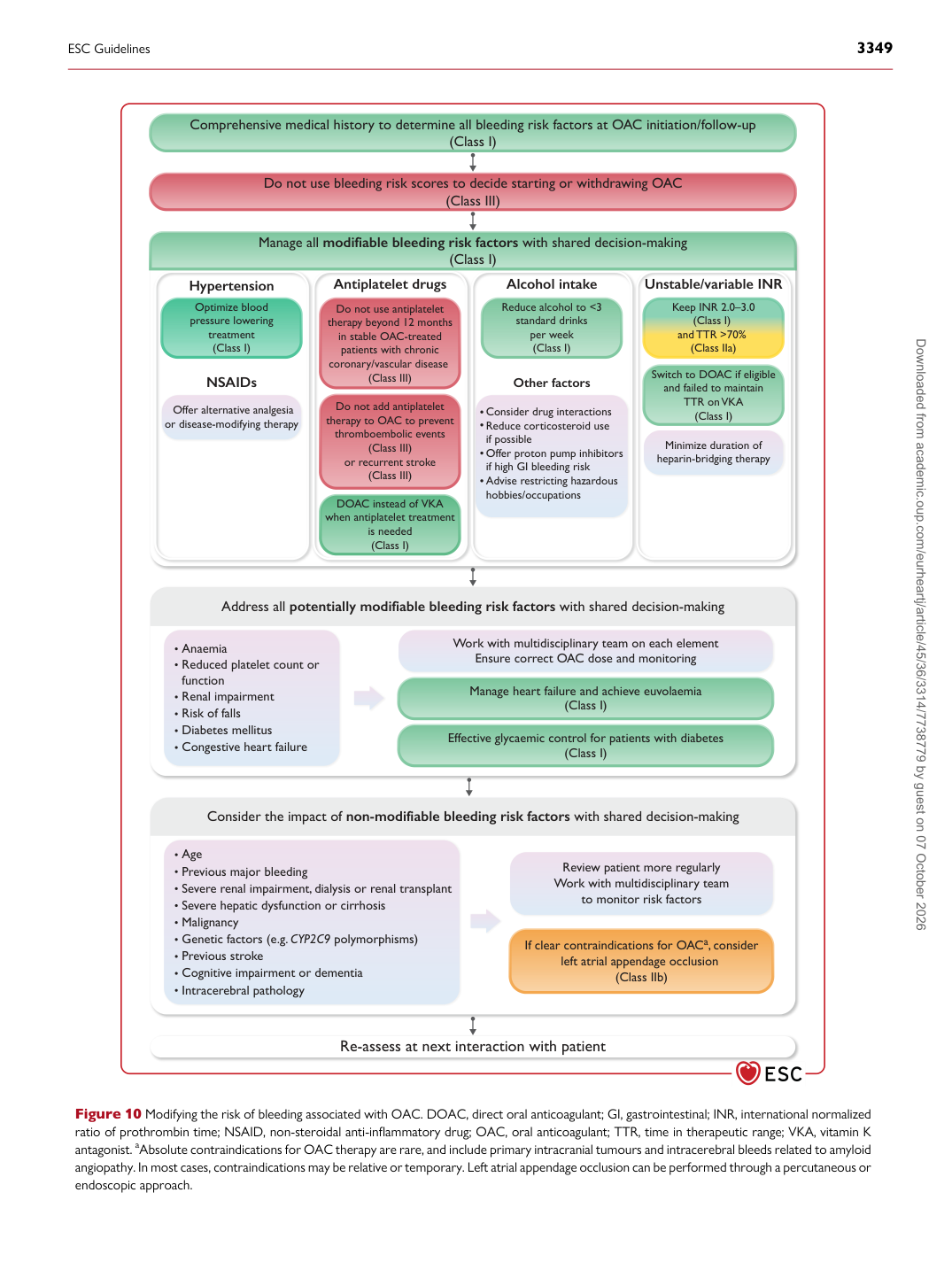
Figure 10 Modifying the risk of bleeding associated with OAC. DOAC, direct oral anticoagulant; GI, gastrointestinal; INR, international normalized ratio of prothrombin time; NSAID, non-steroidal anti-inflammatory drug; OAC, oral anticoagulant; TTR, time in therapeutic range; VKA, vitamin K antagonist. aAbsolute contraindications for OAC therapy are rare, and include primary intracranial tumours and intracerebral bleeds related to amyloid angiopathy. In most cases, contraindications may be relative or temporary. Left atrial appendage occlusion can be performed through a percutaneous or endoscopic approach.

ESC Guidelines                                                                                                                                                                                          3349

Downloaded from academic.oup.com/eurheartj/article/45/36/3314/7738779 by guest on 07 October 2026