p.32 抽出テキスト
6.2.2 Vitamin K antagonists

Vitamin K antagonist therapy reduces stroke risk by 64% and mortality by 26% in patients with AF at elevated thromboembolic risk (mostly warfarin in trials, compared with placebo or no treatment).239 Vitamin K antagonists are still used in many patients worldwide, but prescriptions have declined sharply since the introduction of DOACs.340,341 Vitamin K antagonists are currently the only treatment option in AF patients with mechanical heart valves or moderate-tosevere mitral valve stenosis.294,331 The use of VKAs is not only limited by numerous drug and food interactions (Figure 9), but also a narrow therapeutic range. This requires frequent monitoring and dose adjustment according to the prothrombin time expressed as the international normalized ratio (INR).342 If the time in therapeutic range (TTR) is maintained for long periods (e.g. >70% with INR 2.0–3.0), then VKA can be effective for thromboembolic protection with an acceptable safety profile.295–297,343 However, VKAs are associated with higher rates of intracranial bleeding,299,300 and also higher rates of other types of bleeding compared with DOACs.83 In view of the potential safety benefits, switching from VKAs to a DOAC is justified where there are concerns about intracranial bleeding or for patient-choice reasons, and a switch is recommended where patients have failed to maintain an adequate TTR (<70%). This depends on patients fulfilling eligibility criteria for DOACs and should take into account other correctable reasons for poor INR control. There is limited data on switching OAC in older patients (≥75 years) with polypharmacy or other markers of frailty. A recent trial in this patient group prematurely stopped for futility showed that switching from VKAs to DOACs led to a higher primary outcome rate of major or clinically relevant nonmajor bleeding events compared with continuing with INR-guided VKA (17.8 vs. 10.5 per 100 patient-years, driven by non-major bleeds).309

Hence, in such patients who are clinically stable with good TTR, VKAs may be continued rather than switching to a DOAC after an open discussion with the patient and shared decision-making.

6.2.3 Clinical vs. device-detected subclinical AF

The known benefit of anticoagulation applies to clinical AF. Two RCTs have been published assessing the value of DOAC therapy in devicedetected subclinical AF. The ARTESiA trial (Apixaban for the Reduction of Thromboembolism in Patients With Device-Detected Sub-Clinical Atrial Fibrillation) was completed with 4012 patients with device-detected subclinical AF and a mean follow-up of 3.5 years.282 The primary efficacy outcome of stroke or systemic embolism was significantly less in those randomized to apixaban compared with aspirin (HR, 0.63; 95% CI, 0.45–0.88; P = .007). In the intention-to-treat analysis, the primary safety outcome of major bleeding was higher with apixaban (HR, 1.36; 95% CI, 1.01–1.82; P = .04). The NOAH trial (Nonvitamin K Antagonist Oral Anticoagulants in Patients With Atrial High Rate Episodes) was stopped prematurely due to safety concerns and futility for the efficacy of edoxaban, and hence provides limited information.281 The analysis of 2536 patients with device-detected atrial highrate episodes and a median follow-up of 21 months identified no difference in a composite of cardiovascular death, stroke, or embolism comparing edoxaban and placebo (HR, 0.81; 95% CI, 0.60–1.08; P = .15). Those randomized to edoxaban had a higher rate of the composite of death or major bleeding than placebo (HR, 1.31; 95% CI, 1.02–1.67; P = .03). Patients had a low burden of devicedetected subclinical AF in both trials (median duration 1.5 h and

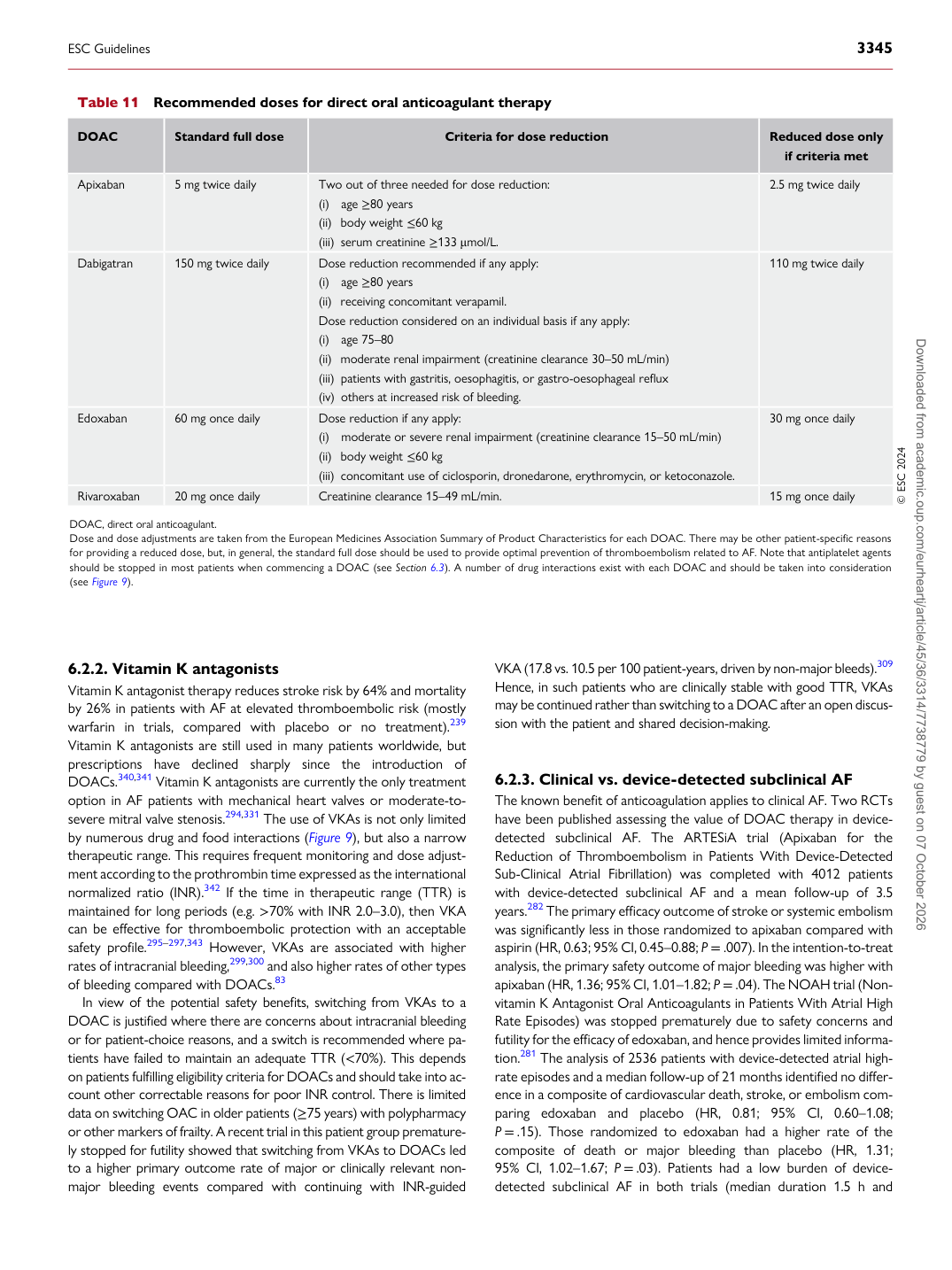
Table 11 Recommended doses for direct oral anticoagulant therapy

DOAC Standard full dose Criteria for dose reduction Reduced dose only

if criteria met

Apixaban 5 mg twice daily Two out of three needed for dose reduction:

(i) age ≥80 years (ii) body weight ≤60 kg (iii) serum creatinine ≥133 μmol/L. 2.5 mg twice daily

Dabigatran 150 mg twice daily Dose reduction recommended if any apply: (i) age ≥80 years

(ii) receiving concomitant verapamil. Dose reduction considered on an individual basis if any apply: (i) age 75–80 (ii) moderate renal impairment (creatinine clearance 30–50 mL/min) (iii) patients with gastritis, oesophagitis, or gastro-oesophageal reflux (iv) others at increased risk of bleeding. 110 mg twice daily

Edoxaban 60 mg once daily Dose reduction if any apply: (i) moderate or severe renal impairment (creatinine clearance 15–50 mL/min)

(ii) body weight ≤60 kg (iii) concomitant use of ciclosporin, dronedarone, erythromycin, or ketoconazole. 30 mg once daily

Rivaroxaban 20 mg once daily Creatinine clearance 15–49 mL/min. 15 mg once daily © ESC 2024

DOAC, direct oral anticoagulant. Dose and dose adjustments are taken from the European Medicines Association Summary of Product Characteristics for each DOAC. There may be other patient-specific reasons for providing a reduced dose, but, in general, the standard full dose should be used to provide optimal prevention of thromboembolism related to AF. Note that antiplatelet agents should be stopped in most patients when commencing a DOAC (see Section 6.3). A number of drug interactions exist with each DOAC and should be taken into consideration (see Figure 9).

ESC Guidelines                                                                                                                                                                                          3345

Downloaded from academic.oup.com/eurheartj/article/45/36/3314/7738779 by guest on 07 October 2026