p.30 抽出テキスト
6.2 Oral anticoagulants

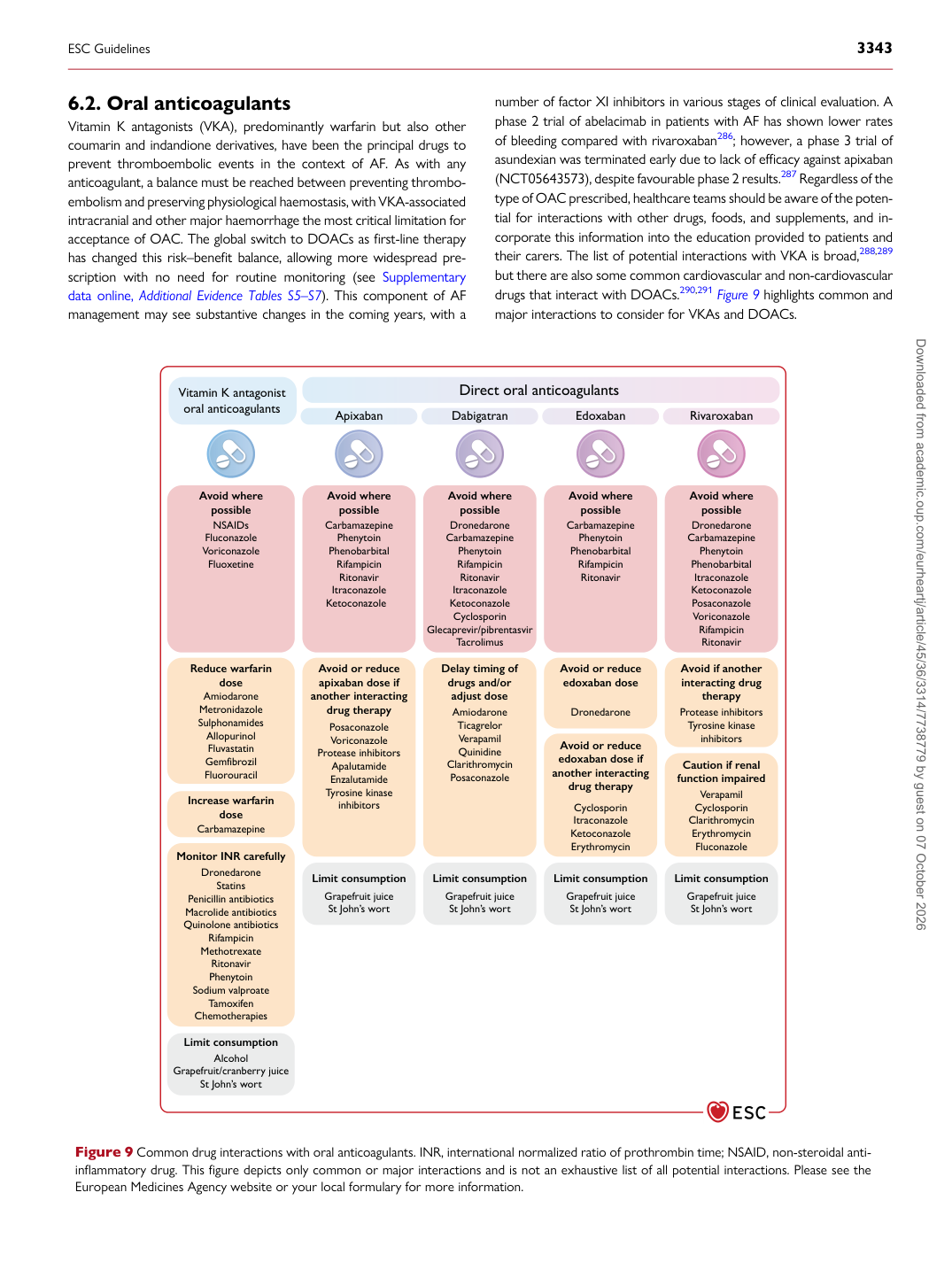
Vitamin K antagonists (VKA), predominantly warfarin but also other coumarin and indandione derivatives, have been the principal drugs to prevent thromboembolic events in the context of AF. As with any anticoagulant, a balance must be reached between preventing thromboembolism and preserving physiological haemostasis, with VKA-associated intracranial and other major haemorrhage the most critical limitation for acceptance of OAC. The global switch to DOACs as first-line therapy has changed this risk–benefit balance, allowing more widespread prescription with no need for routine monitoring (see Supplementary data online, Additional Evidence Tables S5–S7). This component of AF management may see substantive changes in the coming years, with a number of factor XI inhibitors in various stages of clinical evaluation. A phase 2 trial of abelacimab in patients with AF has shown lower rates of bleeding compared with rivaroxaban286; however, a phase 3 trial of asundexian was terminated early due to lack of efficacy against apixaban (NCT05643573), despite favourable phase 2 results.287 Regardless of the type of OAC prescribed, healthcare teams should be aware of the potential for interactions with other drugs, foods, and supplements, and incorporate this information into the education provided to patients and their carers. The list of potential interactions with VKA is broad,288,289

but there are also some common cardiovascular and non-cardiovascular drugs that interact with DOACs.290,291 Figure 9 highlights common and major interactions to consider for VKAs and DOACs.

Caution if renal function impaired

Vitamin K antagonist oral anticoagulants

Avoid where

possible NSAIDs Fluconazole Voriconazole Fluoxetine Avoid where

possible Carbamazepine Phenytoin Phenobarbital Rifampicin Ritonavir Itraconazole Ketoconazole Avoid where

possible Dronedarone Carbamazepine

Phenytoin Rifampicin Ritonavir Itraconazole Ketoconazole Cyclosporin Glecaprevir/pibrentasvir

Tacrolimus Avoid where

possible Carbamazepine Phenytoin Phenobarbital Rifampicin Ritonavir Avoid where

possible Dronedarone Carbamazepine Phenytoin Phenobarbital Itraconazole Ketoconazole Posaconazole Voriconazole Rifampicin Ritonavir

Limit consumption Avoid or reduce apixaban dose if another interacting

drug therapy Avoid if another interacting drug

therapy

Avoid or reduce edoxaban dose if another interacting

drug therapy

Avoid or reduce

edoxaban dose Reduce warfarin

dose Apixaban Dabigatran Edoxaban

Delay timing of drugs and/or

adjust dose Amiodarone Metronidazole Sulphonamides

Allopurinol Fluvastatin Gemfibrozil Fluorouracil

Increase warfarin

dose Carbamazepine

Monitor INR carefully

Dronedarone Statins Penicillin antibiotics Macrolide antibiotics Quinolone antibiotics

Rifampicin Methotrexate Ritonavir Phenytoin Sodium valproate Tamoxifen Chemotherapies Posaconazole

Voriconazole Protease inhibitors Apalutamide Enzalutamide Tyrosine kinase

inhibitors

Limit consumption

Grapefruit juice St John’s wort Limit consumption

Grapefruit juice St John’s wort Limit consumption

Grapefruit juice St John’s wort Limit consumption

Grapefruit juice St John’s wort

Amiodarone Ticagrelor Verapamil Quinidine Clarithromycin Posaconazole Dronedarone Protease inhibitors

Tyrosine kinase

inhibitors

Verapamil Cyclosporin Clarithromycin Erythromycin Fluconazole

Cyclosporin Itraconazole Ketoconazole Erythromycin

Alcohol Grapefruit/cranberry juice

St John’s wort Rivaroxaban

Direct oral anticoagulants

Figure 9 Common drug interactions with oral anticoagulants. INR, international normalized ratio of prothrombin time; NSAID, non-steroidal antiinflammatory drug. This figure depicts only common or major interactions and is not an exhaustive list of all potential interactions. Please see the European Medicines Agency website or your local formulary for more information.

ESC Guidelines                                                                                                                                                                                          3343

Downloaded from academic.oup.com/eurheartj/article/45/36/3314/7738779 by guest on 07 October 2026